
The Great Stories of the Old Testament
Puzzle 56 · Divided Kingdom and Restoration · Page 84 in print
Ezra Reads the Law
Ezra reads the law to an assembled people; explanation, rejoicing, booths and confession follow.
Jump to a word
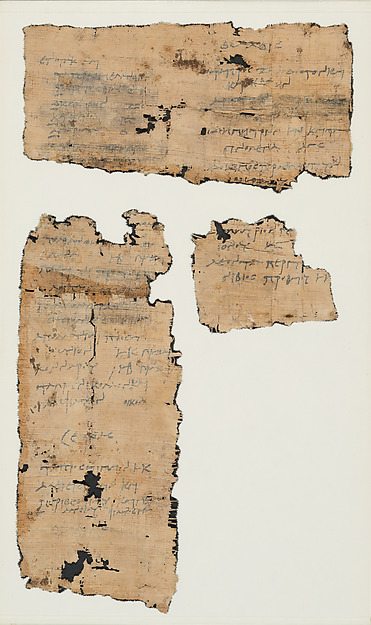
Papyrus, ca. 250 BCE. Egypt.
The written fragment draws attention to reading and explaining a text; it is not Ezra’s scroll.
The Metropolitan Museum of Art; Gift of Egypt Exploration Fund, 1909; object 09.182.54. · CC0 / Public Domain · Original recordImage changes
Resized proportionally to at most 1440px and JPEG compressed; no crop or content alteration.
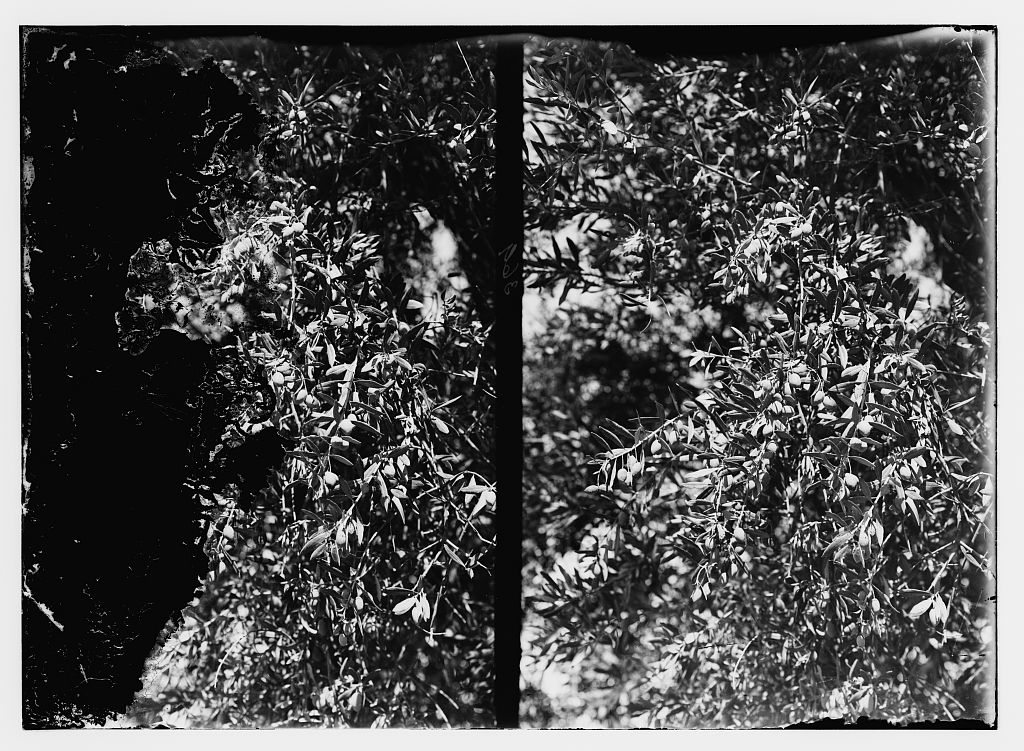
Olive branches and fruit, photographed between 1898 and 1946.
Olive branches connect directly with the materials gathered for the booths in Nehemiah.
American Colony Photo Department / Matson Photo Service; G. Eric and Edith Matson Photograph Collection, Library of Congress. · No known restrictions on publication · Original recordImage changes
Resized proportionally to at most 1440px and JPEG compressed; no crop or content alteration.
The words
Booths
The people build booths on roofs and in courtyards and streets, keep the feast for seven days, then assemble on the eighth.
Did you know?
Leviticus connects living in booths with Israel’s departure from Egypt, giving the festival a purpose of remembrance for later generations.
Nehemiah 8:16–18 (opens a new tab) · Leviticus 23:42–43 (opens a new tab)
Confession
On the twenty-fourth day, the Israelites fast, gather apart from “strangers” in the KJV, and confess their own and their ancestors’ sins.
Congregation
The people gather before the Water Gate on the first day of the seventh month, asking Ezra to bring the law book.
Distinctly
The KJV says the law was read “distinctly”; the NET reads “explaining it,” while noting that the Hebrew word’s exact sense is uncertain.
Nehemiah 8:8 (opens a new tab) · NET Bible: Nehemiah 8:8 (opens a new tab)
Ezra
Ezra opens the law book above the assembled people; they stand, answer “Amen, Amen” and bow as he blesses the LORD.
Jeshua
Jeshua is listed among the men helping the people understand the law while they remain standing in their places.
Levites
The Levites explain the law, then calm the weeping people and tell them not to grieve on the holy day.
Olive Branches
The proclamation calls for olive and other branches to make booths; the people build them on roofs, in courtyards and near the Water Gate.
Pulpit
Raised wooden platform, in the NET Bible.
Ezra stands above the people on a wooden pulpit built for the reading; men are listed on his right and left.
Nehemiah 8:4–5 (opens a new tab) · NET Bible: Nehemiah 8:4 (opens a new tab)
Reading
Ezra reads from morning until midday before men, women and others able to understand; the people listen attentively to the law.
Scribe
Here, a specialist in the law of Moses.
The people address Ezra as scribe when asking him to bring the law book; he then reads it publicly.
Did you know?
The book of Ezra describes him preparing to study the law, carry it out and teach its statutes in Israel.
Nehemiah 8:1–3 (opens a new tab) · Ezra 7:6; Ezra 7:10 (opens a new tab)
Tirshatha
Governor, in the NET Bible.
Nehemiah, called Tirshatha in the KJV, joins Ezra and the Levites in telling the people not to mourn on this holy day.
Nehemiah 8:9 (opens a new tab) · NET Bible: Nehemiah 8:9 (opens a new tab)
Understanding
On the second day, family heads, priests and Levites gather with Ezra to understand the law and discover the instruction about booths.
Water Gate
The open area before the Water Gate hosts the reading; the people later build booths there as part of the feast.
Nehemiah 8:1–3 (opens a new tab) · Nehemiah 8:16 (opens a new tab)
Wept
The people weep when hearing the law; the leaders tell them not to mourn, and the gathering turns to eating, sharing and rejoicing.
Did you know?
The instructions for the holy day include sending portions of food to anyone for whom nothing has been prepared.
Sources
- Nehemiah 8:1-6 (King James Version)King James Version, passage navigation via Bible Gateway
- Nehemiah 8:7-12 (King James Version)King James Version, passage navigation via Bible Gateway
- Nehemiah 8:13-18 (King James Version)King James Version, passage navigation via Bible Gateway
- Nehemiah 9:1-3 (King James Version)King James Version, passage navigation via Bible Gateway
- Nehemiah 8:4 (NET Bible), translation and notesNET Bible, via Bible Gateway
- Nehemiah 8:8 (NET Bible), translation and notesNET Bible, via Bible Gateway
- Nehemiah 8:9 (NET Bible), translation and notesNET Bible, via Bible Gateway
- Ezra 7:6-10 (King James Version)King James Version, passage navigation via Bible Gateway
- Leviticus 23:40-43 (King James Version)King James Version, passage navigation via Bible Gateway