
The Great Stories of the Old Testament
Puzzle 05 · Creation and Primeval History · Page 17 in print
Noah and the Great Flood
The flood narrative describes an ark, the preservation of living creatures and its eventual resting in the mountains of Ararat.
Jump to a word
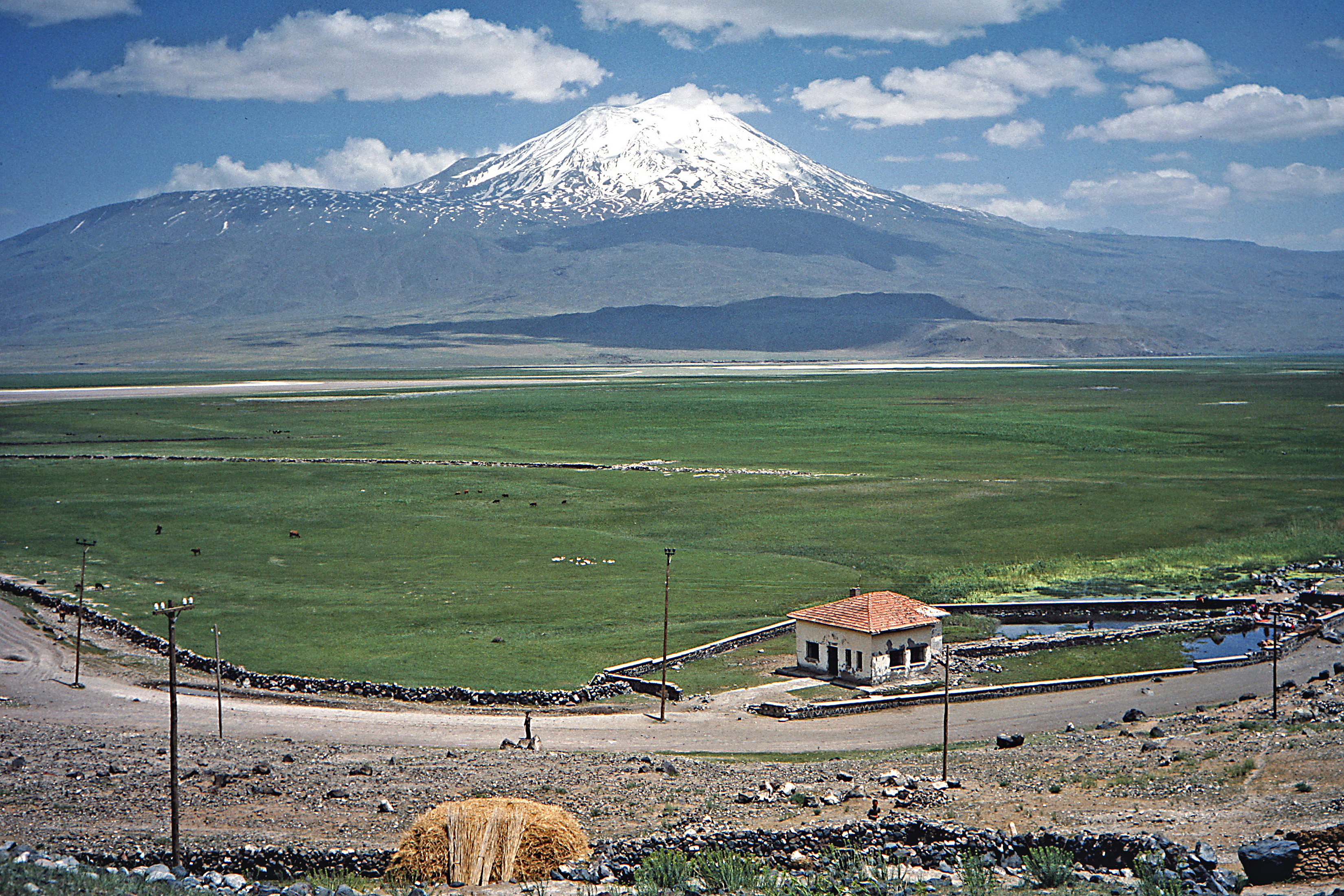
Mount Ararat, photographed June 28, 2006.
The modern mountain name does not identify where the ark rested.
W. Bulach / Wikimedia Commons · CC BY-SA 4.0 · Original recordImage changes
Display copies resized; original downloaded JPEG preserved.
The words
Ararat
The ark comes to rest on the mountains of Ararat; Genesis names a mountainous area rather than identifying a single peak.
Destroy
God announces the destruction of people and animals because the earth is filled with violence; the flood account later describes their deaths.
Genesis 6:7 (opens a new tab) · Genesis 6:11–13 (opens a new tab) · Genesis 7:21–23 (opens a new tab)
Door
Noah is told to put the door in the ark’s side; later, Genesis says the LORD shut him in.
Genesis 6:16 (opens a new tab) · Genesis 7:16 (opens a new tab)
Flood
As the floodwaters increase, they lift the ark from the ground and carry it on the surface of the water.
Forty
Forty counts the days and nights of rain; Genesis separately gives 150 days for the waters prevailing on the earth.
Genesis 7:12 (opens a new tab) · Genesis 7:24 (opens a new tab)
Fountains
Sources or springs of water.
The fountains of the great deep break open on the same day that heaven’s windows open, beginning the flood.
Genesis 7:11 (opens a new tab) · Strong’s H4599 (spring) (opens a new tab)
Fowls
Here, birds generally, not just domestic poultry.
The birds enter with Noah and the other creatures; Genesis expands the description to every bird of every sort.
Gopher Wood
A kind of wood whose identity is uncertain.
God specifies gopher wood for the ark, then gives instructions for rooms and a coating of pitch inside and outside.
Genesis 6:14 (opens a new tab) · NET Bible: Genesis 6:14–16 (opens a new tab)
Heaven
Here, the sky from which rain falls.
Genesis pairs heaven’s opened windows with the fountains of the deep; later both are stopped, and rain from heaven is restrained.
Genesis 7:11 (opens a new tab) · Genesis 8:2 (opens a new tab)
Japheth
Japheth enters the ark with Noah, Shem, Ham, Noah’s wife and the three sons’ wives as the flood begins.
Noah
Noah receives the command to build an ark, follows the instructions, and enters it with his family before the flood.
Genesis 6:14 (opens a new tab) · Genesis 6:22 (opens a new tab) · Genesis 7:7 (opens a new tab)
Pitch
Noah’s instructions call for coating the ark with pitch both inside and outside, alongside the command to make rooms within it.
Did you know?
Exodus describes another coated ark: a bulrush basket covered with slime and pitch and placed at the edge of the river.
Genesis 6:14 (opens a new tab) · Exodus 2:3 (opens a new tab)
Rooms
God’s instructions divide the ark into rooms before specifying its measurements, its door in the side, and its three levels.
Did you know?
The Hebrew noun behind rooms also means nest; Brown-Driver-Briggs describes the ark’s spaces as cells like nests.
Genesis 6:14–16 (opens a new tab) · Strong’s H7064 (nest, room) (opens a new tab)
Shem
Shem is one of Noah’s three sons. He enters the ark with Noah, his brothers, Noah’s wife and the sons’ wives.
Did you know?
Genesis 11 continues the line through Shem and Arphaxad, dating Arphaxad’s birth to two years after the flood.
Genesis 6:10 (opens a new tab) · Genesis 7:13 (opens a new tab) · Genesis 11:10 (opens a new tab)
Window
The KJV calls this feature a window; the NET Bible calls it a roof, showing that the Hebrew word is read differently.
Did you know?
In Genesis 8, Noah opens a window and sends out a raven; a dove follows to check whether the water has receded.
Genesis 6:16 (opens a new tab) · Genesis 8:6–8 (opens a new tab) · NET Bible: Genesis 6:14–16 (opens a new tab) · Strong’s H6672 (window, roof) (opens a new tab)
Sources
- Genesis 8:4 (King James Version)King James Version, passage navigation via Bible Gateway
- Genesis 6:7 (King James Version)King James Version, passage navigation via Bible Gateway
- Genesis 6:11-13 (King James Version)King James Version, passage navigation via Bible Gateway
- Genesis 7:21-23 (King James Version)King James Version, passage navigation via Bible Gateway
- Genesis 6:16 (King James Version)King James Version, passage navigation via Bible Gateway
- Genesis 7:16 (King James Version)King James Version, passage navigation via Bible Gateway
- Genesis 7:17-18 (King James Version)King James Version, passage navigation via Bible Gateway
- Genesis 7:12 (King James Version)King James Version, passage navigation via Bible Gateway
- Genesis 7:24 (King James Version)King James Version, passage navigation via Bible Gateway
- Strong’s Hebrew 4599: mayanBible Hub
- Genesis 7:11 (King James Version)King James Version, passage navigation via Bible Gateway
- Genesis 7:13-14 (King James Version)King James Version, passage navigation via Bible Gateway
- Genesis 6:14–16 (NET Bible), translation and notesNET Bible, via Bible Gateway
- Genesis 6:14 (King James Version)King James Version, passage navigation via Bible Gateway
- Genesis 8:2 (King James Version)King James Version, passage navigation via Bible Gateway
- Genesis 7:13 (King James Version)King James Version, passage navigation via Bible Gateway
- Genesis 6:22 (King James Version)King James Version, passage navigation via Bible Gateway
- Genesis 7:7 (King James Version)King James Version, passage navigation via Bible Gateway
- Exodus 2:3 (King James Version)King James Version, passage navigation via Bible Gateway
- Strong’s Hebrew 7064: qenBible Hub
- Genesis 6:14-16 (King James Version)King James Version, passage navigation via Bible Gateway
- Genesis 6:10 (King James Version)King James Version, passage navigation via Bible Gateway
- Genesis 11:10 (King James Version)King James Version, passage navigation via Bible Gateway
- Strong’s Hebrew 6672: tsoharBible Hub
- Genesis 8:6-8 (King James Version)King James Version, passage navigation via Bible Gateway