
The Great Stories of the Old Testament
Puzzle 03 · Creation and Primeval History · Page 15 in print
Cain and Abel
Two brothers bring offerings, and Cain’s anger ends in murder; the story continues with judgment and a protective mark.
Jump to a word
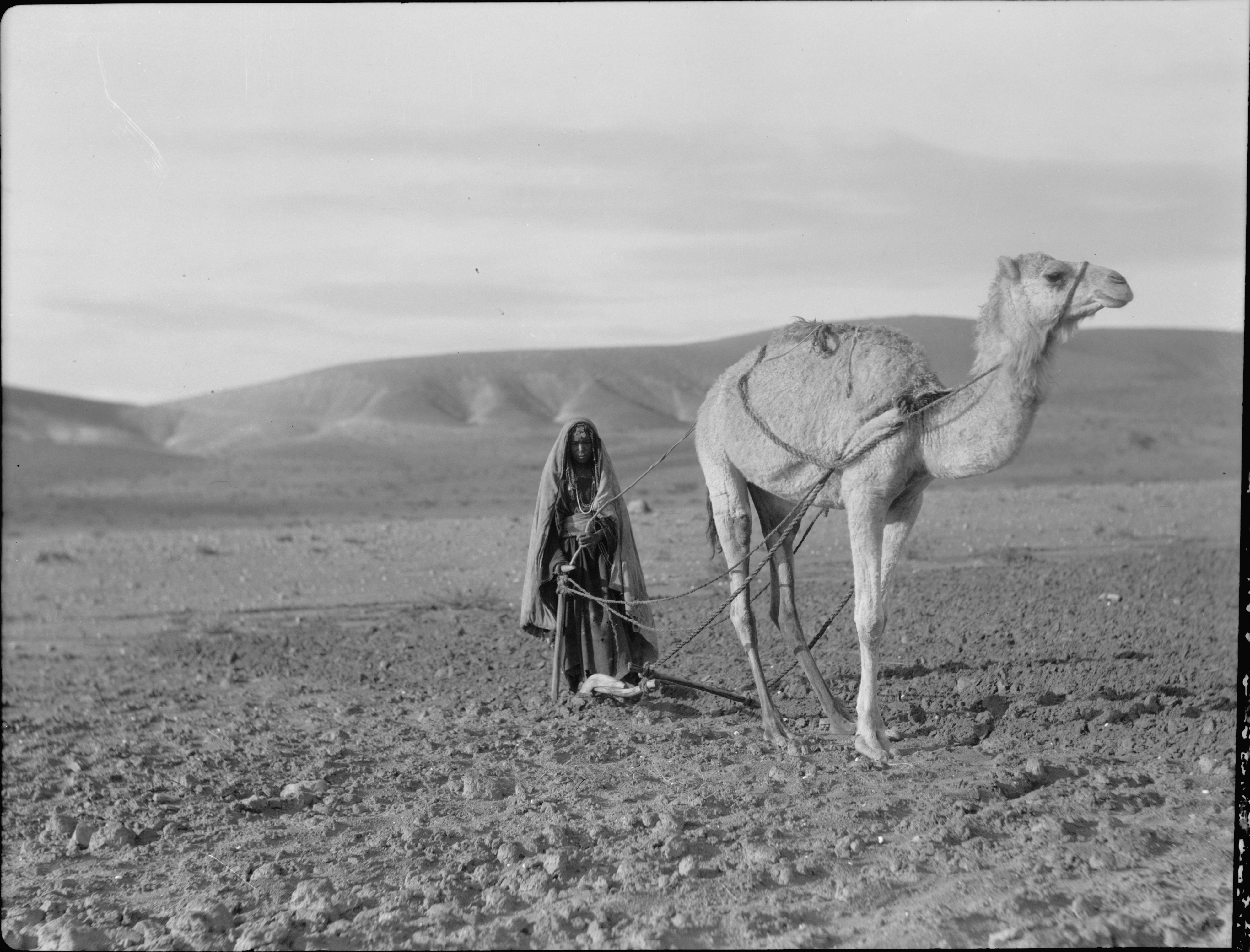
Ploughing with a camel near Beersheba, approximately 1920–1933.
American Colony (Jerusalem). Photo Department / G. Eric and Edith Matson Photograph Collection, Library of Congress (matpc.15528) · No known restrictions on publication · Original recordImage changes
Display copies resized; original downloaded JPEG preserved.
The words
Abel
Abel keeps sheep and brings the firstborn of his flock as an offering; Cain later kills him in the field.
Genesis 4:2–4 (opens a new tab) · Genesis 4:8 (opens a new tab)
Brother
God asks Cain where his brother Abel is; Cain answers that he does not know, then questions his responsibility.
Cain
Cain tills the ground and brings its produce as an offering. After his offering is rejected, he kills his brother Abel.
Genesis 4:2–5 (opens a new tab) · Genesis 4:8 (opens a new tab)
Countenance
Cain’s face falls when his offering is not accepted; God then asks why he is angry and downcast.
Did you know?
Numbers pairs God’s shining face with his lifted countenance, using the word in a blessing that asks for peace.
Genesis 4:5–6 (opens a new tab) · Numbers 6:25–26 (opens a new tab)
Firstlings
The firstborn young of livestock.
Abel selects these animals from his flock for his offering; Genesis also mentions their fat and God’s acceptance of the gift.
Did you know?
Deuteronomy later sets apart firstborn males from both herd and flock, forbidding work with the firstborn bullock or shearing the firstborn sheep.
Genesis 4:4 (opens a new tab) · Deuteronomy 15:19 (opens a new tab) · Strong’s H1062 (firstborn) (opens a new tab)
Flock
Abel tends sheep, and his offering comes from that flock; Cain’s offering instead comes from the ground he tills.
Did you know?
Rachel also keeps sheep in Genesis: she arrives with her father’s animals, another example of tending flocks in the book.
Genesis 4:2–4 (opens a new tab) · Genesis 29:9 (opens a new tab)
Fugitive
After Cain kills Abel, God says the ground will withhold its strength and Cain will become a fugitive.
Genesis 4:8 (opens a new tab) · Genesis 4:12 (opens a new tab)
Keeper
Cain asks whether he must look after Abel, even though he has killed him; the question answers God’s inquiry about his brother.
Did you know?
Psalm 121 calls the LORD a keeper who neither slumbers nor sleeps, giving the word a protective sense in a different setting.
Genesis 4:8–9 (opens a new tab) · Psalm 121:4–5 (opens a new tab)
Land of Nod
After leaving God’s presence, Cain settles in the land of Nod, which Genesis places to the east of Eden.
Did you know?
Strong’s connects Nod with wandering, echoing the unsettled life described earlier in Cain’s sentence in the same chapter.
Genesis 4:16 (opens a new tab) · Strong’s H5113 (Nod) (opens a new tab)
Mark
God places a mark on Cain to protect him from anyone who might kill him; the verse does not describe its appearance.
Punishment
Cain says his punishment is more than he can bear, then describes exile from the land and fear of being killed.
Sevenfold
God warns that anyone who kills Cain will face sevenfold vengeance, then gives Cain a protective mark.
Slew
The past tense of slay: killed.
The KJV uses this word when Cain attacks Abel in the field and kills him; the victim is his own brother.
Genesis 4:8 (opens a new tab) · Webster’s 1828: slay (opens a new tab)
Tiller
Cain’s work ties him to the ground: he cultivates it, brings its produce as an offering, then loses its yield.
Genesis 4:2–3 (opens a new tab) · Genesis 4:12 (opens a new tab)
Vagabond
A wanderer without a settled home.
God’s sentence pairs this word with fugitive; Cain repeats both when he describes the unsettled life he expects to lead.
Genesis 4:12 (opens a new tab) · Genesis 4:14 (opens a new tab) · Genesis 4:12 (ASV) (opens a new tab)
Sources
- Genesis 4:2-4 (King James Version)King James Version, passage navigation via Bible Gateway
- Genesis 4:8 (King James Version)King James Version, passage navigation via Bible Gateway
- Genesis 4:9 (King James Version)King James Version, passage navigation via Bible Gateway
- Genesis 4:2-5 (King James Version)King James Version, passage navigation via Bible Gateway
- Genesis 4:5-6 (King James Version)King James Version, passage navigation via Bible Gateway
- Numbers 6:25-26 (King James Version)King James Version, passage navigation via Bible Gateway
- Strong’s Hebrew 1062: bekorahBible Hub
- Genesis 4:4 (King James Version)King James Version, passage navigation via Bible Gateway
- Deuteronomy 15:19 (King James Version)King James Version, passage navigation via Bible Gateway
- Genesis 29:9 (King James Version)King James Version, passage navigation via Bible Gateway
- Genesis 4:12 (King James Version)King James Version, passage navigation via Bible Gateway
- Genesis 4:8-9 (King James Version)King James Version, passage navigation via Bible Gateway
- Psalm 121:4-5 (King James Version)King James Version, passage navigation via Bible Gateway
- Strong’s Hebrew 5113: NodBible Hub
- Genesis 4:16 (King James Version)King James Version, passage navigation via Bible Gateway
- Genesis 4:15 (King James Version)King James Version, passage navigation via Bible Gateway
- Genesis 4:13-14 (King James Version)King James Version, passage navigation via Bible Gateway
- SlayWebster’s Dictionary 1828
- Genesis 4:2-3 (King James Version)King James Version, passage navigation via Bible Gateway
- Genesis 4:12 (American Standard Version)American Standard Version, passage navigation via Bible Gateway
- Genesis 4:14 (King James Version)King James Version, passage navigation via Bible Gateway