
America’s National Parks
Puzzle 07 · Northeast and Appalachians · Page 19 in print
Mammoth Cave
Stephen Bishop, an enslaved African American man who guided at Mammoth Cave from 1838, crossed the Bottomless Pit and opened many miles of the cave to exploration.
Jump to a word
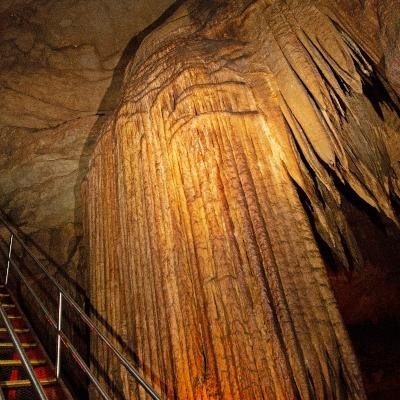
Frozen Niagara shows how flowstone can drape a cave wall.
NPS Photo/ Deb Spillman · Public domain (U.S. federal government work) · Original recordImage changes
Resized and converted to JPEG for display; no subject alteration.
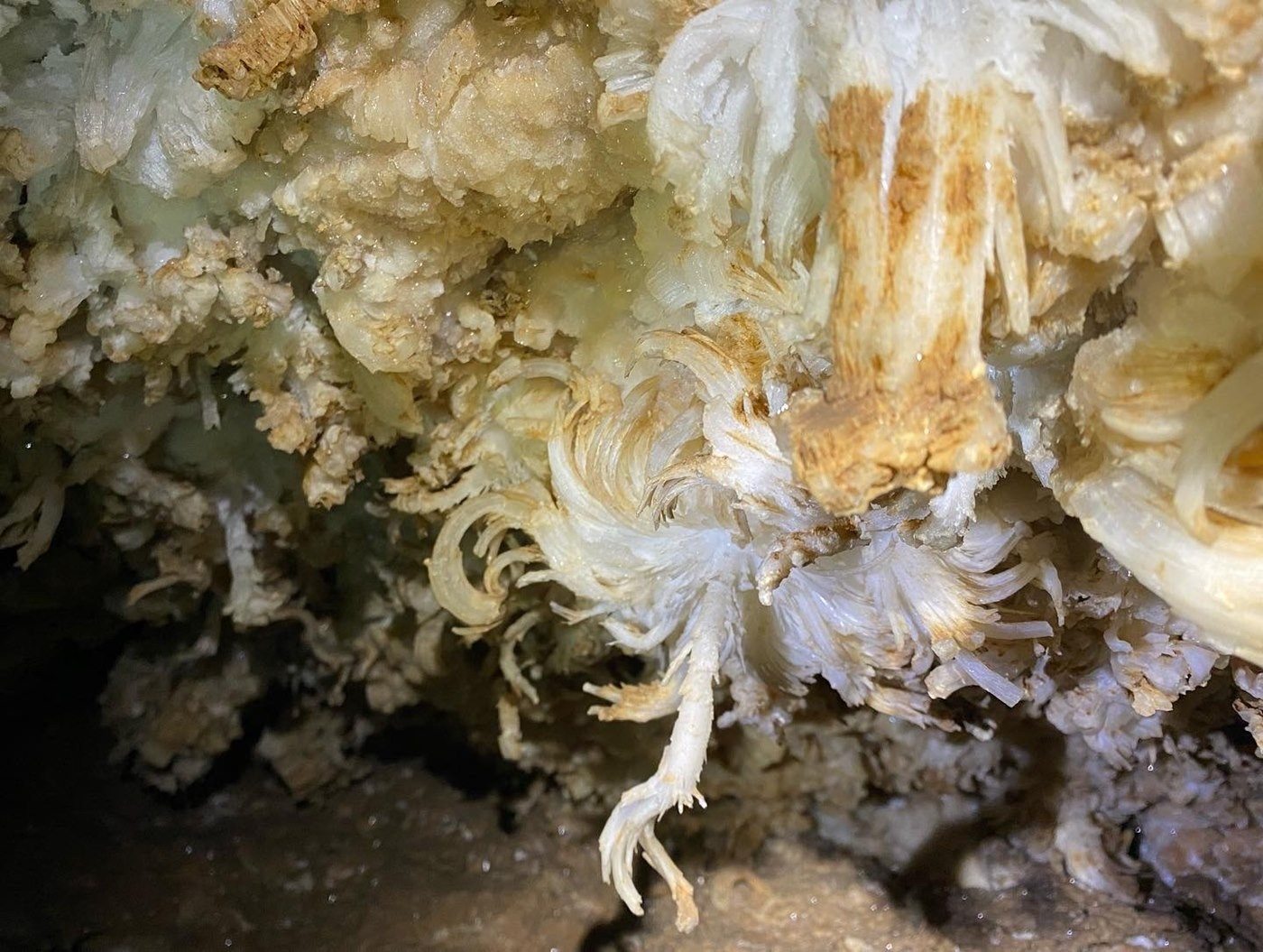
Delicate gypsum flowers in Mammoth Cave's New Discovery section.
NPS Photo/ Thomas DiGiovannangelo · Public domain (U.S. federal government work) · Original recordImage changes
Resized and converted to JPEG for display; no subject alteration.
The words
Cavefish
Northern and southern cavefish live in Mammoth Cave’s underground waters. Adapted to darkness, they lack normal eyes and coloring; sensory structures on their skin help them navigate.
Did you know?
Female northern cavefish shelter their eggs inside their gill cavities, continuing to carry the young after hatching.
Echo River
Echo River is an underground waterway that Stephen Bishop crossed in 1840. It later became a tourist route; the park’s timeline records the last Echo River Tour in 1992.
Did you know?
In 1938, Echo River became the setting for the first radio broadcast made from inside Mammoth Cave.
Flint Ridge
On September 9, 1972, six explorers connected the Flint Ridge and Mammoth Cave Ridge systems. Their underground route established that passages beneath the two ridges belonged to one cave system.
Frozen Niagara
Frozen Niagara is a curtain-like formation of flowstone, sheets of calcium carbonate deposited along a cave wall. Its downward-hanging layers resemble the shape of a waterfall.
Green River
The Green River flows through the park above ground, supporting fish, freshwater mussels and river otters. Underground rivers also drain into it, connecting the cave with the surface landscape.
Park Service: River and cave wildlife (opens a new tab) · Park Service: How the cave formed (opens a new tab)
Gypsum Flowers
In dry cave passages, white gypsum crystals push outward from the rock. When some crystals grow faster than others, they form curling, flower-like shapes rather than an even crust.
Karst
A landscape shaped by dissolving bedrock, often with caves, sinkholes, sinking streams and springs.
At Mammoth Cave, rainwater enters cracks and dissolves limestone, enlarging underground passages. This connected landscape carries water from the surface into the cave, so surface pollution can also affect life underground.
Park Service: How the cave formed (opens a new tab) · Park Service: Karst landscapes (opens a new tab)
Leaching Vats
Large containers used to separate soluble material from cave soil with water.
Large wooden vats remain from Mammoth Cave’s early saltpeter industry. Enslaved African American men did much of the mining work, hauling and sifting cave dirt during long hours in poor conditions.
Mammoth Dome
Mammoth Dome is a vertical shaft more than 190 feet (58 m) tall. Such shafts form where water follows upright cracks downward through layers of limestone.
River Styx
River Styx flows at the cave’s underground river level. Like other cave waterways, it belongs to a drainage system that carries water through limestone passages and out to the Green River.
Rotunda
The Rotunda holds remains of saltpeter vats and a pump tower. These industrial traces record the cave’s mining past, when enslaved African American men supplied much of the labor.
Park Service: Rotunda and geologic maps (opens a new tab) · Park Service: Saltpeter mining history (opens a new tab)
Saltpeter
Potassium nitrate, historically used as an ingredient in black gunpowder.
Demand for Mammoth Cave’s saltpeter rose during the War of 1812, when British blockades restricted gunpowder imports. The industry depended heavily on enslaved African American men working underground.
Snowball Room
White, rounded balls of gypsum cover the ceiling of Snowball Room and give the chamber its name. These mineral deposits belong to the cave’s dry-area formations rather than its dripping calcite features.
Star Chamber
Pale specks against Star Chamber’s dark ceiling create the illusion of a night sky. The Park Service explains that earlier visitors exposed bright patches by knocking away soot-covered gypsum.
Did you know?
Ralph Waldo Emerson wrote about Star Chamber’s apparent night sky in his 1857 essay Illusions.
Stephen Bishop
Bishop began guiding while enslaved and became known for his knowledge of geology and the cave’s passages. After gaining his freedom, he continued at Mammoth Cave as a paid guide.
Did you know?
During an 1842 visit to Louisville, Bishop drew the explored cave passages from memory; the map was later published with credit to him.
Sources
- Viewing Park Wildlife - Mammoth Cave National ParkNational Park Service
- Timeline - Mammoth Cave National ParkNational Park Service
- Stalactites, Stalagmites, and Cave Formations - Mammoth Cave National ParkNational Park Service
- Geologic Maps in Action—Promote EducationNational Park Service
- Fish - Mammoth Cave National ParkNational Park Service
- How Mammoth Cave Formed - Mammoth Cave National ParkNational Park Service
- Karst LandscapesNational Park Service
- From Dirt to GunpowderNational Park Service
- Star Chamber - Beneath Your FeetNational Park Service
- Stephen BishopNational Park Service