
America’s National Parks
Puzzle 59 · California · Page 85 in print
Sequoia and Kings Canyon
Moro Rock, a large granite dome, looms thousands of feet above the highway as visitors enter Sequoia National Park. A concrete and stone stairway climbs more than 350 steps to its top.
Jump to a word
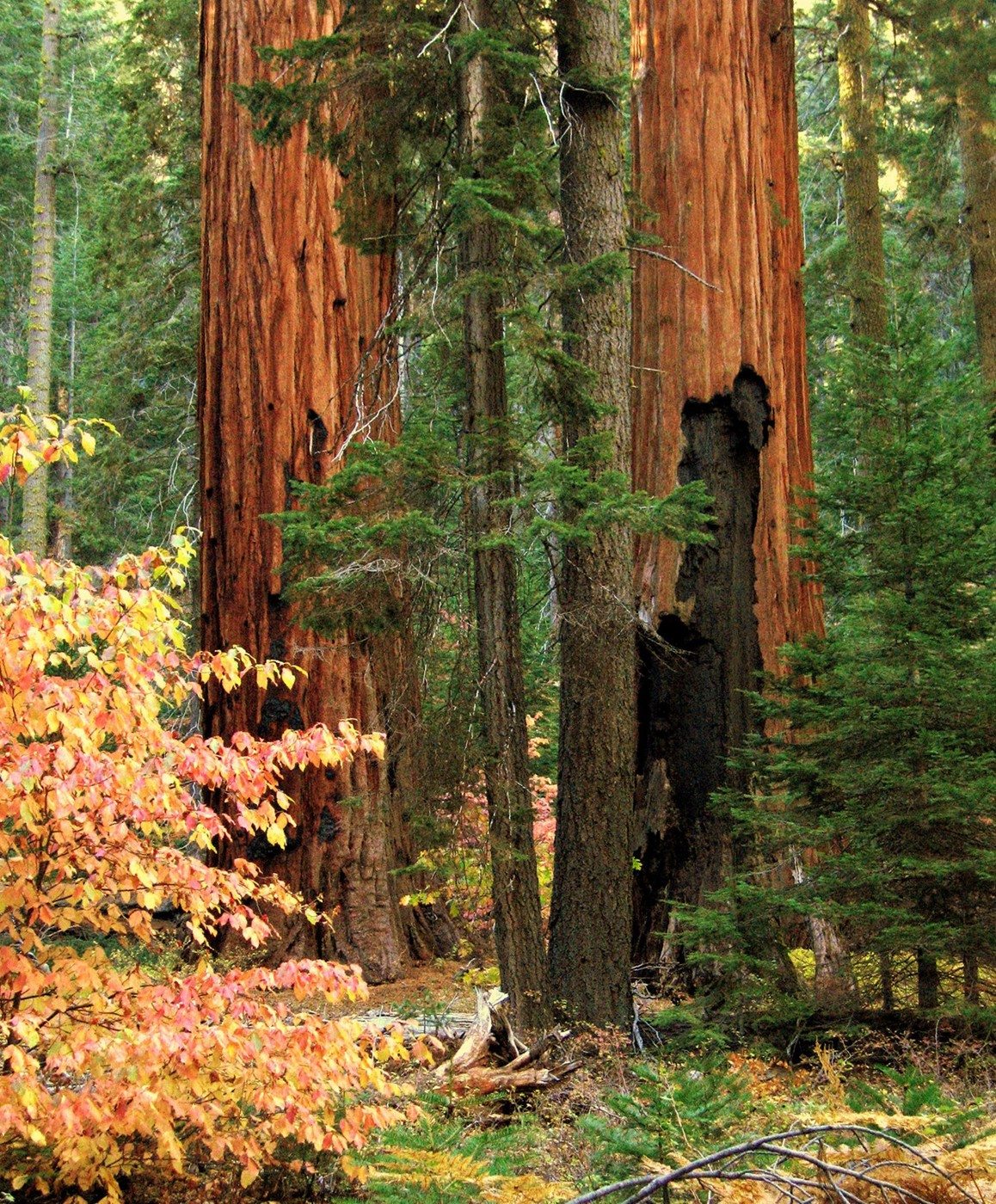
Giant sequoias in Redwood Mountain Grove.
NPS Photo - Anthony Caprio · Public domain (U.S. federal government work) · Original recordImage changes
Resized and converted to JPEG for display; no subject alteration.
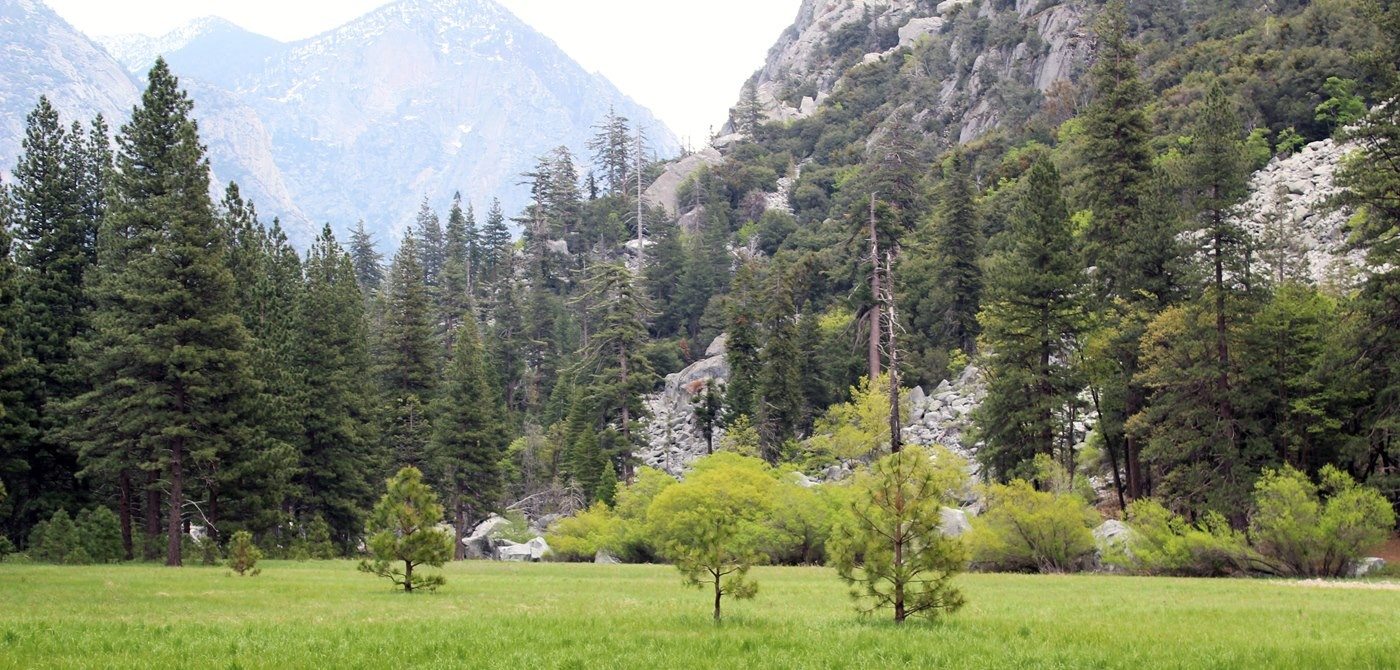
Zumwalt Meadow and the granite walls of Kings Canyon.
NPS Photo · Public domain (U.S. federal government work) · Original recordImage changes
Resized and converted to JPEG for display; no subject alteration.
The words
Big Stump
Big Stump Grove, the former logging site retaining old-growth stumps and regenerated young sequoias.
Cedar Grove
Cedar Grove, the Kings Canyon area with trails along the Kings River.
Charles Young
Captain Charles Young, the officer who became acting park superintendent in summer 1903.
Crystal Cave
Crystal Cave, the Sequoia marble cavern with fragile formations.
Fire Scar
A fire scar, the dated injury record left on a tree after it survives and heals from fire.
General Grant
The General Grant Tree, the Grant Grove sequoia celebrated as the nation’s Christmas tree.
Giant Forest
Giant Forest, the large unlogged sequoia grove between forks of the Kaweah River.
Giant Sequoia
Giant sequoia, the enormous tree with distinctive red-orange bark in these forests.
Kaweah
The Kaweah River, whose snowmelt-fed Marble Fork flows through Lodgepole Campground.
Kings River
The Kings River, whose South Fork runs through the Cedar Grove canyon.
Mineral King
Mineral King, the Sequoia destination linked to Giant Forest by a trail improved during Young’s tenure.
Moro Rock
Moro Rock, the large granite dome above the road entering Sequoia National Park.
Sherman Tree
The General Sherman Tree, the Giant Forest sequoia described as the world’s largest tree by volume.
Sugar Pine
Sugar pine, a conifer found with giant sequoias in these park groves.
Tunnel Log
Tunnel Log, the fallen giant sequoia cut with a drive-through tunnel on Crescent Meadow Road.
Sources
- Exploring Giant Sequoia Groves - Sequoia & Kings Canyon National ParksNational Park Service
- Cedar Grove Trails - Sequoia & Kings Canyon National ParksNational Park Service
- Brigadier General Charles Young, Early Park Superintendent - Sequoia & Kings Canyon National ParksNational Park Service
- Crystal Cave - Sequoia & Kings Canyon National ParksNational Park Service
- Giant Sequoias and Fire - Sequoia & Kings Canyon National ParksNational Park Service
- Giant Sequoias - Sequoia & Kings Canyon National ParksNational Park Service
- Giant Forest and Lodgepole - Sequoia & Kings Canyon National ParksNational Park Service
- Cedar Grove - Sequoia & Kings Canyon National ParksNational Park Service
- Moro Rock & Other Granite Domes - Sequoia & Kings Canyon National ParksNational Park Service
- The Myth of the Tree You Can Drive Through - Sequoia & Kings Canyon National ParksNational Park Service