
America’s National Parks
Puzzle 04 · Northeast and Appalachians · Page 16 in print
Blue Ridge Parkway
Construction of the Blue Ridge Parkway began in 1935 near Cumberland Knob, North Carolina, and the Linn Cove Viaduct, built from the top down to protect the mountainside, completed the 469-mile route in 1987.
Jump to a word
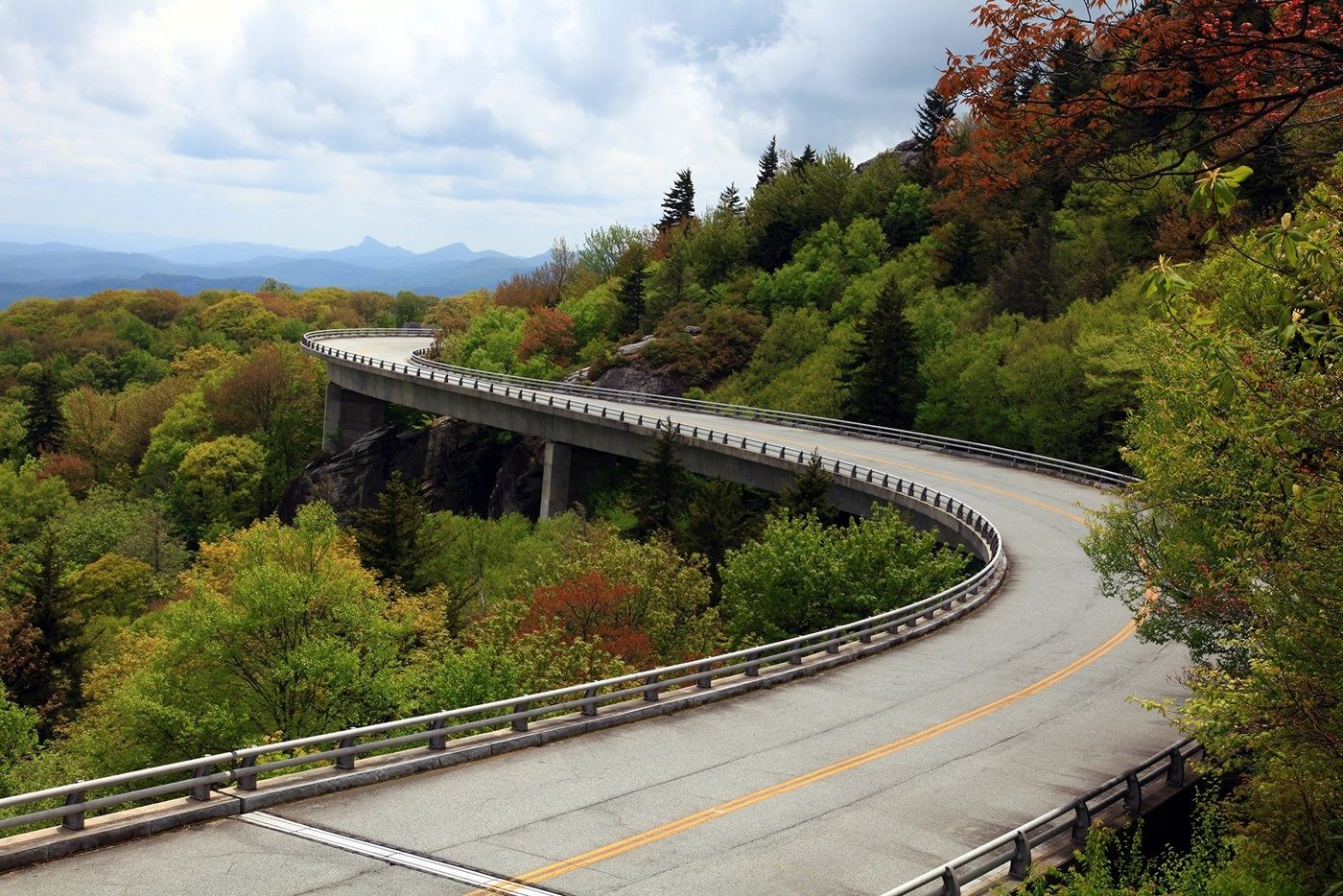
The Linn Cove Viaduct follows the mountain's contours.
NPS photo · Public domain (U.S. federal government work) · Original recordImage changes
Resized and converted to JPEG for display; no subject alteration.
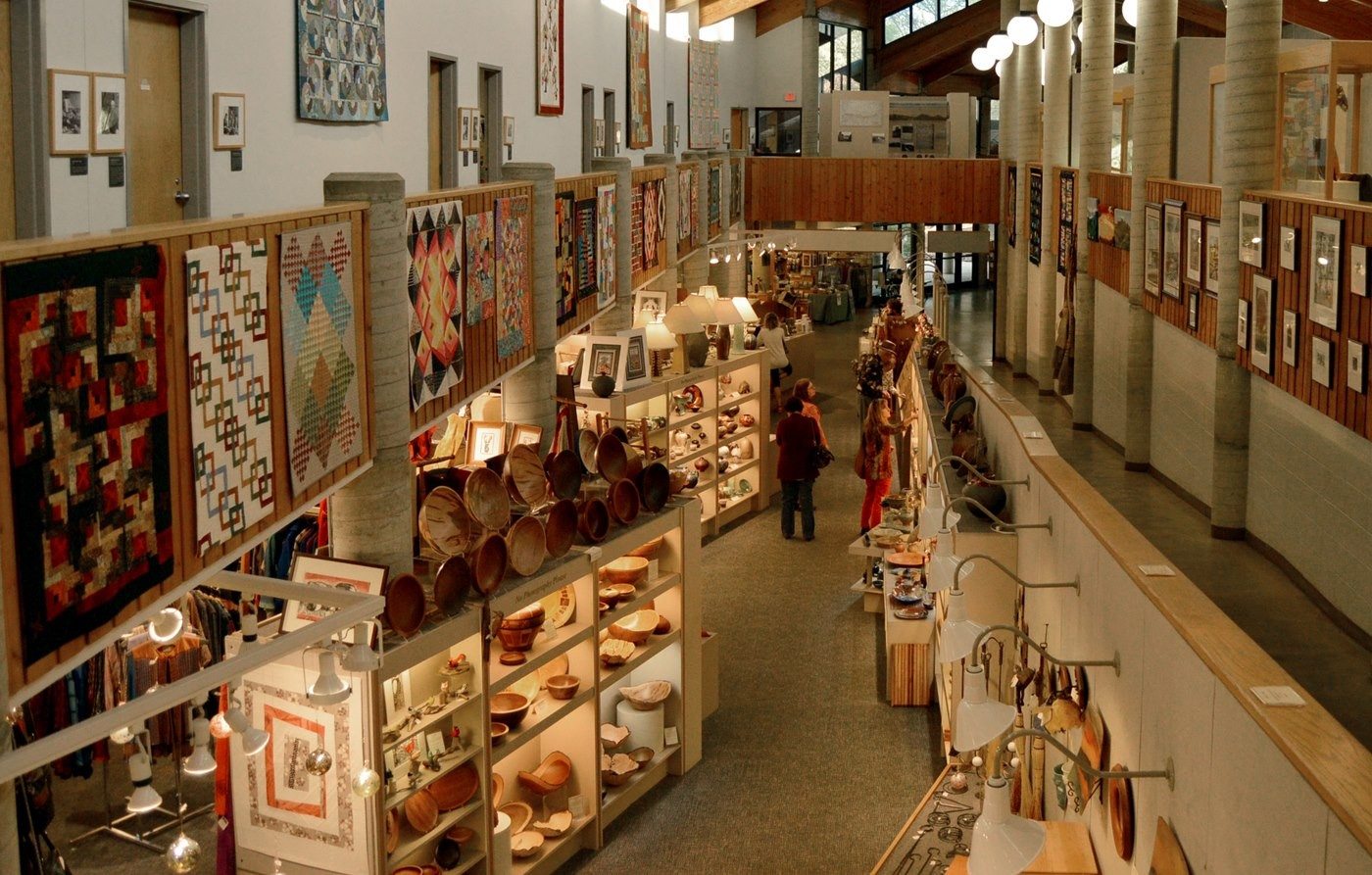
The Folk Art Center connects the parkway with Appalachian craft.
NPS Photo · Public domain (U.S. federal government work) · Original recordImage changes
Resized and converted to JPEG for display; no subject alteration.
The words
Bluegrass
Bluegrass shares the region’s musical landscape with old-time string bands and ballad singing. The Parkway’s Blue Ridge Music Center presents this heritage through exhibits and performances.
Craggy Gardens
At Craggy Gardens, rhododendron thickets and gnarled trees reflect the conditions of the high mountains. Shrub-covered areas called heath balds shape the landscape along its trails.
Doughton Park
At Doughton Park, ridgetop meadows and steep mountainsides surround Brinegar Cabin. The cabin interprets mountain families who lived off the land and sold homemade goods for cash.
Did you know?
In 1949, the Bluffs Restaurant became the Parkway’s first dining establishment, according to the Park Service.
Folk Art Center
The center showcases traditional and contemporary Southern Appalachian crafts. Its galleries, library and Allanstand Craft Shop connect the Parkway’s landscapes with the region’s makers.
Did you know?
The Southern Highland Craft Guild was founded in 1930, during the Great Depression, to unite local artisans and help them sell their work.
Humpback Rocks
Humpback Rocks combines a mountain outcrop with an outdoor farm museum. Its historic buildings were gathered from nearby locations to portray Appalachian farm life in the 1890s.
Linn Cove
Linn Cove is the boulder-strewn setting on Grandfather Mountain around which the Parkway’s concrete bridge curves. Its sweeping S-shaped route helped avoid extensive cutting and filling on the slope.
Did you know?
Of the viaduct’s 153 concrete segments, only the southernmost is straight; the others form the sweeping curve around Grandfather Mountain.
Linville Falls
The Linville River begins high on Grandfather Mountain and drops through the falls into a steep gorge. Hemlocks, rhododendrons and native wildflowers grow along the surrounding trails.
Mabry Mill
Ed and Lizzy Mabry ground corn, sawed lumber and operated a blacksmith shop here. Their water-powered mill preserves the linked trades that supported a rural Appalachian community.
Milepost
Concrete mileposts form the Parkway’s location system, starting at 0 near Shenandoah National Park in Virginia and ending at 469 at Great Smoky Mountains National Park in North Carolina.
Moses Cone
Textile manufacturer Moses Cone and his wife, Bertha, created Flat Top Manor as a summer estate. Its carriage roads were designed for both pleasure drives and work across the property.
Mount Pisgah
Forests of trees that shed their leaves surround Mount Pisgah’s prominent peak. At this elevation, clouds, fog and cooler summer temperatures distinguish the area from the valleys below.
Peaks of Otter
These Virginia peaks drew tourists during the 1800s, when residents opened homes and lodges to guests. Polly Wood’s Ordinary, an early tavern, preserves part of that hospitality.
Rockfish Gap
At Rockfish Gap, the Parkway meets Skyline Drive, linking its northern end with Shenandoah’s ridge-top route through Virginia.
Did you know?
The stretch from Jarman Gap to Rockfish Gap was built as part of the Blue Ridge Parkway, then transferred to Shenandoah National Park in 1961.
Park Service: Skyline Drive history (opens a new tab) · Park Service: Parkway mileposts (opens a new tab)
Viaduct
A raised roadway carried on a series of supports.
At Linn Cove, precast concrete sections were joined into an elevated road deck. Builders worked from the deck itself, limiting the need for heavy machinery on the slope below.
Waterrock Knob
Waterrock Knob’s high setting offers long views across several Appalachian mountain chains. The surrounding region of North Carolina is home to the Eastern Band of Cherokee Indians.
Sources
- Blue Ridge Music - Blue Ridge ParkwayNational Park Service
- National Park Service Selects the Southern Highland Craft Guild to Operate Visitor Services at the Folk Art Center - Blue Ridge ParkwayNational Park Service
- Linville Falls - Milepost 316 - Blue Ridge ParkwayNational Park Service
- Mabry MillNational Park Service
- The Greatest Single FeatureNational Park Service
- History of the Linn Cove Viaduct - Blue Ridge ParkwayNational Park Service
- Waterrock Knob - Milepost 451.2 - Blue Ridge ParkwayNational Park Service
- Craggy Gardens Hiking Trails - Blue Ridge ParkwayNational Park Service
- Doughton Park - Milepost 241 - Blue Ridge ParkwayNational Park Service
- Humpback Rocks - Milepost 5.8 - Blue Ridge ParkwayNational Park Service
- Moses ConeNational Park Service
- Mount Pisgah AreaNational Park Service
- Peaks of Otter - Milepost 85.6 - Blue Ridge ParkwayNational Park Service
- Top 10 Things to Know Before You GoNational Park Service