
America’s National Parks
Puzzle 25 · The Great Plains · Page 43 in print
Badlands
The Badlands erode at an estimated one inch per year, while the granite of the Black Hills to the west erodes one inch every ten thousand years.
Jump to a word
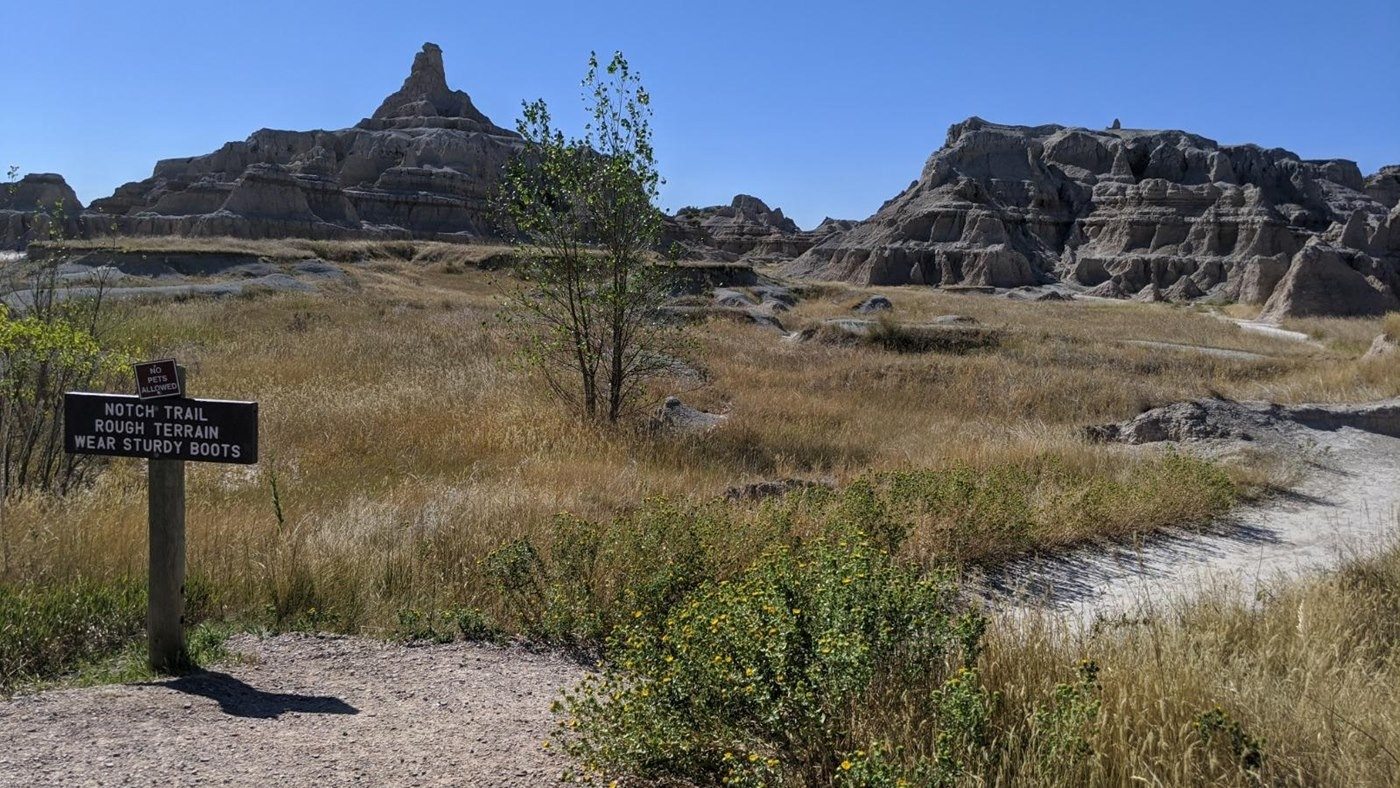
The Notch Trail passes through Badlands rock formations.
NPS Photo / Earl Perez-Foust · Public domain (U.S. federal government work) · Original recordImage changes
Resized and converted to JPEG for display; no subject alteration.
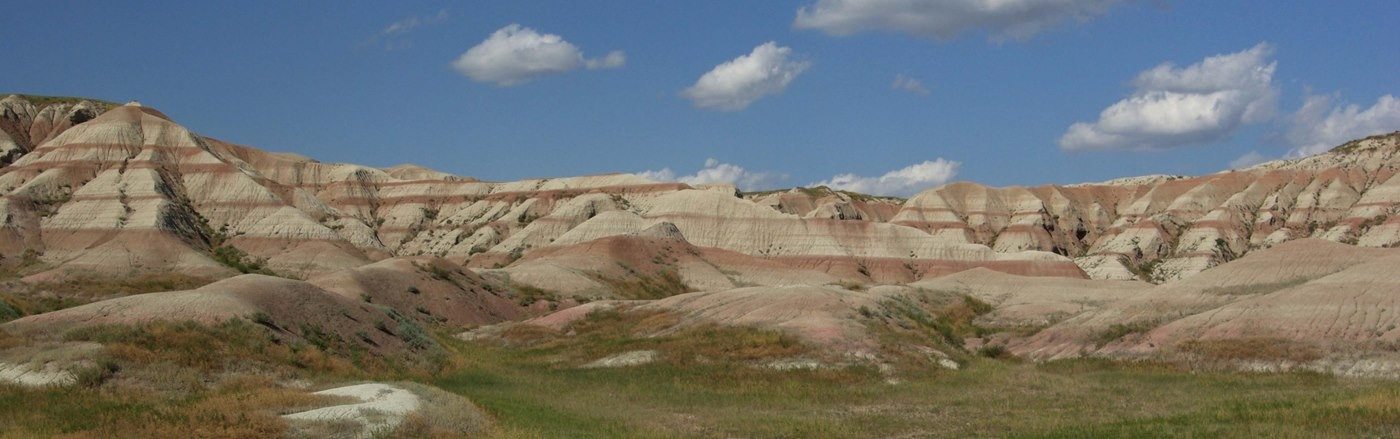
Layered Badlands buttes preserve a long geological record.
NPS Photo · Public domain (U.S. federal government work) · Original recordImage changes
Resized and converted to JPEG for display; no subject alteration.
The words
Badlands
Badlands, the eroded landscape protected by the national park.
Big Pig Dig
Big Pig Dig, the long-running fossil excavation in the park.
Bighorn
Bighorn sheep, a species found in the park.
Cedar Pass
Cedar Pass, the eastern visitor area of the park.
Door Trail
Door Trail, a hiking trail through the park’s rock formations.
Ferret
The black-footed ferret, a prairie mammal in the park.
Mako Sica
Mako sica, the Lakota name meaning bad lands.
Notch Trail
Notch Trail, the hiking trail known for its log ladder.
Oligocene
The Oligocene, a geological epoch represented by the park's mammal fossils.
Oreodont
An oreodont, an extinct mammal preserved in the park's fossil deposits.
Pierre Shale
Pierre Shale, the marine sedimentary layer in the park's geological record.
Sage Creek
Sage Creek, the western campground and prairie area.
Swift Fox
The swift fox, the small prairie fox studied and restored at Badlands.
White River
White River, the river whose suspended silt gives it its name.
Yellow Mounds
Yellow Mounds, the yellow geological formations near Dillon Pass.
Sources
- Accessible Brochures - Badlands National ParkNational Park Service
- Geology & Paleontology - Badlands National ParkNational Park Service
- Notch TrailheadNational Park Service
- Teacher Background Information: Swift Fox TimelineNational Park Service