
America’s National Parks
Puzzle 19 · Great Lakes and Ozarks · Page 35 in print
Indiana Dunes
Hoosier Slide, a 200-foot dune that was the largest on Indiana’s lakeshore, was carried away in railroad boxcars by the Ball Brothers of Muncie, makers of glass fruit jars, and the Pittsburgh Plate Glass Company of Kokomo.
Jump to a word
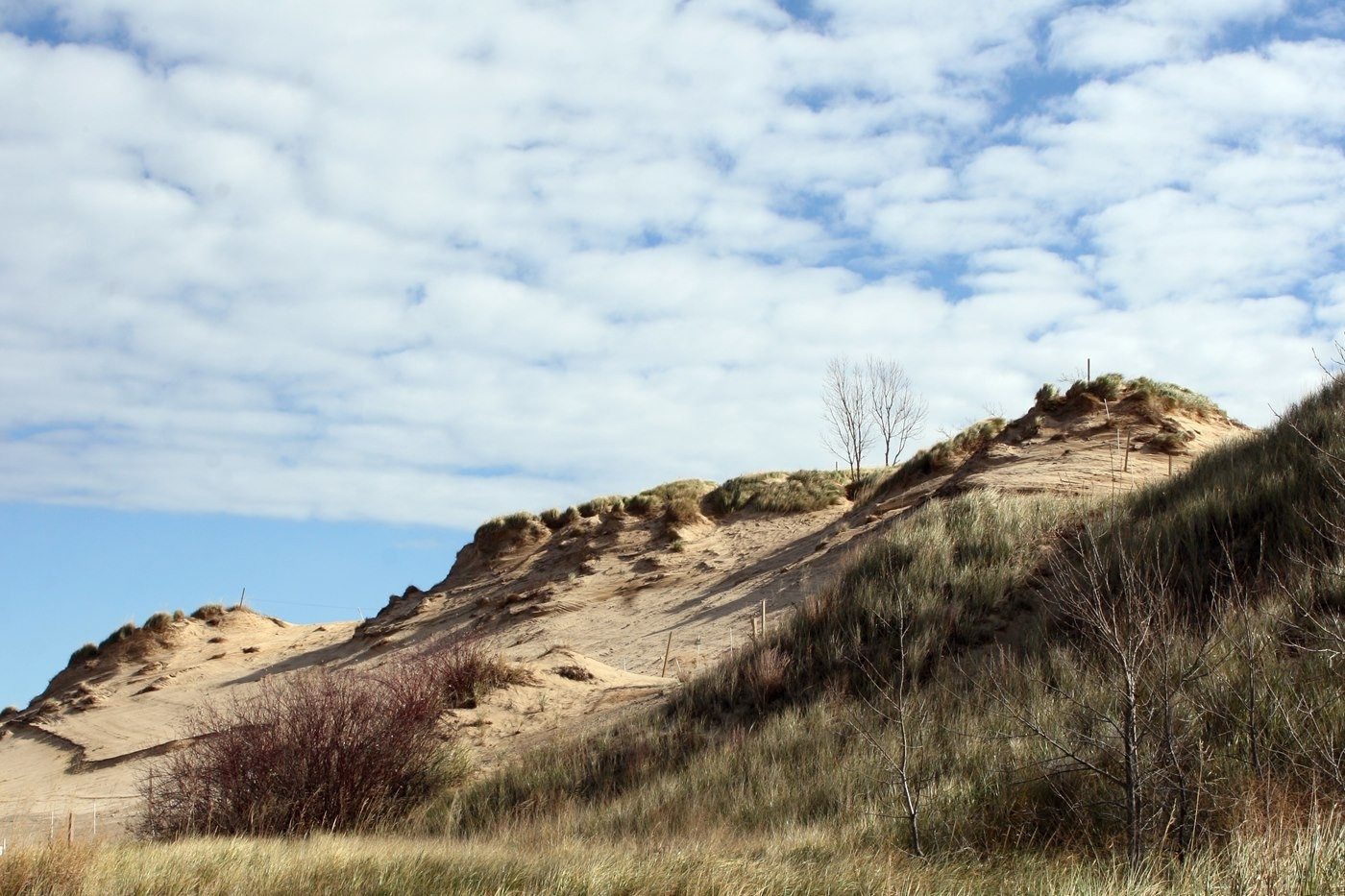
Mount Baldy rises above Indiana's Lake Michigan shore.
NPS / K. George · Public domain (U.S. federal government work) · Original recordImage changes
Resized and converted to JPEG for display; no subject alteration.
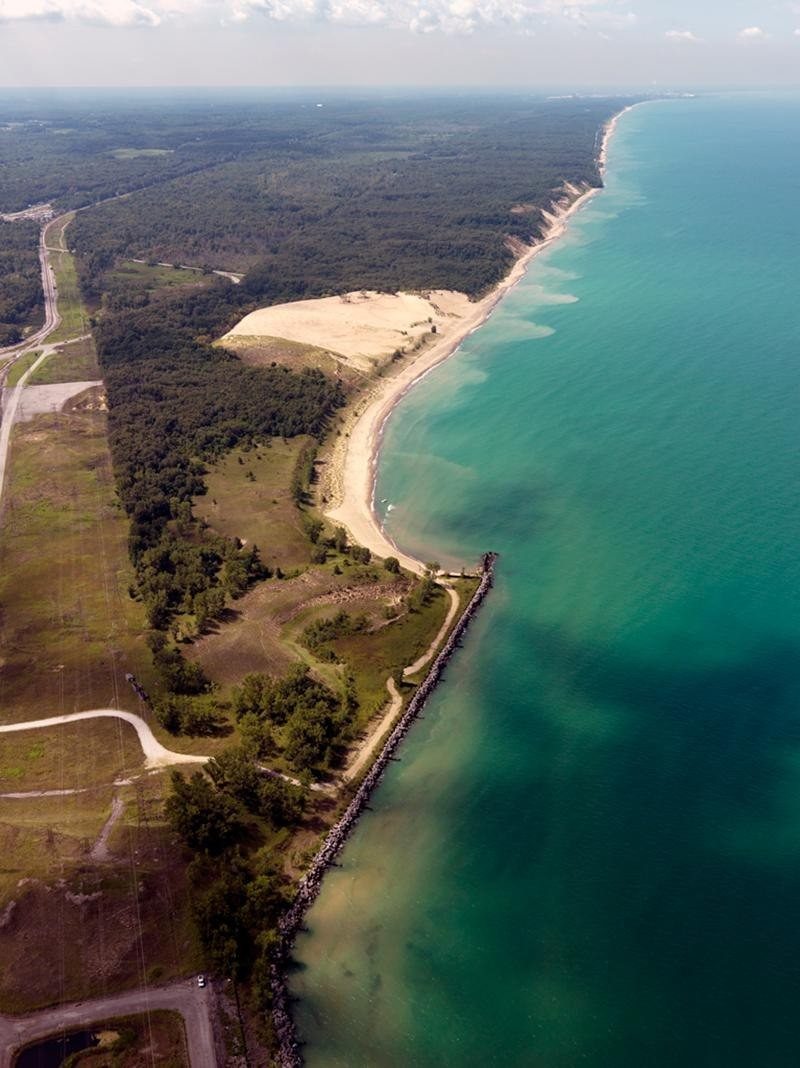
An aerial view of the Mount Baldy area.
NPS · Public domain (U.S. federal government work) · Original recordImage changes
Resized and converted to JPEG for display; no subject alteration.
The words
Chellberg Farm
Chellberg Farm preserves the home of a Swedish immigrant family in the Baillytown community. Three generations lived and farmed here, linking the dunes landscape with the region’s agricultural and immigrant history.
Did you know?
The farmhouse’s red bricks came from nearby Porter brickyards, where local glacial clay supplied the building material.
Cowles Bog
The Cowles Bog area combines ponds, marshes, swamps, black oak savannas and beaches. This variety of habitats helped make it a field laboratory for Henry Cowles’s early studies of plant ecology.
Dorothy Buell
Dorothy Buell organized the Save the Dunes Council in 1952 and rallied support for national protection. Her campaign linked local residents, scientists and politicians in efforts to preserve the remaining lakeshore.
Did you know?
Council members carried Frank Dudley’s dune paintings to Washington to help make the case for protecting the lakeshore.
Henry Cowles
Henry Cowles used the dunes to investigate how plant communities change over time. His 1899 study brought international attention to this lakeshore and helped establish plant ecology as a scientific field.
Heron Rookery
Heron Rookery’s woodland follows the Little Calumet River, supporting kingfishers, woodpeckers and warblers. Spring flowers such as trillium and Dutchman’s breeches bloom before the trees fully leaf out.
Did you know?
The area once held more than 100 great blue heron nests; after about sixty years of nesting, the colony moved elsewhere.
Indiana Dunes
Indiana Dunes protects part of Lake Michigan’s southern shore after a long struggle between industrial development and preservation. Congress established the national lakeshore in 1966 and changed its name to national park in 2019.
Karner Blue
Karner blue caterpillars depend on wild lupine. In 2012, extreme heat and drought deepened the decline of Indiana’s butterflies, illustrating how closely their survival is tied to habitat and weather.
Park Service: Karner blue climate response (opens a new tab) · Fish & Wildlife Service: Lupine and Karners (opens a new tab)
Lupine
Wild blue lupine grows in open oak savannas and pine barrens. Its leaves are the only food for Karner blue caterpillars, so conservation work must protect the plant as well as the butterfly.
Fish & Wildlife Service: Lupine and Karners (opens a new tab)
Mount Baldy
Mount Baldy’s moving sand buries older ground and trees. Research following a child’s rescue in 2013 identified cavities left by decaying buried trunks, revealing a hidden part of the dune’s changing structure.
Octave Chanute
In 1896, Octave Chanute brought a team of inventors and flight enthusiasts to the Indiana Dunes. Steady lake winds and sandy landing places made the shoreline a testing ground for their gliders.
Park Service: Chanute’s glider experiments (opens a new tab)
Pinhook Bog
Pinhook Bog began in a depression left by melting glacial ice. Isolated from groundwater, its water became acidic, allowing sphagnum moss to form floating mats that support orchids and insect-eating plants.
Potawatomi
Potawatomi communities lived along southern Lake Michigan. The Park Service describes treaty land losses and forced removal westward, while also recording families who remained in the region.
Singing Sands
The 2026–27 Singing Sands guide includes national and state park maps, trail information and beach activities. It also explains the difference between the neighboring parks and provides an accessibility section.
Park Service: Singing Sands guide (2026–27) (opens a new tab)
Succession
Gradual change in the species making up a natural community.
At the dunes, early plants trap sand while later shrubs add shade and organic matter. These changes make conditions suitable for different plants, gradually transforming the community and its soil.
Park Service: Changing dune plant habitats (opens a new tab)
West Beach
West Beach’s Dune Succession Trail connects the beach with older, vegetated dunes. Marram grass, shrubs, pines and oaks show different stages and conditions in the lakeshore’s changing plant communities.
Did you know?
Jack pines and low-growing bearberries are remnants of the cooler conditions that followed the retreat of the glaciers.
Park Service: Changing dune plant habitats (opens a new tab)
Sources
- Plant Succession - Indiana Dunes National ParkNational Park Service
- History & Culture - Indiana Dunes National ParkNational Park Service
- Cowles Bog Trail - Indiana Dunes National ParkNational Park Service
- Heron Rookery Trail - Indiana Dunes National ParkNational Park Service
- Resisting, accepting, and directing change in parksNational Park Service
- Mount Baldy Restoration - Indiana Dunes National ParkNational Park Service
- Experiments in Flight: The Albatross - Indiana Dunes National ParkNational Park Service
- Pinhook Bog Trails - Indiana Dunes National ParkNational Park Service
- Indigenous Peoples and Early Settlement - Indiana Dunes National ParkNational Park Service
- Chellberg FarmNational Park Service
- Dorothy BuellNational Park Service
- Park Newspaper - The Singing SandsNational Park Service
- Recovering the Karner Blue ButterflyU.S. Fish & Wildlife Service