
The Life of Jesus
Puzzle 09 · The Nativity · Page 23 in print
Simeon and Anna
At the temple, Simeon and Anna recognize the child; the account joins family observance to long expectation.
Jump to a word
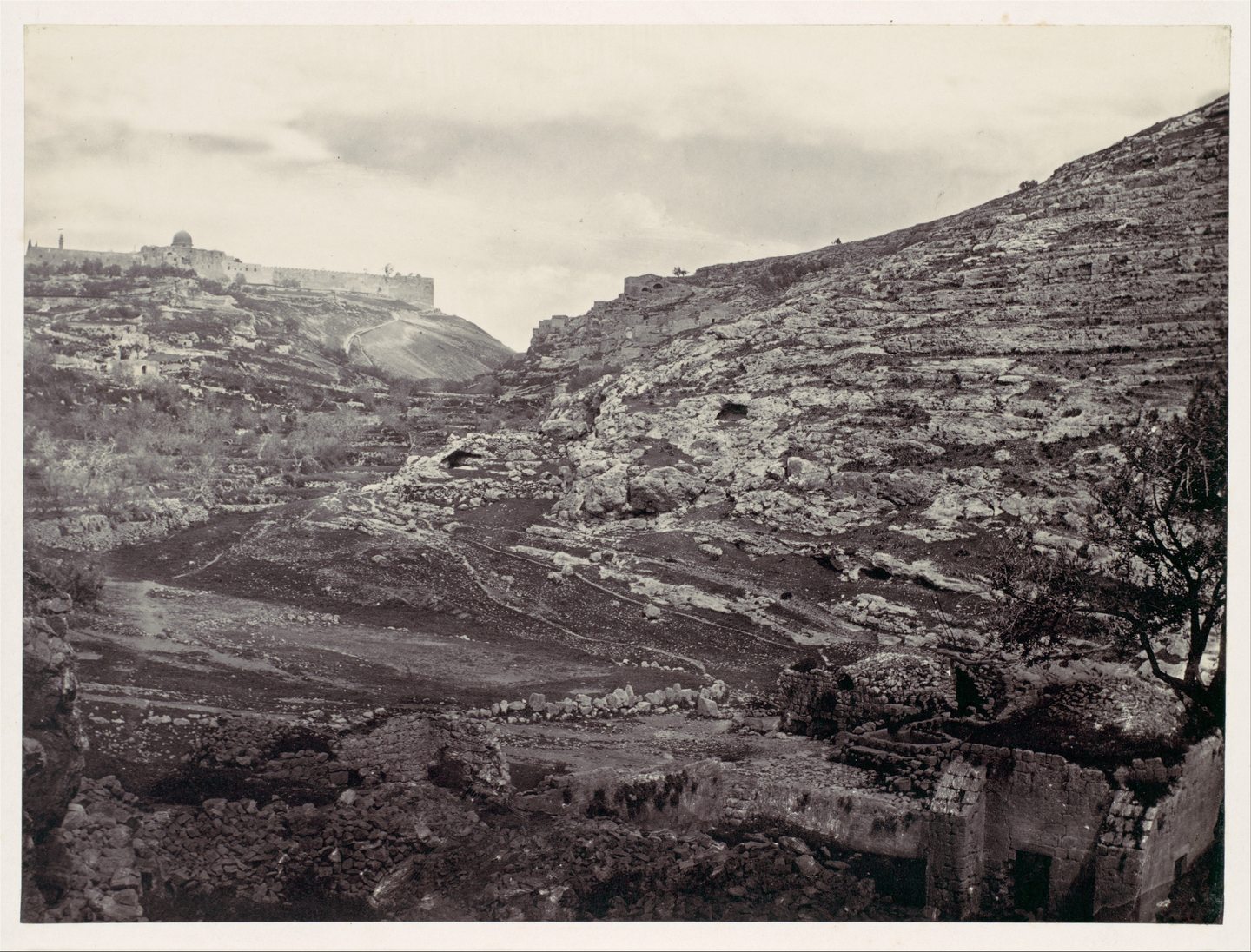
Mount Moriah, Jerusalem, from the Well of En Rogel.
This later city view gives geographical context for the temple setting; it does not show Simeon and Anna’s temple.
Francis Frith · CC0 1.0 · Original recordImage changes
Resized proportionally to at most 1440px and JPEG compressed; no crop or content alteration.
The words
Anna
Luke introduces Anna as a prophetess, then says she comes at that moment, gives thanks to the Lord and speaks to those awaiting redemption in Jerusalem.
Aser
Asher, in the NET’s spelling.
Luke places Anna in the tribe of Aser, naming her father Phanuel before turning to her years of marriage and widowhood.
Did you know?
Genesis 49:20 gives Asher a short saying about bread and “royal dainties,” within Jacob’s words addressed to his gathered sons.
Luke 2:36–37 (opens a new tab) · NET Bible: Luke 2:36-38 (opens a new tab) · Genesis 49:1–2 (opens a new tab) · Genesis 49:20 (opens a new tab)
Consolation
Restoration, in the NET’s rendering of Simeon’s hope.
Luke describes Simeon as just and devout, waiting for the consolation of Israel; he later comes by the Spirit into the temple as Jesus’s parents arrive.
Luke 2:25–27 (opens a new tab) · NET Bible: Luke 2:21-28 (opens a new tab)
Fastings
Luke describes Anna’s service as “fastings and prayers night and day”; she then comes at that moment, gives thanks and speaks about the child.
Fourscore
Luke calls Anna a widow of “about fourscore and four years.” The NET’s note says the eighty-four years may describe either her age or her widowhood.
Luke 2:37 (opens a new tab) · NET Bible: Luke 2:36-38 (opens a new tab)
Gentiles
Simeon’s words join light for the Gentiles with glory for Israel, after he speaks of salvation prepared before the face of all people.
Did you know?
Isaiah 49:6 also joins “light to the Gentiles” with salvation reaching “unto the end of the earth,” alongside the restoration of Israel.
Luke 2:30–32 (opens a new tab) · Isaiah 49:6 (opens a new tab)
Phanuel
Penuel, in the NIV’s spelling.
Luke identifies Anna as the daughter of Phanuel and links her family to the tribe of Aser before describing her marriage and widowhood.
Luke 2:36–37 (opens a new tab) · NIV: Luke 2:36 (opens a new tab)
Pigeons
Luke gives the offering as a pair of turtledoves or two young pigeons, using the bird alternatives named in Leviticus 12.
Luke 2:24 (opens a new tab) · Leviticus 12:8 (opens a new tab)
Prophetess
A woman prophet; the NIV calls Anna a prophet.
Luke names Anna as a prophetess before describing her temple service; her words about the child reach those looking for redemption in Jerusalem.
Luke 2:36–38 (opens a new tab) · NIV: Luke 2:36 (opens a new tab)
Purification
Luke places the family’s journey to Jerusalem after the days of purification, describing the presentation of the child to the Lord and an offering under the law.
Salvation
Simeon’s words “mine eyes have seen thy salvation” follow his taking the child into his arms and blessing God.
Simeon
Luke says the Spirit leads Simeon into the temple, where he takes Jesus into his arms and blesses God as the parents bring the child.
Did you know?
A Vatican text prepared in 2025 describes Simeon’s canticle as a prayer at day’s end; its traditional name, Nunc dimittis, comes from the Latin opening.
Luke 2:27–28 (opens a new tab) · Luke 2:29–32 (opens a new tab) · NET Bible: Luke 2:29-35 (opens a new tab) · Vatican: Simeon’s canticle (opens a new tab)
Sword
Simeon tells Mary “a sword shall pierce through thy own soul also,” within his words about the child being spoken against and thoughts being revealed.
Turtledoves
Turtledoves appear as a pair in Luke’s quotation of the offering rule; two young pigeons are the other option listed in the same verse.
Widow
Luke describes Anna’s seven years of marriage and subsequent widowhood, then places her fasting, prayer and thanksgiving within the temple scene.
Sources
- Luke 2:21-28 (King James Version)King James Version, passage navigation via Bible Gateway
- Luke 2:29-35 (King James Version)King James Version, passage navigation via Bible Gateway
- Luke 2:36-38 (King James Version)King James Version, passage navigation via Bible Gateway
- Luke 2:21-28 (NET Bible), translation and notesNET Bible, via Bible Gateway
- Luke 2:29-35 (NET Bible), translation and notesNET Bible, via Bible Gateway
- Luke 2:36-38 (NET Bible), translation and notesNET Bible, via Bible Gateway
- Leviticus 12:6-8 (King James Version)King James Version, passage navigation via Bible Gateway
- Genesis 49:1-2 (King James Version)King James Version, passage navigation via Bible Gateway
- Genesis 49:20 (King James Version)King James Version, passage navigation via Bible Gateway
- Isaiah 49:1-6 (King James Version)King James Version, passage navigation via Bible Gateway
- Luke 2:36 (New International Version)New International Version, via Bible Gateway
- Catechesis prepared for the General Audience of February 26, 2025: the presentation of Jesus at the TempleThe Holy See, Dicastery for Communication