
The Life of Jesus
Puzzle 65 · Called to Follow · Page 94 in print
Sending the Seventy
Jesus sends seventy in pairs and later receives their joyful report, placing their work within dependence on God.
Jump to a word
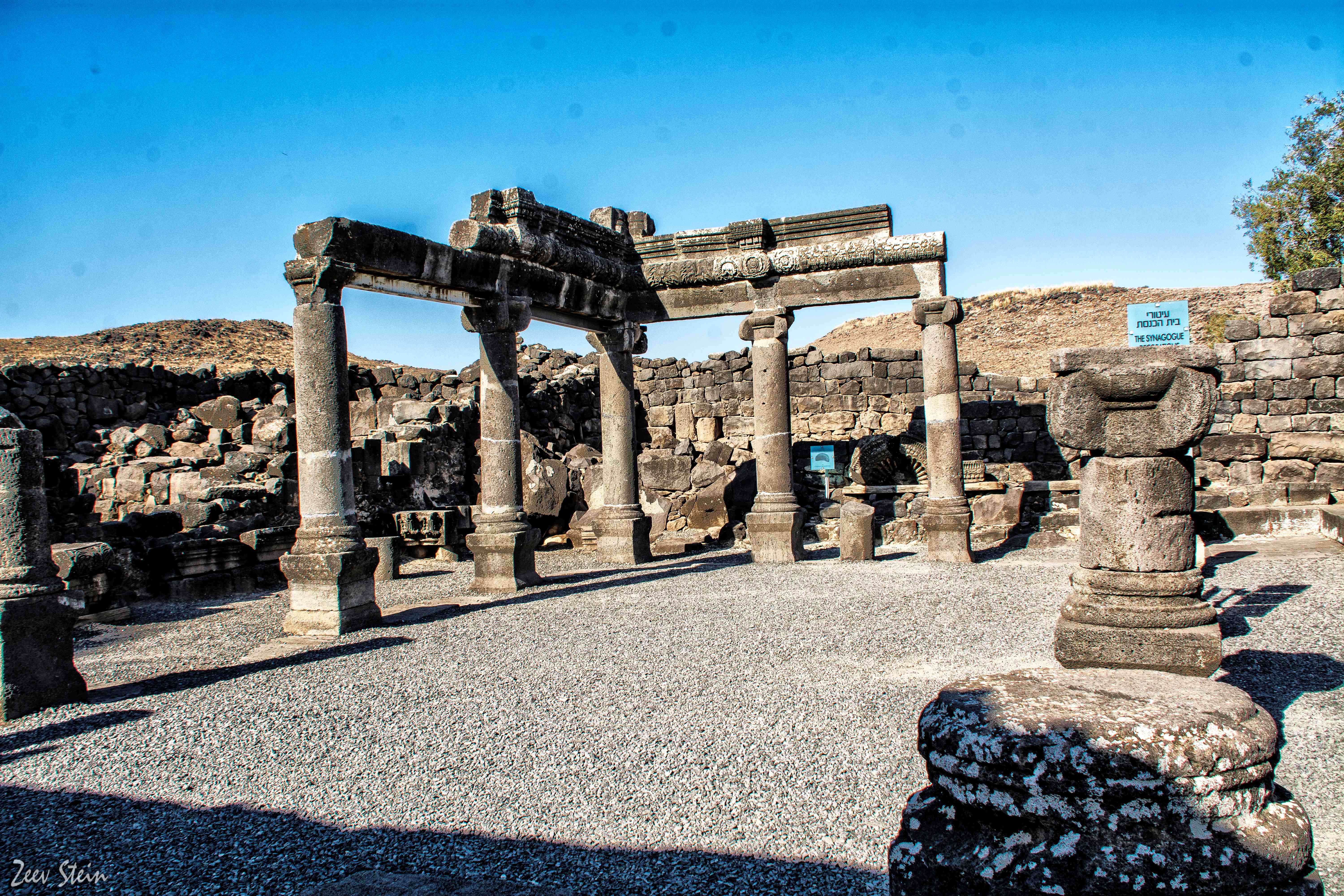
Ruins of the later synagogue at Chorazin, photographed November 26, 2016.
Zeev Stein / Pikiwiki Israel / Wikimedia Commons · CC BY 2.5 · Original recordImage changes
Display copies resized; original downloaded JPEG preserved.
The words
Appointed
Selected and commissioned.
In the KJV, the Lord appoints seventy others and sends them in pairs ahead of him to the places he intends to visit. The mission begins with a harvest image and a request for workers.
Did you know?
Numbers 11:16–17 also describes a group of seventy: Moses is to gather elders who will help bear the people’s burden, rather than leaving him to carry it alone.
Luke 10:1–2 (opens a new tab) · Numbers 11:16–17 (opens a new tab)
Ashes
Jesus says Tyre and Sidon would have repented in sackcloth and ashes if the mighty works done in Chorazin and Bethsaida had happened there. The ashes belong to that hypothetical response.
Babes
Little children; the NET also notes a childlike sense.
In his thanksgiving to the Father, Jesus contrasts things hidden from the wise and prudent with things revealed to babes. The NET says little children and also notes the childlike sense.
Luke 10:21 (opens a new tab) · NET Bible: Luke 10:1-24 (opens a new tab)
Chorazin
Jesus pronounces woe on Chorazin and Bethsaida, comparing the mighty works done there with what Tyre and Sidon would have received. He says those other cities would have repented long ago.
Cleaveth
Clings; sticks to.
Cleaveth describes a rejecting town’s dust sticking to the messengers. Jesus tells them to go into the streets and announce that they wipe it off, while still declaring the kingdom of God has come near.
Luke 10:10–11 (opens a new tab) · NET Bible: Luke 10:1-24 (opens a new tab)
Hire
Pay; wages for labor.
Jesus tells the messengers to remain in the same house and eat and drink what the hosts provide, explaining that the laborer is worthy of hire. The NET renders hire as pay.
Luke 10:7 (opens a new tab) · NET Bible: Luke 10:1-24 (opens a new tab)
Lambs
Jesus describes sending the messengers as lambs among wolves. The next instructions concern traveling without purse, bag or shoes, offering peace to a household and remaining where they are received.
Lightning
After the messengers joyfully report that demons submit through his name, Jesus says he beheld Satan fall from heaven like lightning. He then speaks of authority and redirects their rejoicing toward names written in heaven.
Prudent
Intelligent, in the NET’s wording here.
Prudent is paired with wise in Jesus’s thanksgiving about what the Father has hidden and revealed. The NET uses intelligent; the contrast with babes belongs to the prayer’s description of revelation.
Luke 10:21 (opens a new tab) · NET Bible: Luke 10:1-24 (opens a new tab)
Sackcloth
Mourning cloth, in this repentance image.
Sackcloth appears with ashes in the response Jesus says Tyre and Sidon would have made to mighty works. The NET note describes the clothing and ashes as a public sign of mourning or lament.
Luke 10:13 (opens a new tab) · NET Bible: Luke 10:1-24 (opens a new tab)
Scorpions
Jesus names serpents and scorpions in the saying about authority over the enemy. He then tells the messengers to rejoice that their names are written in heaven, rather than in the spirits’ submission.
Seventy
The KJV reads seventy and the NET seventy-two. The NET note calls this a difficult textual problem and records manuscript support for both numbers; the difference appears at both the departure and return.
Luke 10:1, 17 (opens a new tab) · NET Bible: Luke 10:1-24 (opens a new tab)
Sodom
Jesus says judgment will be more tolerable for Sodom than for a town that refuses the messengers. This warning follows the instructions to announce rejection by wiping off the town’s dust.
Two and Two
In pairs; two people together.
The Lord sends the messengers in pairs ahead of him to each place he intends to visit. Their instructions include a greeting of peace, staying in one house and announcing the kingdom of God.
Wipe
For a town that refuses to receive them, Jesus tells the messengers to go into its streets and declare that they wipe off its dust. They must still announce that God’s kingdom has come near.
Sources
- Luke 10:1-24 (King James Version)King James Version, passage navigation via Bible Gateway
- Luke 10:1-24 (NET Bible), translation and notesNET Bible, via Bible Gateway
- Numbers 11:16-17 (King James Version)King James Version, passage navigation via Bible Gateway