
The Life of Jesus
Puzzle 64 · Called to Follow · Page 93 in print
The Charge to the Twelve
The Twelve receive instructions for travel, hospitality and courage, with small everyday things used to speak of God’s care.
Jump to a word
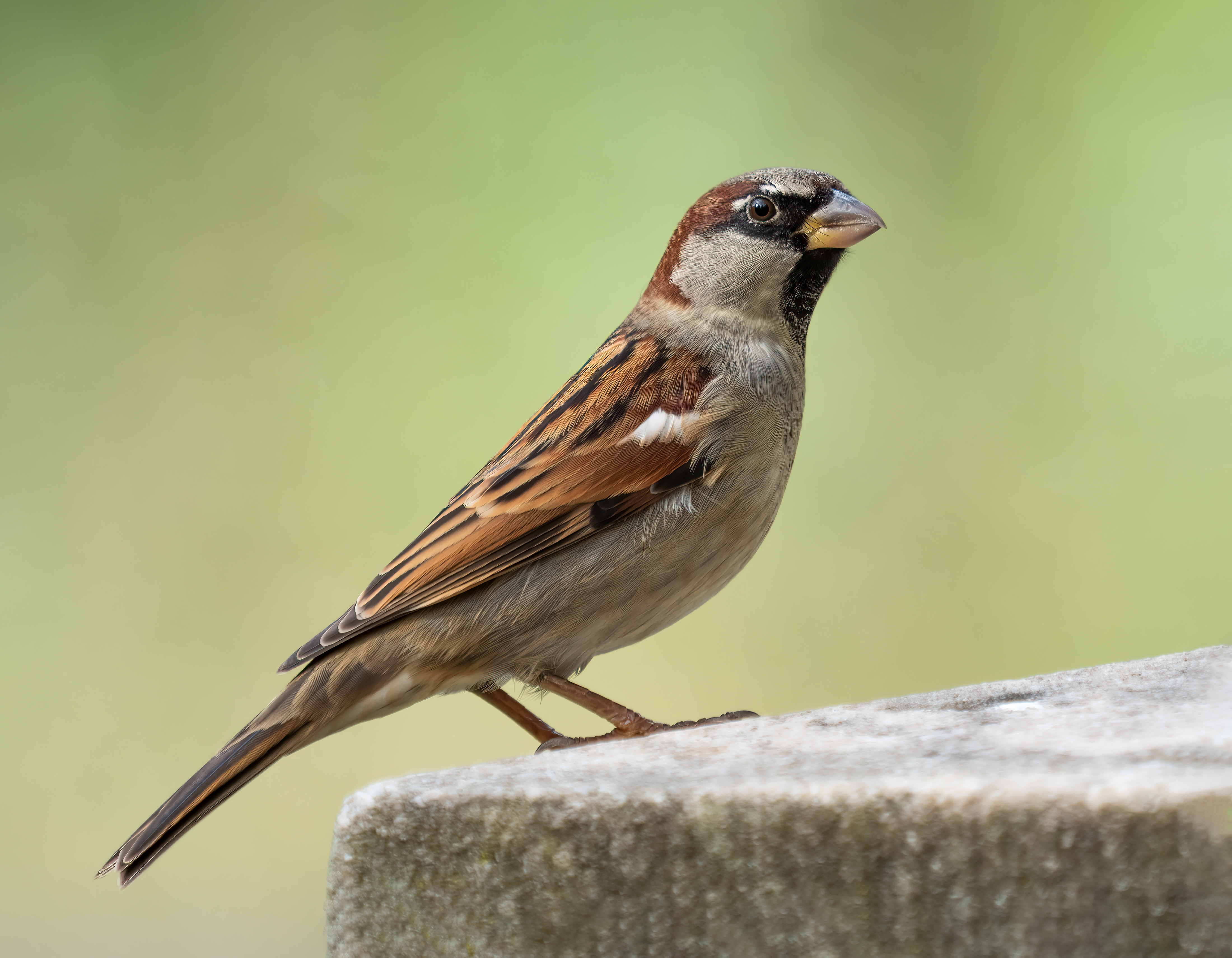
Male house sparrow in Prospect Park, photographed November 5, 2022.
Rhododendrites / Wikimedia Commons · CC BY-SA 4.0 · Original recordImage changes
Display copies resized; original downloaded JPEG preserved.
The words
Beelzebub
Name used for the ruler of demons.
Jesus compares a household’s treatment with its master’s: if the master is called Beelzebub, the household can expect worse. Matthew elsewhere quotes Pharisees calling Beelzebub the prince of the devils.
Matthew 10:24–25 (opens a new tab) · Matthew 12:24 (opens a new tab)
Brass
Copper money, in this passage.
Brass appears with gold and silver in Matthew’s instruction not to carry money in their purses. The NET renders the metal as copper; the next verse links the journey’s provisions with the worker’s food.
Matthew 10:9–10 (opens a new tab) · NET Bible: Matthew 10:1-23 (opens a new tab)
Cold Water
Matthew closes with Jesus’s saying about giving a cup of cold water to one of these little ones “in the name of a disciple.” He says the giver will not lose the reward.
Councils
Local courts or judicial bodies here.
Jesus warns the disciples of being handed over to councils and scourged in synagogues, then of being brought before governors and kings. The NET note explains councils here as local judicial bodies.
Matthew 10:17–18 (opens a new tab) · NET Bible: Matthew 10:1-23 (opens a new tab)
Farthing
A small Roman copper coin; the assarion.
Matthew’s example prices two sparrows at a farthing before speaking of the Father’s attention to them. The NET note identifies the coin as an assarion, a small Roman copper coin worth one-sixteenth of a denarius.
Matthew 10:29 (opens a new tab) · NET Bible: Matthew 10:24-42 (opens a new tab)
Gomorrha
The KJV spelling of Gomorrah.
Jesus compares a town that rejects the messengers with Sodom and Gomorrha, saying judgment will be more tolerable for those cities. The NET spells the second city’s name Gomorrah.
Matthew 10:14–15 (opens a new tab) · NET Bible: Matthew 10:1-23 (opens a new tab)
Harmless
Innocent, in the NET’s wording here.
Jesus compares the disciples’ mission to sheep among wolves and pairs the wisdom of serpents with the harmlessness of doves. The NET renders the dove comparison as innocent, within the warning about opposition.
Matthew 10:16–17 (opens a new tab) · NET Bible: Matthew 10:1-23 (opens a new tab)
Housetops
Jesus contrasts what is spoken in darkness or heard privately with proclamation from the housetops. The NET note explains this as an expression for proclaiming something publicly.
Did you know?
Peter also prays on a housetop in Acts 10:9. The narrative places this around the sixth hour, as travelers are nearing the city.
Matthew 10:27 (opens a new tab) · NET Bible: Matthew 10:24-42 (opens a new tab) · Acts 10:9 (opens a new tab)
Numbered
After speaking of sparrows, Jesus says even the hairs of the disciples’ heads are numbered. He then tells them not to fear and says they are of more value than many sparrows.
Purses
Money containers, rendered belts by the NET.
Matthew names purses as the place where gold, silver or copper would be carried and tells the disciples not to provide that money. The NET’s wording places the money in belts.
Matthew 10:9 (opens a new tab) · NET Bible: Matthew 10:1-23 (opens a new tab)
Scourge
Whip; flog as a punishment.
Jesus warns of being handed over to councils and being scourged in synagogues, then of appearances before governors and kings. The NET renders scourge as flog, naming a threatened physical punishment.
Matthew 10:17–18 (opens a new tab) · NET Bible: Matthew 10:1-23 (opens a new tab)
Scrip
A bag carried on a journey.
The scrip is among the supplies Luke says the Twelve should not take on their journey, alongside staff, bread and money. The NET renders it as a bag; the next instruction concerns staying in a house.
Luke 9:3–4 (opens a new tab) · NET Bible: Luke 9:1-6 (opens a new tab)
Sparrows
Jesus speaks of two sparrows sold for a farthing and says not one falls to the ground without the Father. He follows this with the numbered hairs and the disciples’ greater value than many sparrows.
Staves
Staffs carried on a journey.
Matthew and Luke prohibit a staff among the journey’s supplies; Mark permits a staff while forbidding bread, bag and money. The NET note explicitly acknowledges these different instructions.
Matthew 10:10 (opens a new tab) · Luke 9:3 (opens a new tab) · Mark 6:8 (opens a new tab) · NET Bible: Mark 6:7-13 (opens a new tab)
Workman
Worker; laborer.
The workman appears in Matthew’s explanation of the travel instructions: the worker is worthy of food. The NET uses provisions, and Matthew next directs the disciples to find a suitable host and stay there.
Matthew 10:10–11 (opens a new tab) · NET Bible: Matthew 10:1-23 (opens a new tab)
Sources
- Matthew 10:1-23 (King James Version)King James Version, passage navigation via Bible Gateway
- Matthew 10:24-42 (King James Version)King James Version, passage navigation via Bible Gateway
- Luke 9:1-6 (King James Version)King James Version, passage navigation via Bible Gateway
- Mark 6:7-13 (King James Version)King James Version, passage navigation via Bible Gateway
- Matthew 10:1-23 (NET Bible), translation and notesNET Bible, via Bible Gateway
- Matthew 10:24-42 (NET Bible), translation and notesNET Bible, via Bible Gateway
- Luke 9:1-6 (NET Bible), translation and notesNET Bible, via Bible Gateway
- Mark 6:7-13 (NET Bible), translation and notesNET Bible, via Bible Gateway
- Acts 10:9 (King James Version)King James Version, passage navigation via Bible Gateway
- Matthew 12:22-28 (King James Version)King James Version, passage navigation via Bible Gateway