
The Life of Jesus
Puzzle 57 · Stories Jesus Told · Page 84 in print
The Rich Fool
A dispute over inheritance leads to a warning about greed and a rich man’s mistaken confidence in stored goods.
Jump to a word
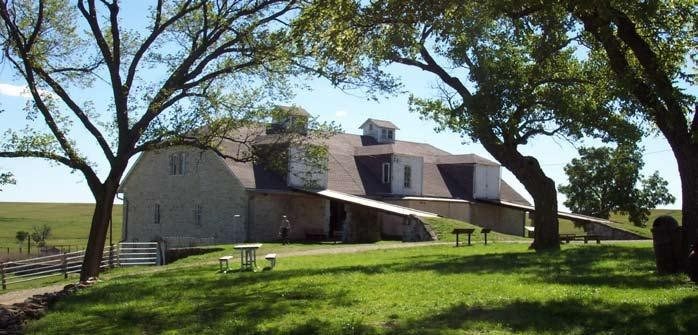
Spring Hill Ranch barn at Tallgrass Prairie National Preserve, Kansas, completed in 1882.
NPS Photo · Public domain (U.S. federal government work) · Original recordImage changes
Resized and converted to JPEG for display; no subject alteration.
The words
Barns
The man proposes pulling down his barns and building greater ones to gather his fruits and goods; the NET calls the stored crop grain, making the farming setting explicit.
Did you know?
The National Park Service describes separate floors in the pictured barn for stables, farm equipment, and hay and grain; ramps gave horse-drawn wagons access to the third floor.
Luke 12:17–18 (opens a new tab) · NET Bible: Luke 12:13-21 (opens a new tab) · NPS: Spring Hill Ranch barn (opens a new tab)
Bestow
Store; put away.
Bestow names the storing that concerns the rich man: he first says he has no room for his fruits, then plans greater barns to bestow his fruits and goods.
Luke 12:17–18 (opens a new tab) · NET Bible: Luke 12:13-21 (opens a new tab)
Beware
Be on guard.
Beware introduces Jesus’s warning against covetousness; the NET says to guard against greed. The warning stands between the inheritance exchange and the parable of the rich man.
Luke 12:13–16 (opens a new tab) · NET Bible: Luke 12:13-21 (opens a new tab)
Consisteth
Consists; has its basis.
Before the parable, Jesus says a person’s life does not consist in the abundance of possessions; the story follows this warning with a man who treats stored goods as a secure future.
Luke 12:15, 19 (opens a new tab) · NET Bible: Luke 12:13-21 (opens a new tab)
Covetousness
Greed; desire for more.
Jesus warns the listeners to beware of covetousness after declining to divide the inheritance; the NET names greed, before the parable turns to a rich man’s plentiful harvest and storage plans.
Luke 12:14–18 (opens a new tab) · NET Bible: Luke 12:13-21 (opens a new tab)
Divider
A person who apportions property.
Divider is the role Jesus declines when asked to tell a brother to share an inheritance; the NET uses arbitrator alongside judge in his reply to the request.
Luke 12:13–14 (opens a new tab) · NET Bible: Luke 12:13-21 (opens a new tab)
Ease
Rest; relax.
In his planned speech to his soul, the man says take thine ease, with goods laid up for many years; the NET says relax before the eating, drinking and merriment.
Luke 12:19 (opens a new tab) · NET Bible: Luke 12:13-21 (opens a new tab)
Fool
Unwise; lacking good sense.
God calls the man Thou fool after his imagined years of ease; the same speech says his soul is required that night and asks who will receive the prepared goods.
Luke 12:19–20 (opens a new tab) · Strong’s Greek: fool (opens a new tab)
Greater
Greater describes the new barns in the man’s proposal to pull down his existing ones; the NET says bigger. The larger buildings are where he plans to gather his crops and goods.
Luke 12:18 (opens a new tab) · NET Bible: Luke 12:13-21 (opens a new tab)
Inheritance
An unnamed listener asks Jesus to tell his brother to divide the inheritance with him; Jesus’s reply asks who appointed him judge or divider, before he turns to the warning about covetousness.
Many Years
Many years belongs to what the man plans to tell his soul about stored goods and ease; God’s reply says this night, contrasting the future he imagines with the announcement he receives.
Much Goods
Much goods appears in the speech the man plans for his soul after proposing greater barns; he imagines abundance laid up for many years, before God asks who will receive it.
Plentifully
The parable begins with the ground of a rich man bringing forth plentifully; the NET describes an abundant crop. His conversation with himself then turns to where he can store the produce.
Luke 12:16–17 (opens a new tab) · NET Bible: Luke 12:13-21 (opens a new tab)
Possesseth
Owns; holds as property.
Possesseth belongs to Jesus’s warning that life does not consist in the abundance of what a person owns; the rich man’s later speech repeatedly names his crops, barns and goods as his own.
Luke 12:15, 17–19 (opens a new tab) · NET Bible: Luke 12:13-21 (opens a new tab)
Required
Demanded back, in this saying.
God’s reply says the man’s life will be required that night, then asks who will have the prepared goods; Jesus ends with the contrast between treasure for oneself and being rich toward God.
Luke 12:20–21 (opens a new tab) · NET Bible: Luke 12:13-21 (opens a new tab)
Sources
- Luke 12:13-21 (King James Version)King James Version, passage navigation via Bible Gateway
- Luke 12:13-21 (NET Bible), translation and notesNET Bible, via Bible Gateway
- Strong’s Greek 878: aphron, foolishStrong’s Exhaustive Concordance, via Bible Hub
- Tallgrass Prairie National Preserve Quick FactsNational Park Service