
The Life of Jesus
Puzzle 56 · Stories Jesus Told · Page 83 in print
The Good Samaritan
A question about a neighbour becomes a story of practical mercy on the road from Jerusalem to Jericho.
Jump to a word
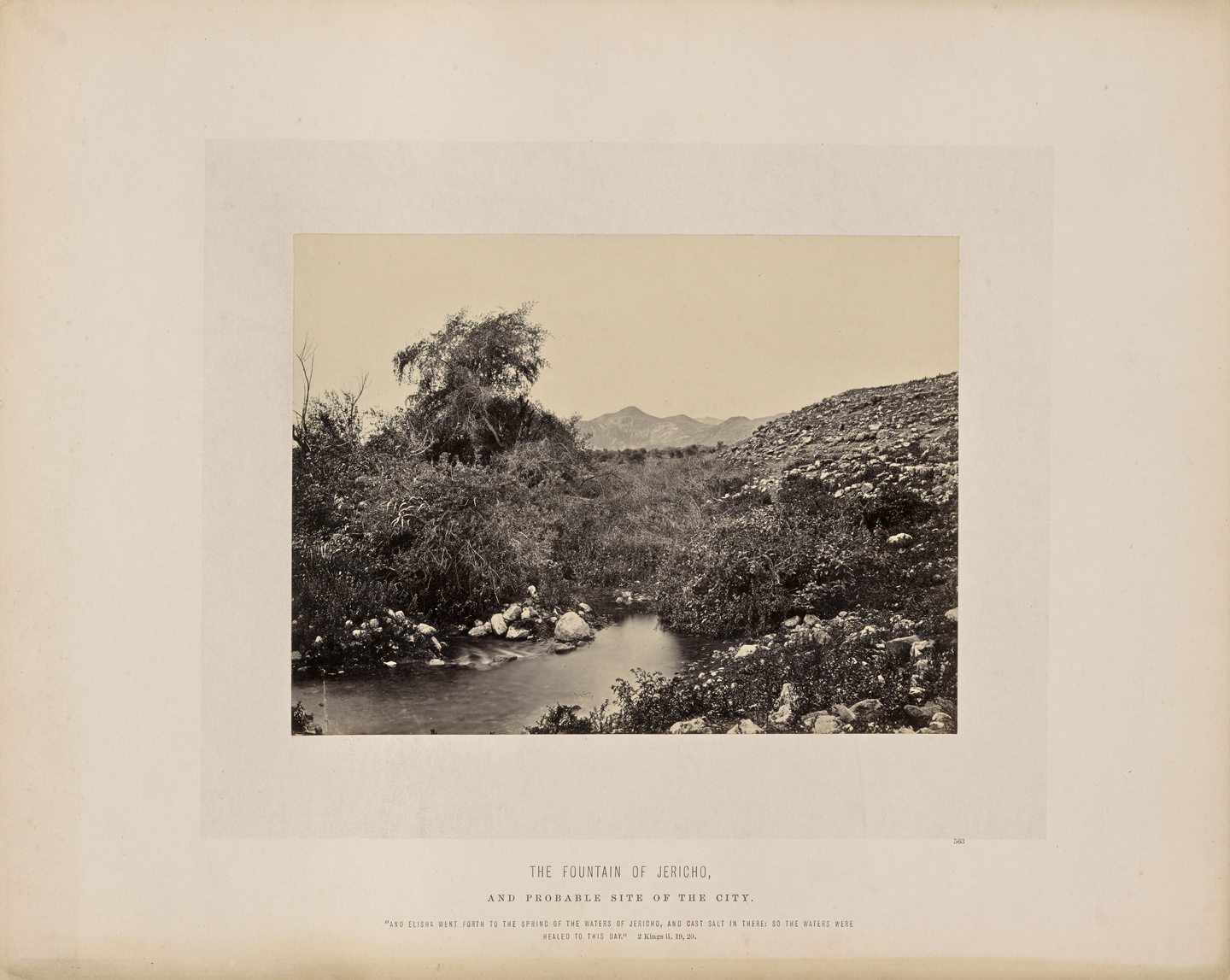
The Fountain of Jericho, and Probable Site of the City.
A historical view of Jericho gives geographical context for the destination named in the parable.
Francis Frith · CC0 1.0 · Original recordImage changes
Resized proportionally to at most 1440px and JPEG compressed; no crop or content alteration.
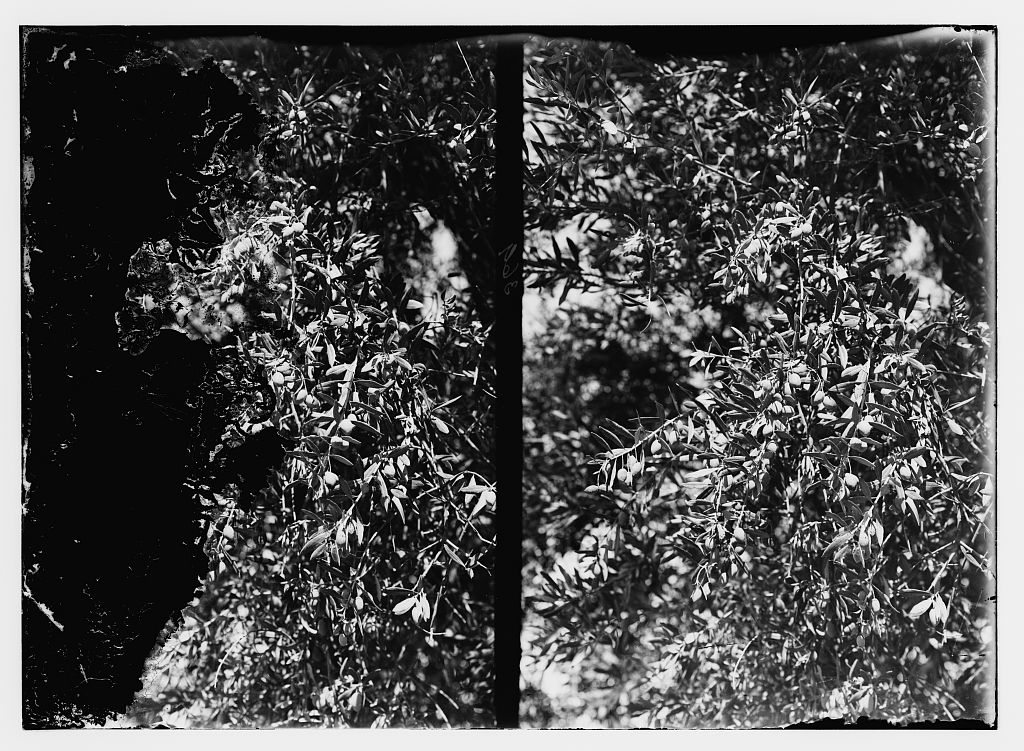
Olive branches and fruit, photographed between 1898 and 1946.
Olive branches connect with the oil used in caring for the wounded traveller, not a tree identified in the story.
American Colony Photo Department / Matson Photo Service; G. Eric and Edith Matson Photograph Collection, Library of Congress. · No known restrictions on publication · Original recordImage changes
Resized proportionally to at most 1440px and JPEG compressed; no crop or content alteration.
The words
Beast
An animal used for riding, here.
Luke says the Samaritan sets the injured man on his own beast before taking him to the inn; the NET calls it his own animal, leaving the species unspecified.
Luke 10:34 (opens a new tab) · NET Bible: Luke 10:25-37 (opens a new tab)
Half Dead
Severely wounded, in the story.
Luke describes the attackers leaving the man half dead after stripping and wounding him; this is the condition in which later travelers encounter him, before the Samaritan’s care.
Luke 10:30–34 (opens a new tab) · NET Bible: Luke 10:25-37 (opens a new tab)
Host
An innkeeper, here.
The host receives two pence and the request to take care of the injured man; the Samaritan also promises reimbursement for extra spending when he returns. The NET calls the host an innkeeper.
Luke 10:35 (opens a new tab) · NET Bible: Luke 10:25-37 (opens a new tab)
Jericho
Jesus begins with a man going down from Jerusalem to Jericho; this named destination sets the road scene in which the attack and the three encounters take place.
Journeyed
The Samaritan is traveling when he comes upon the man; Luke places his compassion and approach after the priest and Levite have passed on the other side.
Lawyer
An expert in religious law.
The lawyer asks how to inherit eternal life; the NET calls him an expert in religious law. Jesus answers by asking what is written in the law and how he reads it.
Luke 10:25–26 (opens a new tab) · NET Bible: Luke 10:25-37 (opens a new tab)
Levite
A descendant of Levi.
The Levite comes to the place, looks at the man and passes on the other side, following the priest’s passing by; the Samaritan’s approach and compassion come next.
Luke 10:31–34 (opens a new tab) · Strong’s Greek: Levite (opens a new tab)
Neighbour
The lawyer’s reply quotes Leviticus about loving a neighbor as oneself; he then asks who his neighbor is. Jesus later asks which traveler was a neighbor, and the answer points to mercy.
Luke 10:27, 29, 36–37 (opens a new tab) · Leviticus 19:18 (opens a new tab) · NET Bible: Luke 10:25-37 (opens a new tab)
Oil and Wine
Luke describes the Samaritan binding wounds and pouring in oil and wine; the NET specifies olive oil. These actions precede the journey to the inn and arrangements for continued care.
Luke 10:34–35 (opens a new tab) · NET Bible: Luke 10:25-37 (opens a new tab)
Readest
Read; understand the text.
Jesus asks what is written in the law and how the lawyer reads it; the NET phrases the second question in terms of understanding. The reply quotes Deuteronomy about loving God.
Did you know?
A few verses after the command quoted in the lawyer’s reply, Deuteronomy 6:9 speaks of writing the words on the posts of a house and on its gates.
Luke 10:26–27 (opens a new tab) · Deuteronomy 6:5, 9 (opens a new tab) · NET Bible: Luke 10:25-37 (opens a new tab)
Repay
The Samaritan gives two pence to the innkeeper and promises to cover further spending on the man’s care when he returns; the NET identifies these as two denarii, ancient silver coins.
Luke 10:35 (opens a new tab) · NET Bible: Luke 10:25-37 (opens a new tab)
Samaritan
The Samaritan sees the man and has compassion, then takes him to an inn and arranges continuing care; the lawyer’s final answer identifies the neighbor as the one who showed mercy.
Stripped
The attackers strip the traveler of his clothing and wound him before departing; Luke gives this violence at the start of the story, before the priest, Levite and Samaritan arrive.
Thieves
Robbers, in this account.
Luke’s KJV calls the attackers thieves; the NET calls them robbers. In the story they strip and wound the traveler before leaving him half dead.
Luke 10:30 (opens a new tab) · NET Bible: Luke 10:25-37 (opens a new tab)
Wounded
The man is wounded in the attack, and the Samaritan later binds those wounds, pours in oil and wine and takes him to an inn for care.
Sources
- Luke 10:25-37 (King James Version)King James Version, passage navigation via Bible Gateway
- Luke 10:25-37 (NET Bible), translation and notesNET Bible, via Bible Gateway
- Deuteronomy 6:4-9 (King James Version)King James Version, passage navigation via Bible Gateway
- Leviticus 19:17-18 (King James Version)King James Version, passage navigation via Bible Gateway
- Strong’s Greek 3019: LeviteStrong’s Exhaustive Concordance, via Bible Hub