
The Life of Jesus
Puzzle 52 · Stories Jesus Told · Page 79 in print
The Sower
Different soils describe different responses to the word; Jesus explains the seed, obstacles and fruitfulness.
Jump to a word
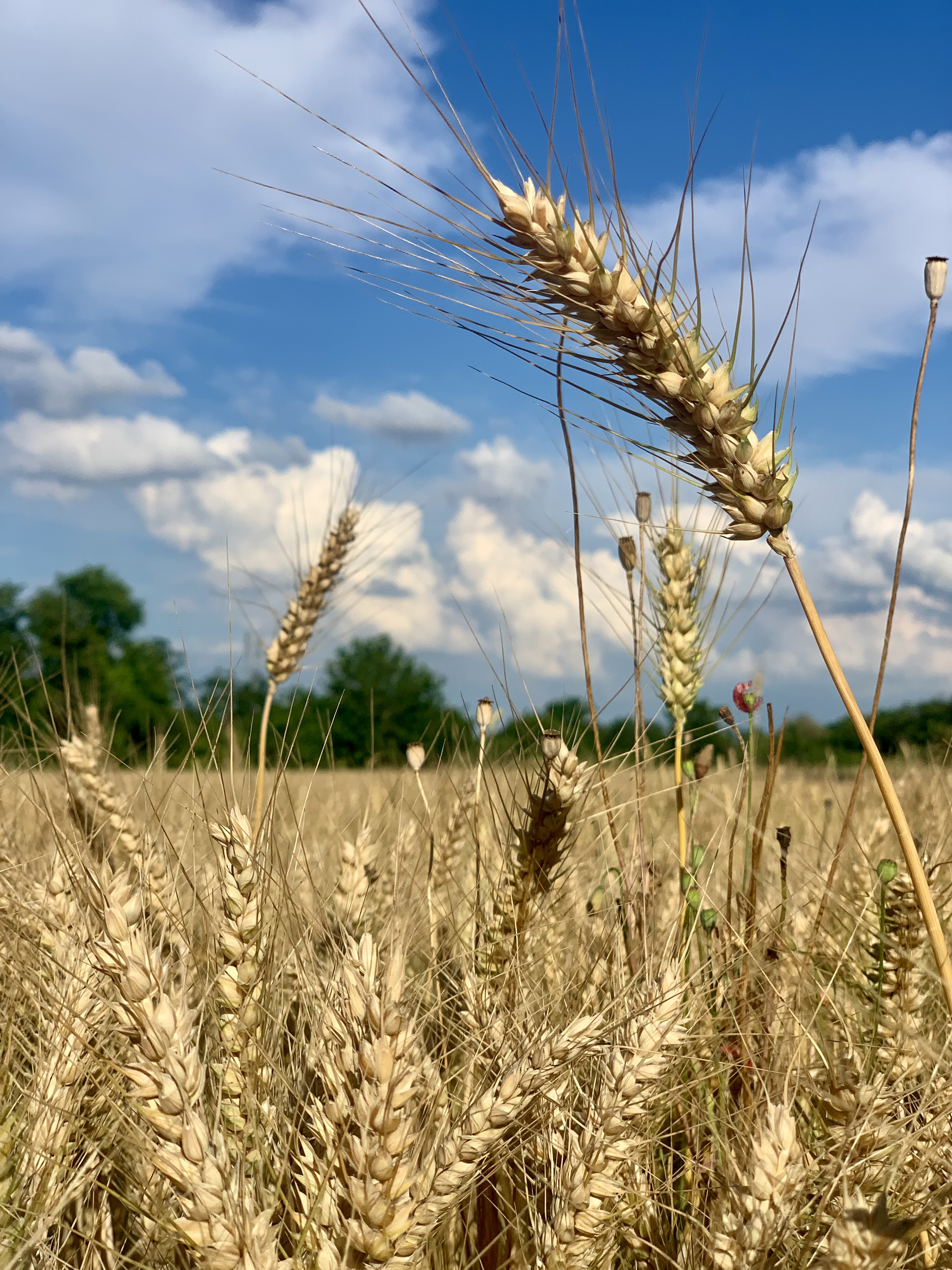
Ears of wheat, photographed June 5, 2026.
Daniela M. / Wikimedia Commons · CC BY-SA 4.0 · Original recordImage changes
Display copies resized; original downloaded JPEG preserved.
The words
Deceitfulness
The power to mislead.
In Matthew’s explanation, deceitfulness of riches joins the care of this world in choking the word; Mark adds desires for other things, while Luke includes life’s pleasures.
Matthew 13:22 (opens a new tab) · Mark 4:19 (opens a new tab) · Luke 8:14 (opens a new tab) · NET Bible: Mark 4:1-20 (opens a new tab)
Deepness
Depth; thickness of soil.
In Matthew, seed on stony places springs up quickly because there is little depth of earth; the sun scorches it and the lack of root leads to withering.
Matthew 13:5–6 (opens a new tab) · NET Bible: Matthew 13:1-23 (opens a new tab)
Devoured
The birds eat seed that falls by the way side in Matthew’s story; in the explanation, the wicked one catches away the word from a hearer who does not understand.
Dull of Hearing
Matthew includes dull of hearing in Jesus’s quotation of Isaiah; the surrounding lines speak of hearing without understanding and seeing without perceiving.
Matthew 13:14–15 (opens a new tab) · Isaiah 6:9–10 (opens a new tab)
Good Ground
Matthew links good ground with hearing and understanding the word; Mark speaks of receiving it. Luke adds keeping it with patience, rendered steadfast endurance in the NET.
Matthew 13:23 (opens a new tab) · Mark 4:20 (opens a new tab) · Luke 8:15 (opens a new tab) · NET Bible: Luke 8:4-15 (opens a new tab)
Hundredfold
A yield a hundred times the seed sown.
Matthew lists a hundredfold first among the good-ground yields; Mark places it last after thirty and sixty, while Luke gives a hundredfold without the smaller figures.
Did you know?
Genesis 26:12 also uses the phrase “an hundredfold,” describing Isaac’s sowing and what he received in the same year.
Matthew 13:8 (opens a new tab) · Mark 4:8 (opens a new tab) · Luke 8:8 (opens a new tab) · NET Bible: Matthew 13:1-23 (opens a new tab) · Genesis 26:12 (opens a new tab)
Mysteries
Secrets made known, in this setting.
Matthew speaks of mysteries of the kingdom of heaven given for the disciples to know; Mark has the singular mystery of the kingdom of God, while Luke also uses mysteries.
Matthew 13:11 (opens a new tab) · Mark 4:11 (opens a new tab) · Luke 8:10 (opens a new tab) · NET Bible: Matthew 13:1-23 (opens a new tab) · NET Bible: Mark 4:1-20 (opens a new tab)
Root
Matthew’s rootless plant withers in the story; the explanation pairs having no root with a hearer’s brief reception, followed by stumbling under tribulation or persecution because of the word.
Scorched
Matthew says the sun scorches the growth on stony places; Mark gives the same sequence of sun, scorching and withering, before explaining the hearers’ response to affliction or persecution.
Matthew 13:5–6 (opens a new tab) · Mark 4:5–6, 16–17 (opens a new tab)
Sixtyfold
A yield sixty times the seed sown.
Matthew’s sixtyfold is the middle of three fruitful yields on good ground, repeated in Jesus’s explanation; the same figure also appears in Mark’s list.
Matthew 13:8, 23 (opens a new tab) · Mark 4:8, 20 (opens a new tab) · NET Bible: Matthew 13:1-23 (opens a new tab)
Sower
The sower goes out to sow, and the seed falls on several kinds of ground. Luke’s explanation identifies the seed as the word of God; Mark says the sower sows the word.
Matthew 13:3–8 (opens a new tab) · Mark 4:14 (opens a new tab) · Luke 8:11 (opens a new tab)
Stony Places
Rocky ground with shallow soil.
In Matthew, the stony places have little earth and no deepness, so growth appears quickly but does not last; Luke’s rock scene emphasizes a lack of moisture.
Matthew 13:5–6 (opens a new tab) · Luke 8:6 (opens a new tab) · NET Bible: Matthew 13:1-23 (opens a new tab)
Thirtyfold
A yield thirty times the seed sown.
Matthew includes thirtyfold among the fruitful yields, alongside sixty and a hundred; Mark begins his sequence with thirty, and both retain it in the explanation of good ground.
Matthew 13:8, 23 (opens a new tab) · Mark 4:8, 20 (opens a new tab) · NET Bible: Matthew 13:1-23 (opens a new tab)
Way Side
Beside the path.
The seed by the way side is eaten by birds in Matthew; Luke adds that it is trodden down. Both explanations describe the word being taken away.
Matthew 13:4, 19 (opens a new tab) · Luke 8:5, 12 (opens a new tab) · NET Bible: Matthew 13:1-23 (opens a new tab)
Wicked One
Matthew calls the figure who catches away the word the wicked one; Mark names Satan in the parallel explanation, and Luke names the devil. Each describes the removal of the sown word.
Matthew 13:19 (opens a new tab) · Mark 4:15 (opens a new tab) · Luke 8:12 (opens a new tab)
Sources
- Matthew 13:1-23 (King James Version)King James Version, passage navigation via Bible Gateway
- Mark 4:1-20 (King James Version)King James Version, passage navigation via Bible Gateway
- Luke 8:4-15 (King James Version)King James Version, passage navigation via Bible Gateway
- Matthew 13:1-23 (NET Bible), translation and notesNET Bible, via Bible Gateway
- Mark 4:1-20 (NET Bible), translation and notesNET Bible, via Bible Gateway
- Luke 8:4-15 (NET Bible), translation and notesNET Bible, via Bible Gateway
- Genesis 26:12-14 (King James Version)King James Version, passage navigation via Bible Gateway
- Isaiah 6:8-10 (King James Version)King James Version, passage navigation via Bible Gateway