
The Life of Jesus
Puzzle 50 · Wonders by the Water · Page 75 in print
The Bread of Life
After the feeding, the conversation turns from perishable food to the bread of life, producing both belief and resistance.
Jump to a word
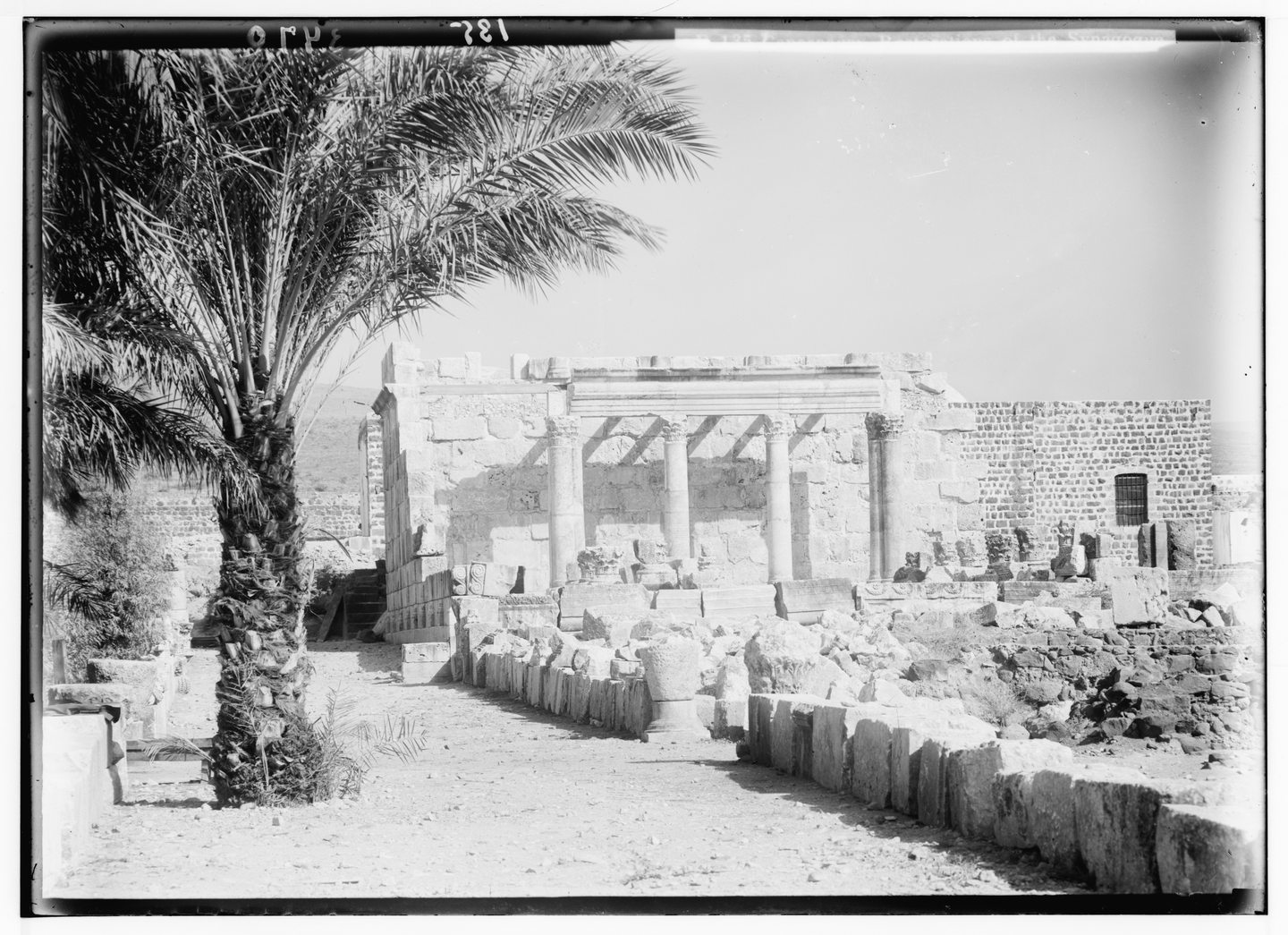
Capernaum, the restored synagogue of about the 4th–5th century AD (1920).
John places the teaching in a synagogue at Capernaum; these visible synagogue ruins belong to a later building.
G. Eric and Edith Matson Photograph Collection, Library of Congress · Public Domain Mark 1.0 · Original recordImage changes
Resized proportionally to at most 1440px and JPEG compressed; no crop or content alteration.
The words
Bread of Life
John records Jesus calling himself the bread of life, linking coming to him with never hungering and believing in him with never thirsting; the saying follows the request for continuing bread.
Dwelleth
Lives or remains in.
Jesus’s saying joins eating his flesh and drinking his blood with dwelling in him and he in that person; the NET uses resides for this shared relationship.
John 6:56 (opens a new tab) · NET Bible: John 6:22-71 (opens a new tab)
Endureth
Lasts; continues.
Jesus sets food that perishes beside food enduring to everlasting life, which the Son of Man will give; the NET’s remains explains endureth as lasting.
John 6:27 (opens a new tab) · NET Bible: John 6:22-71 (opens a new tab)
Evermore
Always; continually.
After Jesus speaks of bread from heaven, the hearers ask him to give it evermore; the NET says all the time, before Jesus identifies himself as the bread of life.
John 6:32–35 (opens a new tab) · NET Bible: John 6:22-71 (opens a new tab)
Hard Saying
A difficult or demanding teaching.
Many of Jesus’s disciples call the teaching a hard saying and ask who can hear it; later, many stop following him, while Peter speaks of words of eternal life.
John 6:60, 66–68 (opens a new tab) · NET Bible: John 6:22-71 (opens a new tab)
Living Bread
Jesus calls himself the living bread from heaven and promises life forever to whoever eats it; he then identifies the bread he will give for the world’s life as his flesh.
Manna
The hearers recall manna given to their ancestors in the wilderness; Jesus returns to that food later, contrasting their ancestors’ deaths with the life he promises through the bread from heaven.
Did you know?
Exodus also describes keeping manna in a pot as a memorial for future generations; Aaron does as Moses directs, setting aside a portion of the wilderness food.
John 6:31, 49–51 (opens a new tab) · Exodus 16:32–34 (opens a new tab)
Murmured
Complained or grumbled.
John describes hearers murmuring at Jesus’s claim to be bread from heaven; they question his origin by saying they know his father and mother. The NET calls their response complaining.
John 6:41–43 (opens a new tab) · NET Bible: John 6:22-71 (opens a new tab)
Perisheth
Passes away; does not last.
Jesus contrasts food that perisheth with food lasting to everlasting life. The NET says disappears; the following exchange turns from the hearers’ question about works to Jesus’s answer about believing.
John 6:27–29 (opens a new tab) · NET Bible: John 6:22-71 (opens a new tab)
Profiteth
Benefits; is of use.
In John 6:63, Jesus says the flesh profiteth nothing, then describes his spoken words as spirit and life; the NET renders the contrast as human nature being of no help.
John 6:63 (opens a new tab) · NET Bible: John 6:22-71 (opens a new tab)
Quickeneth
Gives life.
John records Jesus saying that the Spirit quickeneth, immediately before the contrast with flesh; the verse then describes Jesus’s words as spirit and life. The NET renders the verb as gives life.
John 6:63 (opens a new tab) · NET Bible: John 6:22-71 (opens a new tab)
Sealed
Marked with approval, here.
In the saying about lasting food, Jesus says God the Father has sealed the Son of Man; the NET’s seal of approval makes the word’s sense of attestation explicit.
John 6:27 (opens a new tab) · NET Bible: John 6:22-71 (opens a new tab)
Shipping
Boats; passage by boat.
John says boats from Tiberias arrive near the place of the feeding; the people then take shipping to Capernaum while seeking Jesus. The NET names the boats they board.
John 6:23–24 (opens a new tab) · NET Bible: John 6:22-71 (opens a new tab)
Strove
Argued or disputed.
John describes hearers disputing among themselves after Jesus speaks of giving his flesh for the world’s life; their question asks how he can give them his flesh to eat.
John 6:51–52 (opens a new tab) · NET Bible: John 6:22-71 (opens a new tab)
True Bread
Jesus answers the manna comparison by identifying the Father as the giver of the true bread from heaven; he then describes the bread of God as coming down and giving life to the world.
Sources
- John 6:22-71 (King James Version)King James Version, passage navigation via Bible Gateway
- John 6:22-71 (NET Bible), translation and notesNET Bible, via Bible Gateway
- Exodus 16:31-36 (King James Version)King James Version, passage navigation via Bible Gateway