
The Life of Jesus
Puzzle 47 · Wonders by the Water · Page 72 in print
Legion and the Swine
A man living among tombs is restored, and a herd of swine rushes into the sea; he is sent home to tell what happened.
Jump to a word
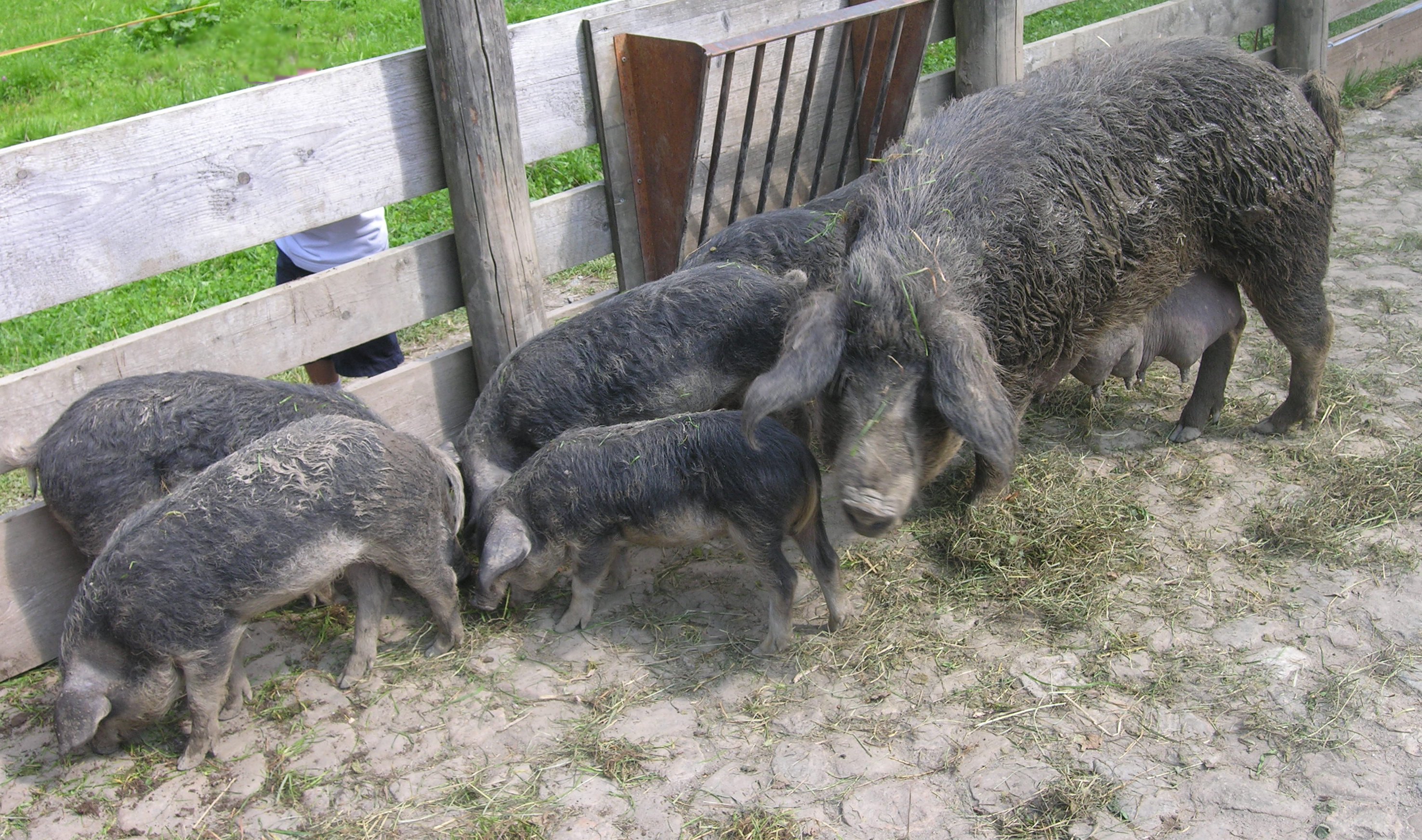
Woolly-coated pigs, photographed August 12, 2007.
Audrius Meskauskas / Wikimedia Commons · CC BY-SA 3.0 · Original recordImage changes
Display copies resized; original downloaded JPEG preserved.
The words
Adjure
Appeal solemnly.
Mark records “I adjure thee by God” in the cry addressed to Jesus; the next verse explains that Jesus has commanded the unclean spirit to come out.
Mark 5:7–8 (opens a new tab) · NET Bible: Mark 5:1-20 (opens a new tab)
Asunder
Apart; into separate pieces.
Mark’s KJV says the chains were “plucked asunder” by the man, while the fetters were broken in pieces; the NET renders the chains as torn apart.
Mark 5:4 (opens a new tab) · NET Bible: Mark 5:1-20 (opens a new tab)
Chains
Mark says no one could bind the man even with chains, then explains that earlier chains and fetters had been broken; Luke likewise describes restraints that failed.
Choked
Drowned, in this account.
Mark and Luke’s KJV accounts say the swine were choked after rushing into the water; Matthew says they perished in the waters, while NET Mark uses drowned.
Mark 5:13 (opens a new tab) · Luke 8:33 (opens a new tab) · Matthew 8:32 (opens a new tab) · NET Bible: Mark 5:1-20 (opens a new tab)
Clothed
Mark describes visitors finding the man clothed and sitting with Jesus; later, Jesus sends him home to tell his friends what the Lord has done for him.
Fetters
Shackles or chains for the feet.
Mark pairs fetters with chains among the restraints the man had broken; the NET’s note explains fetters as chains for the feet, distinguishing the older word.
Mark 5:4 (opens a new tab) · NET Bible: Mark 5:1-20 (opens a new tab)
Gadarenes
Mark and Luke’s KJV use Gadarenes; Matthew’s KJV uses Gergesenes. NET Mark and Luke read Gerasenes, while NET Matthew reads Gadarenes; their notes describe the manuscript variants.
Mark 5:1 (opens a new tab) · Luke 8:26 (opens a new tab) · Matthew 8:28 (opens a new tab) · NET Bible: Mark 5:1-20 (opens a new tab) · NET Bible: Luke 8:26-39 (opens a new tab) · NET Bible: Matthew 8:28-34 (opens a new tab)
Herd
Mark gives the herd as about two thousand swine when it rushes into the sea; Luke and Matthew describe a herd without giving that number in their accounts.
Mark 5:13 (opens a new tab) · Luke 8:32–33 (opens a new tab) · Matthew 8:30–32 (opens a new tab)
Legion
Mark gives the answer “My name is Legion: for we are many”; Luke explains the name by saying many devils had entered the man, without giving their exact number.
Did you know?
Collins Dictionary lists legion both as a Roman military unit and as a large number of people or things, giving the word a broader English use.
Mark 5:9 (opens a new tab) · Luke 8:30 (opens a new tab) · Collins Dictionary: legion (opens a new tab)
Right Mind
Mark describes the man sitting, clothed and “in his right mind”; Luke adds that he is sitting at Jesus’s feet, and both accounts report the onlookers’ fear.
Steep Place
All three KJV accounts use steep place for the herd’s rush into the water, where it drowns; Mark and Matthew say sea, while Luke says lake.
Mark 5:13 (opens a new tab) · Luke 8:33 (opens a new tab) · Matthew 8:32 (opens a new tab)
Swine
Pigs; the older term.
Mark describes the unclean spirits entering the swine before the herd rushes into the sea and drowns; the NET uses pigs for the animals in the same passage.
Mark 5:12–13 (opens a new tab) · NET Bible: Mark 5:1-20 (opens a new tab)
Tame
Subdue or restrain, in this context.
Mark’s KJV says no one could tame the man after describing the broken chains and fetters; the NET renders this as no one being strong enough to subdue him.
Mark 5:4 (opens a new tab) · NET Bible: Mark 5:1-20 (opens a new tab)
Tombs
Mark and Luke describe a man living among tombs; Matthew describes two men coming from them. All three introduce the meeting after Jesus reaches the other side.
Mark 5:1–3 (opens a new tab) · Luke 8:26–27 (opens a new tab) · Matthew 8:28 (opens a new tab)
Torment
Cause severe suffering.
Mark records the plea “torment me not,” followed by the explanation about Jesus commanding the unclean spirit out; Matthew’s two men ask about torment before the time.
Mark 5:7–8 (opens a new tab) · Matthew 8:29 (opens a new tab)
Sources
- Mark 5:1-20 (King James Version)King James Version, passage navigation via Bible Gateway
- Luke 8:26-39 (King James Version)King James Version, passage navigation via Bible Gateway
- Matthew 8:28-34 (King James Version)King James Version, passage navigation via Bible Gateway
- Mark 5:1-20 (NET Bible), translation and notesNET Bible, via Bible Gateway
- Luke 8:26-39 (NET Bible), translation and notesNET Bible, via Bible Gateway
- Matthew 8:28-34 (NET Bible), translation and notesNET Bible, via Bible Gateway
- Legion: English dictionary definitionsCollins / HarperCollins