
The Life of Jesus
Puzzle 44 · The Sermon on the Mount · Page 67 in print
Ask, Seek, Knock
Jesus pairs asking with the Father’s generosity, then teaches discernment through gates, paths and fruit.
Jump to a word
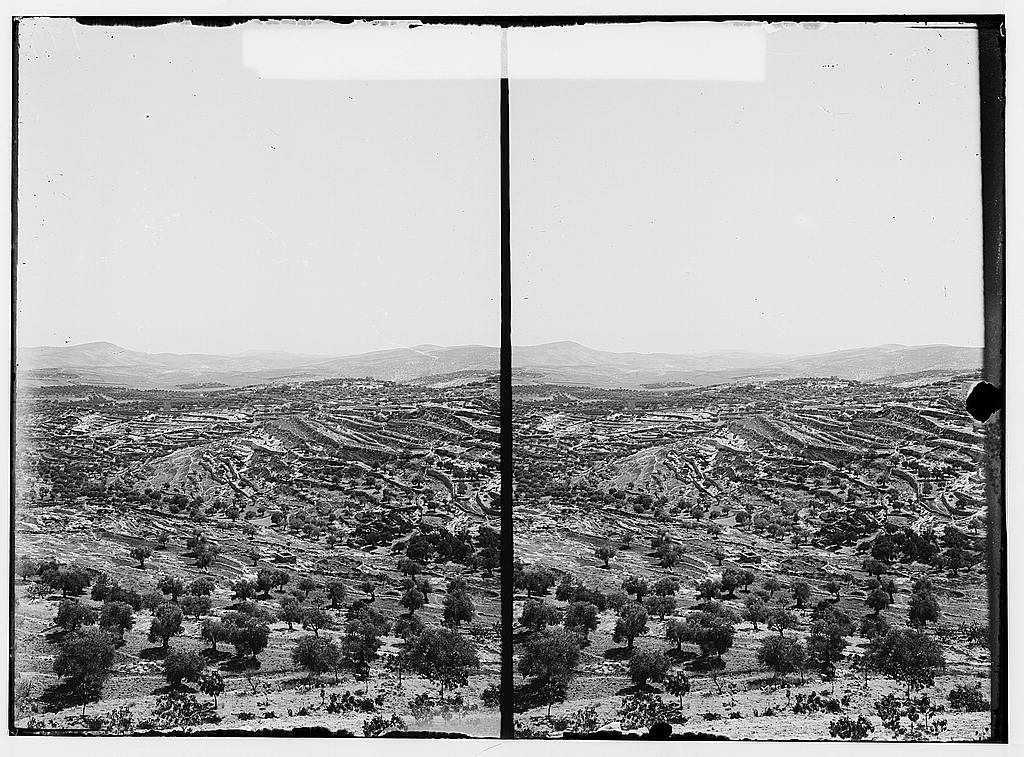
Vineyards and olive groves near Bethlehem, about 1900–1920.
A later cultivated landscape connects with the instruction to recognize fruit, without identifying a particular tree in the saying.
American Colony (Jerusalem). Photo Department; G. Eric and Edith Matson Photograph Collection, Library of Congress. · No known restrictions on publication · Original recordImage changes
Resized proportionally to at most 1440px and JPEG compressed; no crop or content alteration.
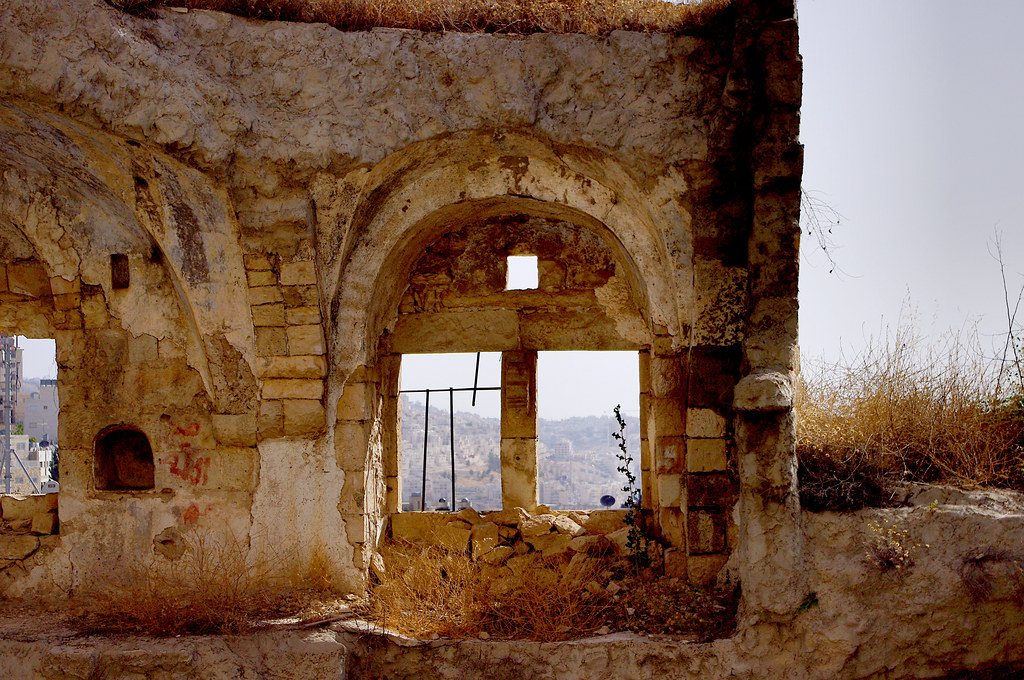
Stonework in Bethlehem, photographed June 22, 2010.
A photographed house makes the action of knocking and a door being opened concrete, not a setting named in the passage.
Jan Helebrant · CC0 (Public Domain Dedication) · Original recordImage changes
Resized proportionally to at most 1440px and JPEG compressed; no crop or content alteration.
The words
Asketh
Asks; the older verb form.
Matthew’s KJV says “every one that asketh receiveth” after the three commands to ask, seek and knock; Luke’s KJV repeats the same pairing of asking and receiving.
Matthew 7:7–8 (opens a new tab) · Luke 11:9–10 (opens a new tab) · NET Bible: Matthew 7:7-20 (opens a new tab)
False Prophets
Matthew records Jesus warning of false prophets in sheep’s clothing but inwardly as wolves; the next verse introduces recognizing them by their fruits, without naming a particular group.
Findeth
Finds; the older verb form.
Matthew’s KJV pairs seeking with finding in “he that seeketh findeth”; Luke’s KJV repeats the wording after its own commands to ask, seek and knock.
Matthew 7:7–8 (opens a new tab) · Luke 11:9–10 (opens a new tab) · NET Bible: Matthew 7:7-20 (opens a new tab)
Fruits
Matthew’s fruit teaching moves from good and corrupt trees to an unfruitful tree being cut down and burned, then returns to knowing the prophets by their fruits.
Good Gifts
Matthew compares parents giving good gifts with the Father giving good things; Luke’s KJV uses good gifts for parents but names the Holy Spirit in the Father’s promise.
Matthew 7:11 (opens a new tab) · Luke 11:13 (opens a new tab)
Grapes
Matthew places grapes with thorns in Jesus’s question about where fruit is gathered, pairing figs with thistles before the comparison between good and corrupt trees.
Knock
Matthew places knock third after ask and seek, pairing it with being opened; Luke repeats the sequence after the story of a request made at midnight.
Did you know?
Luke places a story before these sayings: someone asks a friend for three loaves at midnight after a traveler arrives, explaining that there is nothing to offer.
Matthew 7:7–8 (opens a new tab) · Luke 11:5–10 (opens a new tab)
Narrow
Matthew’s KJV calls the way to life narrow, in contrast with the broad way; NET renders that way as difficult while retaining narrow for the gate.
Matthew 7:13–14 (opens a new tab) · NET Bible: Matthew 7:7-20 (opens a new tab)
Opened
Matthew and Luke’s KJV sayings pair knocking with “it shall be opened”; NET Luke explicitly supplies the door, explaining in a note that the object is implied.
Matthew 7:7–8 (opens a new tab) · Luke 11:9–10 (opens a new tab) · NET Bible: Luke 11:5-13 (opens a new tab)
Receiveth
Receives; the older verb form.
Matthew’s KJV gives receiveth as the response paired with asking in verse 8, then moves to the examples of a child asking for bread or fish.
Matthew 7:8–10 (opens a new tab) · NET Bible: Matthew 7:7-20 (opens a new tab)
Seek
Matthew puts seek between ask and knock, linking it with finding; Luke repeats that order before the examples of a father responding to a child’s requests.
Matthew 7:7–8 (opens a new tab) · Luke 11:9–13 (opens a new tab)
Strait Gate
Narrow gate; strait describes width.
Matthew’s KJV contrasts the strait gate with the wide gate, then pairs the strait gate with the narrow way leading to life; Thayer explains strait as narrow.
Matthew 7:13–14 (opens a new tab) · Thayer’s G4728: narrow (opens a new tab)
Thistles
Matthew pairs thistles with figs in Jesus’s question about fruit, alongside grapes and thorns; the following verses extend the comparison to good and corrupt trees.
Thorns
Matthew’s question asks whether grapes are gathered from thorns, alongside the question about figs and thistles; it follows the warning about false prophets and their fruits.
Wolves
Matthew’s warning contrasts the false prophets’ outward sheep’s clothing with inward ravening wolves, then introduces the fruit images by which Jesus says they will be known.
Sources
- Matthew 7:7-20 (King James Version)King James Version, passage navigation via Bible Gateway
- Luke 11:5-13 (King James Version)King James Version, passage navigation via Bible Gateway
- Matthew 7:7-20 (NET Bible), translation and notesNET Bible, via Bible Gateway
- Luke 11:5-13 (NET Bible), translation and notesNET Bible, via Bible Gateway
- Thayer’s Greek Lexicon, G4728: stenosThayer’s Greek Lexicon, via Bible Hub