
The Life of Jesus
Puzzle 42 · The Sermon on the Mount · Page 65 in print
Lilies of the Field
Jesus links trust and undivided service with birds, flowers and the needs of each day.
Jump to a word
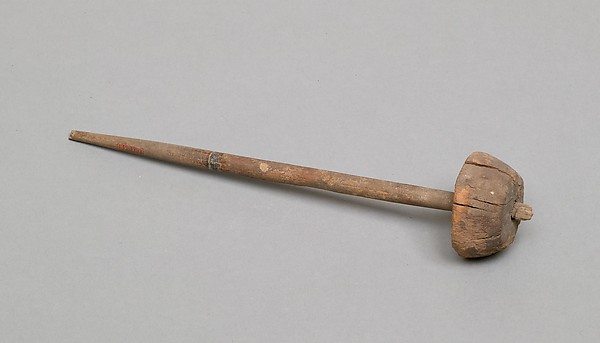
Spindle, ca. 1300–1080 BCE. Egypt.
An ancient spindle makes the saying that lilies do not spin intelligible through the work they do not perform.
The Metropolitan Museum of Art; Rogers Fund, 1911; object 11.151.681. · CC0 / Public Domain · Original recordImage changes
Resized proportionally to at most 1440px and JPEG compressed; no crop or content alteration.
The words
Arrayed
Clothed or dressed.
In Matthew, Jesus compares the field’s lilies with Solomon in all his glory, saying that even Solomon was not arrayed like one of them.
Consider
Matthew places “Consider the lilies” in Jesus’s question about clothing; the description of their growth leads into the statement that they neither toil nor spin.
Cubit
A traditional length measure, about 18 inches (45 cm).
Matthew’s KJV asks about adding a cubit to stature; the NET renders the question as adding an hour to life and notes the alternative height reading.
Matthew 6:27 (opens a new tab) · NET Bible: Matthew 6:19-34 (opens a new tab) · Thayer’s G4083: cubit (opens a new tab)
Fowls of the Air
Birds of the sky.
Jesus points to the birds, saying they neither sow, reap nor gather into barns, yet the heavenly Father feeds them; Matthew places this before the cubit question.
Lilies
Matthew’s KJV names lilies in Jesus’s clothing comparison; the NET uses the broader flowers and explains that the particular kind of flower is uncertain.
Matthew 6:28–29 (opens a new tab) · NET Bible: Matthew 6:19-34 (opens a new tab)
Little Faith
Matthew places “O ye of little faith” at the end of Jesus’s comparison between clothing the grass and clothing his hearers, before the questions about daily needs.
Mammon
Wealth or possessions.
Matthew ends the two-masters saying with Jesus’s words “Ye cannot serve God and mammon”; the NET uses money, and its note explains the term as wealth or possessions.
Matthew 6:24 (opens a new tab) · NET Bible: Matthew 6:19-34 (opens a new tab)
Morrow
Tomorrow; the next day.
Matthew’s KJV closes the passage with Jesus’s statement about the morrow taking thought for itself, followed by the saying about each day’s trouble; the NET uses tomorrow.
Matthew 6:34 (opens a new tab) · NET Bible: Matthew 6:19-34 (opens a new tab)
Moth
Matthew pairs moth with rust in Jesus’s contrast between treasure on earth and treasure in heaven; thieves breaking in and stealing form the other repeated contrast.
Rust
Matthew’s KJV pairs rust with moth as threats to earthly treasure; the NET chooses “devouring insect” and discusses several possible meanings of the Greek term in its note.
Matthew 6:19–20 (opens a new tab) · NET Bible: Matthew 6:19-34 (opens a new tab)
Serve
Jesus’s two-masters saying describes loving one and despising the other, then names God and mammon; Matthew places the teaching before the discussion of food and clothing.
Spin
Make thread or yarn.
Matthew places spinning beside toil among the activities the lilies do not perform; Jesus then compares their appearance with Solomon’s clothing in the following verse.
Did you know?
The Met records the pictured wooden spindle as about 8 11/16 inches (22 cm) long and excavated at Lisht North in Egypt; it illustrates spinning equipment.
Matthew 6:28–29 (opens a new tab) · Met: wooden spindle from Lisht (opens a new tab)
Sufficient
Enough; adequate.
Matthew’s KJV ends Jesus’s statement about the morrow with “Sufficient unto the day is the evil thereof”; the NET expresses the closing thought in terms of the day’s own trouble.
Matthew 6:34 (opens a new tab) · NET Bible: Matthew 6:19-34 (opens a new tab)
Toil
Work hard; labor.
In Matthew’s account, Jesus says the lilies “toil not, neither do they spin,” after inviting his hearers to consider their growth and before comparing them with Solomon.
Two Masters
Matthew records Jesus saying that no one can serve two masters, describing divided attachment before naming God and mammon as the pair at the saying’s close.
Sources
- Matthew 6:19-34 (King James Version)King James Version, passage navigation via Bible Gateway
- Matthew 6:19-34 (NET Bible), translation and notesNET Bible, via Bible Gateway
- Thayer’s Greek Lexicon, G4083: pechusThayer’s Greek Lexicon, via Bible Hub
- Spindle, object 11.151.681The Metropolitan Museum of Art