
The Life of Jesus
Puzzle 35 · Works of Healing · Page 56 in print
The Syrophenician Woman
A mother persists in asking for her daughter’s deliverance, answering the image of children’s bread with crumbs.
Jump to a word
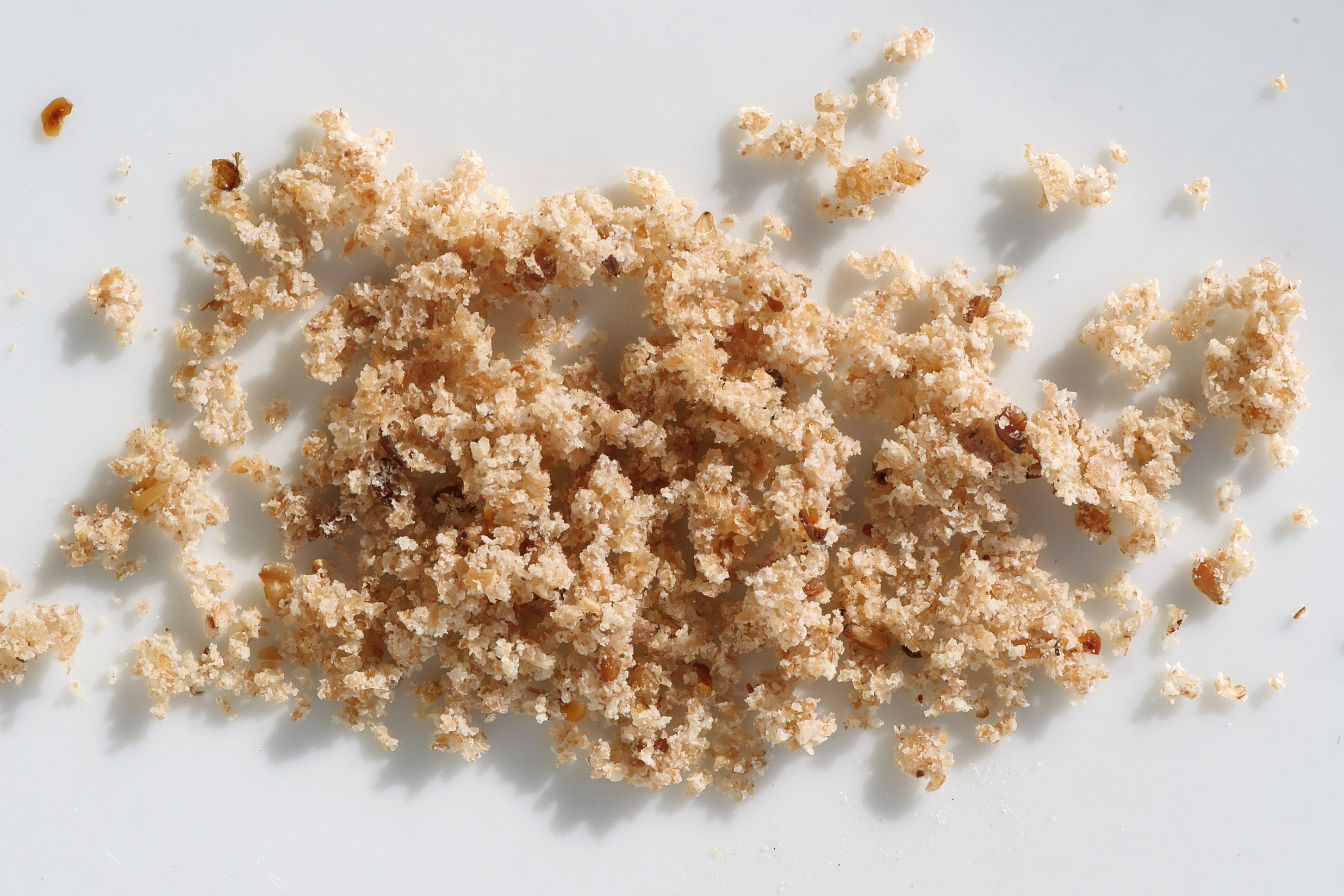
Whole-grain rye-bread crumbs, photographed April 20, 2019.
Membeth / Wikimedia Commons · CC0 · Original recordImage changes
Display copies resized; original downloaded JPEG preserved.
The words
Borders
Region or surrounding territory.
Matthew’s KJV uses “coasts” for the region of Tyre and Sidon; Mark’s KJV uses “borders,” while NET Mark names Tyre alone and notes a manuscript difference.
Matthew 15:21 (opens a new tab) · Mark 7:24 (opens a new tab) · NET Bible: Mark 7:24-30 (opens a new tab)
Canaan
Matthew introduces her as “a woman of Canaan” near Tyre and Sidon; Mark describes her with the words Greek and Syrophenician before her request for her daughter.
Matthew 15:21–22 (opens a new tab) · Mark 7:26 (opens a new tab)
Crieth
Cries out; calls aloud.
In Matthew, “she crieth after us” is the disciples’ explanation for asking Jesus to send the woman away; her earlier cry asks for mercy.
Matthew 15:22–23 (opens a new tab) · NET Bible: Matthew 15:21-28 (opens a new tab)
Crumbs
Matthew and Mark place crumbs in the woman’s answer to the saying about children’s bread and dogs; Mark specifically locates the dogs under the table.
Matthew 15:26–27 (opens a new tab) · Mark 7:27–28 (opens a new tab)
Greek
Gentile woman, in Thayer’s explanation.
Mark calls the woman “a Greek, a Syrophenician by nation” before describing her request that Jesus cast the devil out of her daughter.
Mark 7:26 (opens a new tab) · Thayer’s G1674: Greek woman (opens a new tab)
Help
In Matthew, after Jesus says he is sent only to “the lost sheep of the house of Israel,” the woman comes, worships him and says, “Lord, help me.”
Did you know?
The KJV of Psalm 121:2 also pairs help with the Lord: “My help cometh from the Lord, which made heaven and earth.”
Matthew 15:24–25 (opens a new tab) · Psalms 121:2 (opens a new tab)
Masters' Table
Matthew gives the woman’s reply about crumbs falling from their masters’ table; Mark gives her reply about dogs under the table eating the children’s crumbs.
Matthew 15:27 (opens a new tab) · Mark 7:28 (opens a new tab)
Meet
Matthew and Mark place “meet” in Jesus’s statement about children’s bread and dogs; the NET renders the older wording as “right” in that saying.
Matthew 15:26 (opens a new tab) · Mark 7:27 (opens a new tab) · NET Bible: Matthew 15:21-28 (opens a new tab)
Mercy
Matthew records “Have mercy on me” as the woman’s opening cry; she then describes her daughter as grievously afflicted with a devil.
Syrophenician
Syrophoenician, in the NET spelling.
Mark uses Syrophenician for the woman’s origin, while the NET spells it Syrophoenician; both place her request for her daughter in the region of Tyre.
Mark 7:24–26 (opens a new tab) · NET Bible: Mark 7:24-30 (opens a new tab)
Truth
Yes; an affirmative reply.
Matthew’s KJV begins the woman’s reply with “Truth, Lord,” before she speaks of crumbs; Mark’s reply begins “Yes, Lord,” and locates the dogs under the table.
Matthew 15:27 (opens a new tab) · Mark 7:28 (opens a new tab) · NET Bible: Matthew 15:21-28 (opens a new tab)
Tyre and Sidon
Matthew places Jesus in the region of Tyre and Sidon and introduces the woman as coming from those coasts before she asks for mercy for her daughter.
Did you know?
Acts 21:3 places a ship at Tyre to unload its cargo; verse 5 describes the departing group kneeling on the shore to pray.
Matthew 15:21–22 (opens a new tab) · Acts 21:3–5 (opens a new tab)
Very Hour
Matthew says the daughter is made whole “from that very hour”; Mark ends with the mother returning home and finding her daughter on the bed, the devil gone.
Matthew 15:28 (opens a new tab) · Mark 7:29–30 (opens a new tab)
Vexed
Afflicted or troubled.
Matthew quotes the mother saying her daughter is “grievously vexed with a devil”; Mark describes an unclean spirit and her request to cast it out.
Matthew 15:22 (opens a new tab) · Mark 7:25–26 (opens a new tab) · NET Bible: Matthew 15:21-28 (opens a new tab)
Young Daughter
Mark introduces a mother whose “young daughter” has an unclean spirit; after hearing about Jesus, she comes and falls at his feet to ask for deliverance.
Sources
- Matthew 15:21-28 (King James Version)King James Version, passage navigation via Bible Gateway
- Mark 7:24-30 (King James Version)King James Version, passage navigation via Bible Gateway
- Acts 21:3-6 (King James Version)King James Version, passage navigation via Bible Gateway
- Matthew 15:21-28 (NET Bible), translation and notesNET Bible, via Bible Gateway
- Mark 7:24-30 (NET Bible), translation and notesNET Bible, via Bible Gateway
- Thayer’s Greek Lexicon, G1674: HellenisThayer’s Greek Lexicon, via Bible Hub
- Psalms 121:1-2 (King James Version)King James Version, passage navigation via Bible Gateway