
The Life of Jesus
Puzzle 29 · Works of Healing · Page 50 in print
The Leper Made Clean
A man asks to be made clean; Jesus touches him, then directs him to the priest and the prescribed offering.
Jump to a word
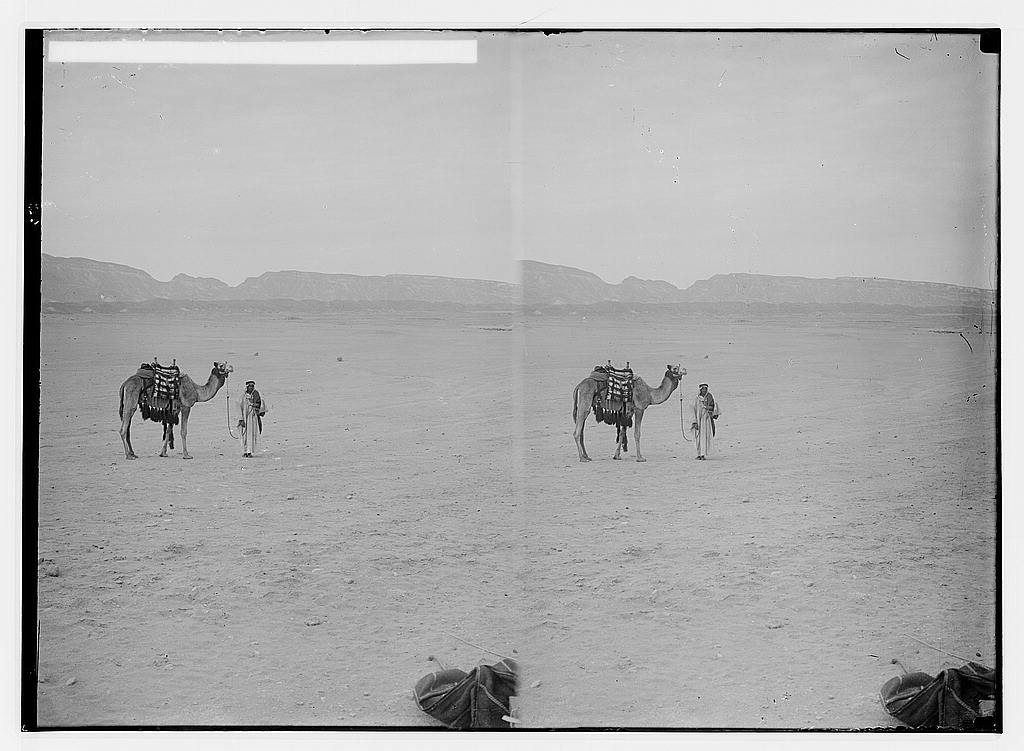
Traveler and camel in the Sinai desert, about 1900–1920.
The landscape is a visual comparison for secluded places, not a claim about the healed man’s location.
American Colony (Jerusalem). Photo Department; G. Eric and Edith Matson Photograph Collection, Library of Congress. · No known restrictions on publication · Original recordImage changes
Resized proportionally to at most 1440px and JPEG compressed; no crop or content alteration.
The words
Beseeching
Earnestly asking or pleading.
Mark describes the man beseeching Jesus while kneeling and saying, “If thou wilt, thou canst make me clean”; Luke likewise presents a plea for cleansing.
Mark 1:40 (opens a new tab) · Luke 5:12 (opens a new tab) · NET Bible: Mark 1:40-45 (opens a new tab)
Blaze Abroad
Spread the news widely.
Mark describes the man spreading the story after Jesus tells him to say nothing; the account then places Jesus outside the city, with people coming from every direction.
Mark 1:44–45 (opens a new tab) · NET Bible: Mark 1:40-45 (opens a new tab)
Charged
Mark records a strict charge and immediate dismissal; Luke specifies an instruction to tell no one and to show himself to the priest, with an offering as Moses commanded.
Mark 1:43–44 (opens a new tab) · Luke 5:14 (opens a new tab)
Cleansed
Mark follows Jesus’s “I will; be thou clean” with the report that the leprosy departs and the man is cleansed; Matthew likewise describes immediate cleansing.
Mark 1:41–42 (opens a new tab) · Matthew 8:3 (opens a new tab)
Desert Places
Remote or deserted places.
Mark says Jesus remains outside in desert places after the man spreads the news; the same verse describes people coming to him from every direction.
Mark 1:45 (opens a new tab) · NET Bible: Mark 1:40-45 (opens a new tab)
Kneeling
Mark describes the man “kneeling down to him” as he asks for cleansing; Luke describes him falling on his face, while Matthew says he worships Jesus.
Mark 1:40 (opens a new tab) · Luke 5:12 (opens a new tab) · Matthew 8:2 (opens a new tab)
Leper
Matthew introduces the man after Jesus comes down from the mountain; Luke places the encounter in an unnamed city, while Mark emphasizes his plea for cleansing.
Matthew 8:1–2 (opens a new tab) · Luke 5:12 (opens a new tab) · Mark 1:40 (opens a new tab)
Leprosy
Mark uses “leprosy” for the man’s condition; the NET note explains that the ancient term covers a wider range of skin conditions than the modern disease called Hansen’s disease.
Mark 1:40–42 (opens a new tab) · NET Bible: Mark 1:40-45 (opens a new tab)
Make Me Clean
Mark, Matthew and Luke each give the man’s request as “if thou wilt, thou canst make me clean,” followed by Jesus’s answer, “I will; be thou clean.”
Mark 1:40–41 (opens a new tab) · Matthew 8:2–3 (opens a new tab) · Luke 5:12–13 (opens a new tab)
Offer
Mark and Luke record Jesus directing the man to offer what Moses commanded for cleansing; Matthew uses “the gift” in the corresponding instruction after the touch and cleansing.
Mark 1:44 (opens a new tab) · Luke 5:14 (opens a new tab) · Matthew 8:3–4 (opens a new tab)
Priest
Mark records Jesus’s direction to visit the priest; Leviticus 13 describes priestly inspection, while Leviticus 14 places the examination outside the camp to see whether the condition has healed.
Mark 1:44 (opens a new tab) · Leviticus 13:2–3 (opens a new tab) · Leviticus 14:2–3 (opens a new tab)
Shew
Show; let someone see.
Mark places “shew thyself to the priest” alongside the instruction to offer what Moses commanded; Matthew and Luke likewise direct the man to show himself to the priest.
Mark 1:44 (opens a new tab) · Matthew 8:4 (opens a new tab) · Luke 5:14 (opens a new tab) · NET Bible: Mark 1:40-45 (opens a new tab)
Straitly
Mark uses “straitly” for Jesus’s charge before sending the man away; the next verse gives the instruction to say nothing, visit the priest and make the prescribed offering.
Mark 1:43–44 (opens a new tab) · NET Bible: Mark 1:40-45 (opens a new tab)
Touched
Mark’s KJV says Jesus is “moved with compassion” as he touches the man; the NET reads “moved with indignation,” with a note discussing the competing manuscript readings.
Mark 1:41 (opens a new tab) · NET Bible: Mark 1:40-45 (opens a new tab)
Withdrew
Luke follows the gathering crowds with Jesus withdrawing to the wilderness to pray; the NET reads “frequently withdrew,” with a note also allowing “he began to withdraw.”
Did you know?
Luke 6:12–13 also links prayer with a later scene: Jesus spends the night praying on a mountain, then chooses twelve disciples when day comes.
Luke 5:15–16 (opens a new tab) · NET Bible: Luke 5:12-16 (opens a new tab) · Luke 6:12–13 (opens a new tab)
Sources
- Mark 1:40-45 (King James Version)King James Version, passage navigation via Bible Gateway
- Luke 5:12-16 (King James Version)King James Version, passage navigation via Bible Gateway
- Matthew 8:1-4 (King James Version)King James Version, passage navigation via Bible Gateway
- Leviticus 13:1-8 (King James Version)King James Version, passage navigation via Bible Gateway
- Leviticus 14:1-7 (King James Version)King James Version, passage navigation via Bible Gateway
- Luke 6:12-13 (King James Version)King James Version, passage navigation via Bible Gateway
- Mark 1:40-45 (NET Bible), translation and notesNET Bible, via Bible Gateway
- Luke 5:12-16 (NET Bible), translation and notesNET Bible, via Bible Gateway