
The Life of Jesus
Puzzle 24 · The First Signs · Page 43 in print
Rejected at Nazareth
In Nazareth, Jesus reads Isaiah and then recalls Elijah and Elisha; admiration turns to anger.
Jump to a word
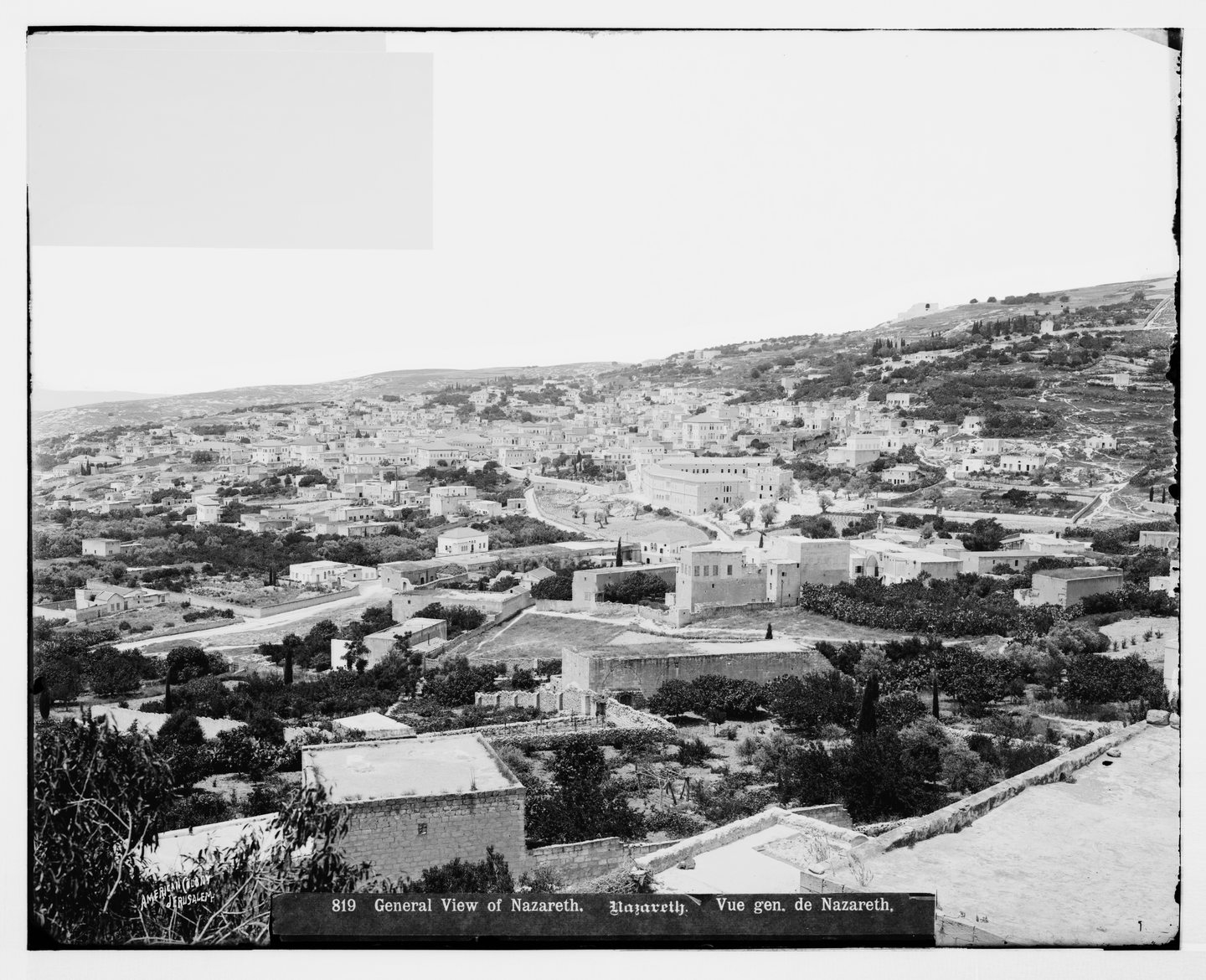
General view of Nazareth (between 1898 and 1914).
The town photograph directly connects with the synagogue visit in Jesus’s home town.
G. Eric and Edith Matson Photograph Collection, Library of Congress · Public Domain Mark 1.0 · Original recordImage changes
Resized proportionally to at most 1440px and JPEG compressed; no crop or content alteration.
The words
Acceptable
Luke’s reading proclaims “the acceptable year of the Lord”; the NET renders it “the year of the Lord’s favor,” before Luke describes Jesus returning the scroll and sitting.
Did you know?
The NET’s note links the word translated acceptable in the year’s proclamation with accepted in Jesus’s later saying about a prophet in his hometown.
Luke 4:19–20; Luke 4:24 (opens a new tab) · NET Bible: Luke 4:16-30 (opens a new tab)
Anointed
Luke records Jesus reading words about the Spirit and anointing to preach to the poor, then saying, “This day is this scripture fulfilled in your ears.”
Brokenhearted
Luke’s KJV text includes “to heal the brokenhearted” in the reading; Isaiah 61:1 uses “bind up the brokenhearted,” while NET Luke 4:18 omits the phrase.
Luke 4:18 (opens a new tab) · Isaiah 61:1 (opens a new tab) · NET Bible: Luke 4:16-30 (opens a new tab)
Bruised
Oppressed or crushed.
Luke’s KJV reading speaks of setting at liberty those who are “bruised”; the NET uses “oppressed,” and Isaiah 58:6 likewise speaks of letting the oppressed go free.
Luke 4:18 (opens a new tab) · NET Bible: Luke 4:16-30 (opens a new tab) · Isaiah 58:6 (opens a new tab)
Captives
Luke includes deliverance for captives in the words Jesus reads; Isaiah 61:1 couples liberty for the captives with prison opening for those who are bound.
Custom
Luke describes Jesus entering the Nazareth synagogue on the Sabbath “as his custom was,” then standing to read, receiving Isaiah’s book and later sitting down.
Did you know?
Luke’s KJV says Jesus opens and closes the book; the NET describes him unrolling and then rolling up a scroll before returning it.
Luke 4:16–20 (opens a new tab) · NET Bible: Luke 4:16-30 (opens a new tab)
Esaias
Isaiah, in this KJV spelling.
Luke’s KJV names the prophet’s book as Esaias; the NET uses Isaiah, and the reading begins with words about the Spirit also found in Isaiah 61:1.
Luke 4:17–18 (opens a new tab) · NET Bible: Luke 4:16-30 (opens a new tab) · Isaiah 61:1 (opens a new tab)
Gracious Words
Luke first reports people wondering at Jesus’s “gracious words” and asking whether he is Joseph’s son; after the Elijah and Elisha examples, he describes their anger.
Headlong
Luke says the crowd leads Jesus to a hill intending to throw him down; the account then describes him passing through them and leaving.
Luke 4:29–30 (opens a new tab) · KKL-JNF: Mount Precipice (opens a new tab)
Liberty
Release or freedom.
Luke’s KJV reading places “liberty” beside those described as “bruised”; Isaiah 58:6 uses freedom language in the passage about loosening burdens and breaking yokes.
Luke 4:18 (opens a new tab) · NET Bible: Luke 4:16-30 (opens a new tab) · Isaiah 58:6 (opens a new tab)
Naaman
Luke names Naaman the Syrian as cleansed in Elisha’s time; 2 Kings 5 describes a captive Israelite girl serving his wife and telling her about the prophet.
Luke 4:27 (opens a new tab) · 2 Kings 5:2–3 (opens a new tab)
Physician
Luke records Jesus anticipating “Physician, heal thyself,” then the demand to do in his home country what people had heard about at Capernaum.
Prophet
Luke moves from Jesus’s “no prophet is accepted in his own country” to the examples of Elijah’s widow and Naaman in Elisha’s time, before describing the crowd’s anger.
Proverb
Luke calls “Physician, heal thyself” a proverb Jesus expects his hearers to repeat; his next saying concerns a prophet not accepted in his own country.
Sarepta
Zarephath, in this KJV spelling.
Luke’s KJV names Sarepta as the city of Sidon to which Elijah was sent; 1 Kings 17 calls the place Zarephath and describes a widow sustaining him.
Luke 4:26 (opens a new tab) · 1 Kings 17:9 (opens a new tab) · NET Bible: Luke 4:16-30 (opens a new tab)
Sources
- Luke 4:16-30 (King James Version)King James Version, passage navigation via Bible Gateway
- Isaiah 61:1-3 (King James Version)King James Version, passage navigation via Bible Gateway
- Isaiah 58:6-9 (King James Version)King James Version, passage navigation via Bible Gateway
- 1 Kings 17:8-16 (King James Version)King James Version, passage navigation via Bible Gateway
- 2 Kings 5:1-14 (King James Version)King James Version, passage navigation via Bible Gateway
- Luke 4:16-30 (NET Bible), translation and notesNET Bible, via Bible Gateway
- KKL-JNF in the Holy Land: Mount PrecipiceKeren Kayemeth LeIsrael – Jewish National Fund