
The Life of Jesus
Puzzle 19 · The Forerunner · Page 35 in print
Herod's Birthday Feast
A birthday banquet ends in John’s execution after Herod’s oath and Herodias’s request.
Jump to a word
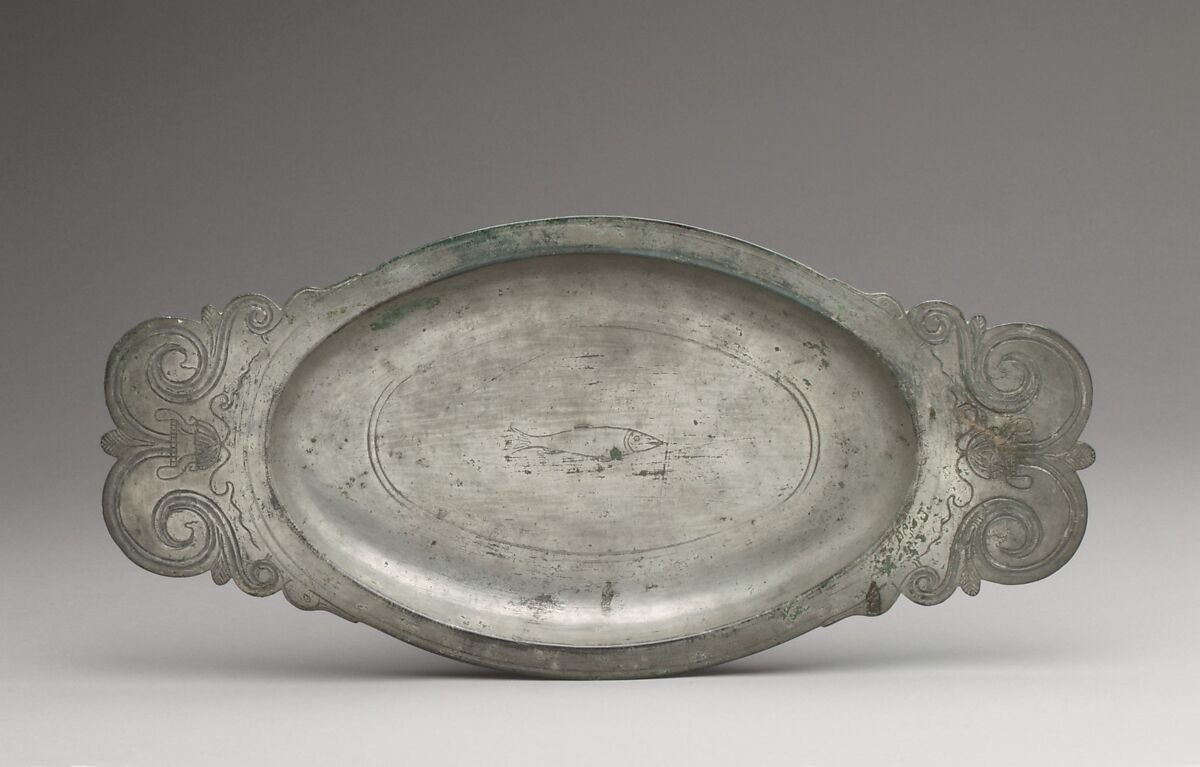
Late Roman platter with a fish design, 4th–5th century.
The Metropolitan Museum of Art, Fletcher Fund, 1947 (47.100.30) · CC0 · Original recordImage changes
Display copies resized; original downloaded JPEG preserved.
The words
Beheaded
Matthew and Mark say John was beheaded in prison on Herod’s order; Josephus’s separate account places his imprisonment and death at Machaerus.
Matthew 14:9–10 (opens a new tab) · Mark 6:26–27 (opens a new tab) · Josephus: Antiquities 18.5.2 (opens a new tab)
Birthday
Mark places the supper on Herod’s birthday and lists the invited leaders; Matthew also links the daughter’s dance and Herod’s oath to the birthday celebration.
Mark 6:21–23 (opens a new tab) · Matthew 14:6–7 (opens a new tab)
Charger
Matthew and Mark use “charger” for the dish requested for John’s head; the pictured platter is dated to the fourth–fifth century by the Met.
Matthew 14:8 (opens a new tab) · Mark 6:25 (opens a new tab) · Met: Late Roman platter (opens a new tab)
Chief Estates
Mark lists the chief estates of Galilee among Herod’s birthday guests, alongside his lords and high captains, before describing the daughter’s dance.
Convenient Day
Mark introduces the birthday supper as a “convenient day,” after saying Herodias wanted John killed but could not while Herod feared and listened to him.
Mark 6:19–20 (opens a new tab) · Mark 6:21 (opens a new tab)
Corpse
Mark says John’s disciples take his corpse and lay it in a tomb; Matthew says they bury the body and then go and tell Jesus.
Mark 6:29 (opens a new tab) · Matthew 14:12 (opens a new tab)
Danced
Mark and Matthew’s KJV accounts describe Herodias’s daughter dancing before Herod; Mark includes the supper guests, and Matthew follows with the oath.
Mark 6:22 (opens a new tab) · Matthew 14:6–7 (opens a new tab)
Executioner
Mark names an executioner sent by the king, who beheads John in prison; Matthew reports Herod sending to have John beheaded without naming that role.
Mark 6:27 (opens a new tab) · Matthew 14:10 (opens a new tab) · NET Bible: Matthew 14:1-12 (opens a new tab)
Gladly
Mark’s KJV text says Herod heard John “gladly” and “did many things”; the NET reads that he was baffled, while still liking to listen.
Mark 6:20 (opens a new tab) · NET Bible: Mark 6:14-29 (opens a new tab)
Herodias
Mark says Herodias wanted John killed after his objection to her marriage; Matthew describes her instructing her daughter to ask for John’s head.
Mark 6:17–19 (opens a new tab) · Matthew 14:8 (opens a new tab)
High Captains
Senior military commanders.
Mark includes high captains among Herod’s birthday guests, between the lords and chief estates of Galilee, as he sets the scene for the supper.
Mark 6:21 (opens a new tab) · NET Bible: Mark 6:14-29 (opens a new tab)
King Herod
Mark calls the ruler King Herod; Matthew introduces him as “Herod the tetrarch” and later also calls him king when describing the order for John’s death.
Mark 6:14 (opens a new tab) · Matthew 14:1; Matthew 14:9–10 (opens a new tab)
Lawful
Mark gives John’s words to Herod as “not lawful” to have his brother’s wife; Matthew also reports John’s objection and Herod’s imprisonment of him.
Mark 6:17–18 (opens a new tab) · Matthew 14:3–4 (opens a new tab)
Quarrel
A grudge or hostility.
Mark says Herodias had a quarrel against John and wanted him killed; the following verse says Herod feared John, knowing him as just and holy.
Mark 6:19–20 (opens a new tab) · NET Bible: Mark 6:14-29 (opens a new tab)
Supper
Mark’s supper scene moves from the birthday guests and dance to John’s execution; the account connects Herod’s decision with his oath and the people seated with him.
Sources
- Mark 6:14-20 (King James Version)King James Version, passage navigation via Bible Gateway
- Mark 6:21-29 (King James Version)King James Version, passage navigation via Bible Gateway
- Matthew 14:1-12 (King James Version)King James Version, passage navigation via Bible Gateway
- Mark 6:14-29 (NET Bible), translation and notesNET Bible, via Bible Gateway
- Matthew 14:1-12 (NET Bible), translation and notesNET Bible, via Bible Gateway
- Josephus, Antiquities 18.5.2 (Whiston)Flavius Josephus, translated by William Whiston, via Project Gutenberg
- Platter with a Fish, Late Roman, 4th–5th centuryThe Metropolitan Museum of Art