
The Life of Jesus
Puzzle 15 · The Forerunner · Page 31 in print
Tempted in the Wilderness
In the wilderness, Jesus answers the tempter with scripture; the tests concern bread, trust and worship.
Jump to a word
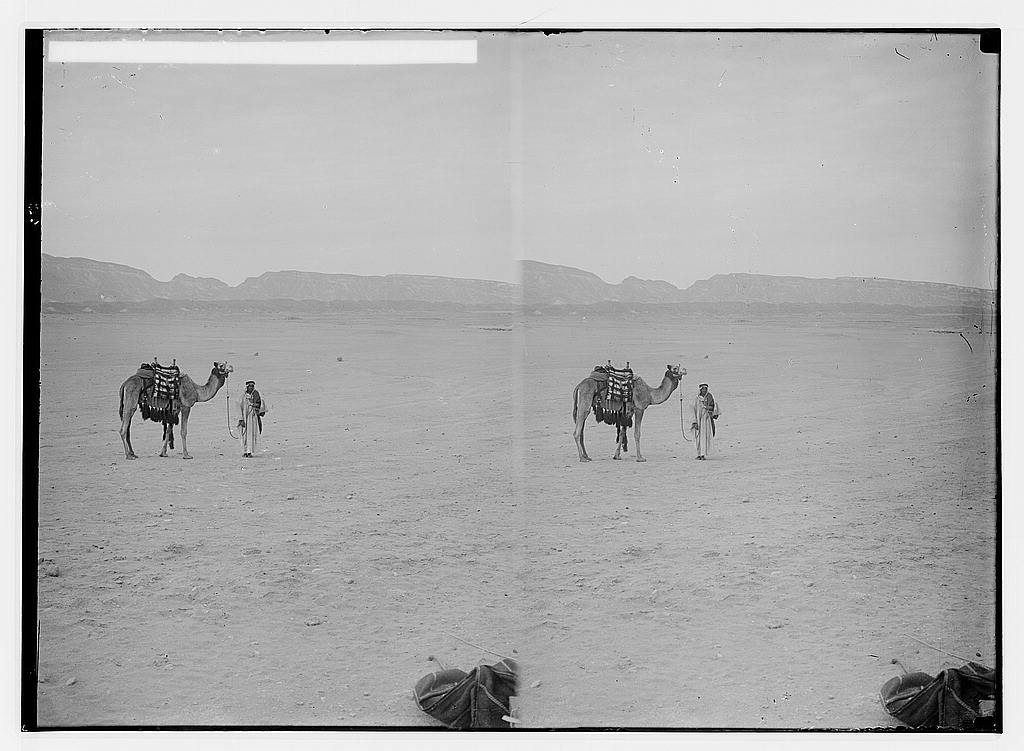
Traveler and camel in the Sinai desert, about 1900–1920.
The barren landscape helps visualize wilderness conditions without identifying the exact place of temptation.
American Colony (Jerusalem). Photo Department; G. Eric and Edith Matson Photograph Collection, Library of Congress. · No known restrictions on publication · Original recordImage changes
Resized proportionally to at most 1440px and JPEG compressed; no crop or content alteration.
The words
Dash
Strike against something.
Matthew and Luke both place “dash thy foot against a stone” in the devil’s quotation about angelic protection; Jesus replies against putting God to the test.
Did you know?
Psalm 91:11–12 joins the angels’ charge with bearing someone up in their hands; it also includes “to keep thee in all thy ways,” absent from Matthew’s quotation.
Matthew 4:6–7 (opens a new tab) · Luke 4:10–12 (opens a new tab) · Psalm 91:11–12 (opens a new tab) · NET Bible: Matthew 4:1-11 (opens a new tab)
Devil
Matthew says the Spirit leads Jesus into the wilderness to be tempted by the devil; Luke describes his return from the Jordan before the wilderness testing.
Matthew 4:1 (opens a new tab) · Luke 4:1–2 (opens a new tab)
Fasted
Matthew says Jesus fasts for forty days and nights before becoming hungry; Luke describes him eating nothing during the days of temptation.
Forty Days
Matthew counts forty days and forty nights for Jesus’s fast; Luke describes forty days of temptation, followed by the challenge concerning bread.
Matthew 4:2–3 (opens a new tab) · Luke 4:2–3 (opens a new tab)
Hungred
Was hungry.
Matthew places Jesus’s hunger after the forty-day fast and just before the tempter’s challenge to turn stones into bread.
Matthew 4:2–3 (opens a new tab) · NET Bible: Matthew 4:1-11 (opens a new tab)
Ministered
Served or attended to someone’s needs.
Matthew ends the scene with the devil leaving Jesus and angels coming to minister to him, after Jesus’s reply about worshiping and serving God.
Did you know?
Mark’s shorter wilderness account also mentions angels ministering to Jesus; it describes forty days of temptation and adds that he was with wild beasts.
Matthew 4:10–11 (opens a new tab) · NET Bible: Matthew 4:1-11 (opens a new tab) · Mark 1:12–13 (opens a new tab)
Moment of Time
Luke says the devil shows Jesus all the world’s kingdoms “in a moment of time,” before offering their power and glory in exchange for worship.
Pinnacle
A high point of the temple.
Matthew places Jesus on a pinnacle of the temple in the holy city; Luke names Jerusalem. In both accounts, the devil urges him to cast himself down.
Matthew 4:5–7 (opens a new tab) · Luke 4:9–12 (opens a new tab) · NET Bible: Matthew 4:1-11 (opens a new tab)
Proceedeth
Comes forth.
Matthew uses “proceedeth” in Jesus’s answer about living by every word from God’s mouth, replying to the tempter’s challenge about turning stones into bread.
Did you know?
Deuteronomy 8 places the words about bread and God’s mouth within a remembrance of Israel’s forty years in the wilderness, including hunger and the provision of manna.
Matthew 4:3–4 (opens a new tab) · NET Bible: Matthew 4:1-11 (opens a new tab) · Deuteronomy 8:2–3 (opens a new tab)
Satan
In Matthew, Jesus addresses the devil as Satan when rejecting the offer of kingdoms in exchange for worship; he answers with words about worshiping and serving God.
Season
A period of time.
Luke closes the temptation account by saying the devil departs “for a season,” leaving the interval unspecified rather than describing a permanent departure.
Luke 4:13 (opens a new tab) · NET Bible: Luke 4:1-13 (opens a new tab)
Son of God
Matthew and Luke both report the devil’s “If thou be the Son of God” challenge in the bread and temple scenes; Jesus answers with scripture.
Matthew 4:3–7 (opens a new tab) · Luke 4:3–4; Luke 4:9–12 (opens a new tab)
Stones
Matthew’s tempter speaks of “these stones” becoming bread; Luke’s devil says “this stone.” In both accounts, Jesus replies about not living by bread alone.
Matthew 4:3–4 (opens a new tab) · Luke 4:3–4 (opens a new tab)
Tempted
Matthew and Luke both show Jesus answering the devil’s challenges with scripture, including the reply about bread and the refusal to put God to the test.
Matthew 4:4; Matthew 4:7 (opens a new tab) · Luke 4:4; Luke 4:12 (opens a new tab) · Deuteronomy 6:16 (opens a new tab)
Tempter
Matthew calls the challenger “the tempter” at the bread test, then gives the temple and kingdoms scenes; Luke places the kingdoms before the temple.
Matthew 4:3–10 (opens a new tab) · Luke 4:3–12 (opens a new tab)
Sources
- Matthew 4:1-11 (King James Version)King James Version, passage navigation via Bible Gateway
- Luke 4:1-13 (King James Version)King James Version, passage navigation via Bible Gateway
- Psalm 91:9-16 (King James Version)King James Version, passage navigation via Bible Gateway
- Deuteronomy 8:1-6 (King James Version)King James Version, passage navigation via Bible Gateway
- Deuteronomy 6:10-16 (King James Version)King James Version, passage navigation via Bible Gateway
- Mark 1:12-13 (King James Version)King James Version, passage navigation via Bible Gateway
- Matthew 4:1-11 (NET Bible), translation and notesNET Bible, via Bible Gateway
- Luke 4:1-13 (NET Bible), translation and notesNET Bible, via Bible Gateway