
Wildlife of the World
Puzzle 67 · Ocean Giants and Reef Life · Page 101 in print
Clownfish Anemones
A clownfish’s mucus coat helps protect it among an anemone’s stinging tentacles; the fish shelters close to its host, where males also guard and fan eggs laid on a nearby surface.
Jump to a word
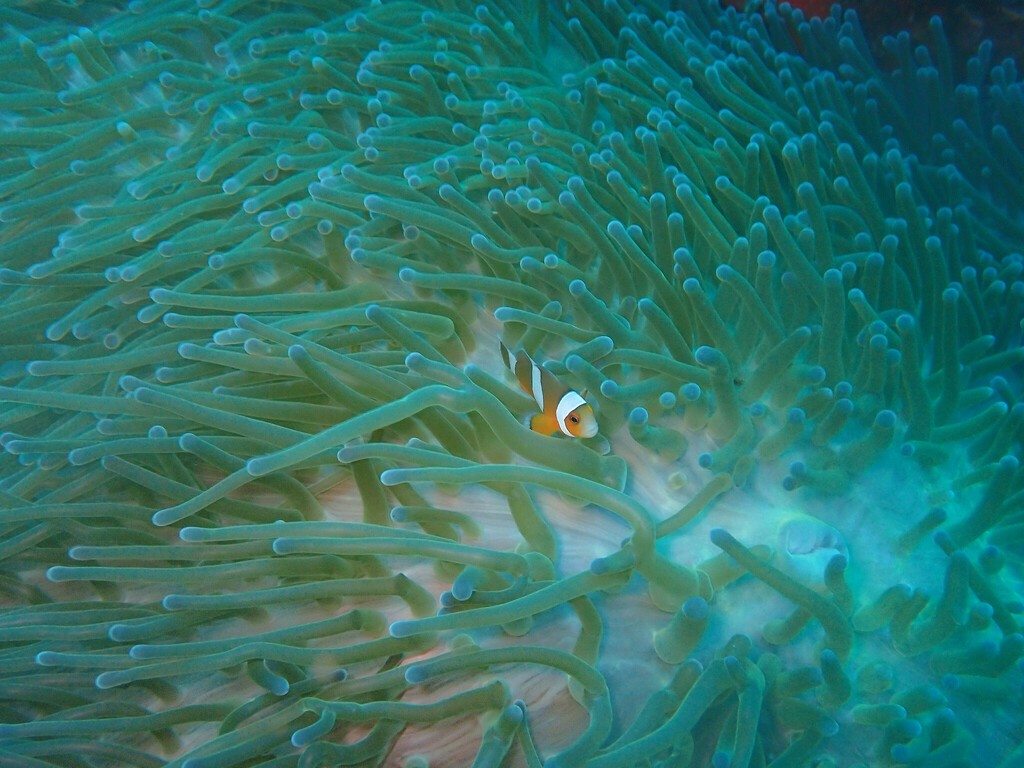
Clownfish shelter among an anemone's tentacles.
Species reference for Clownfish Anemones. The photograph does not necessarily show the population or place named in the puzzle.
(c) Donald Davesne, some rights reserved (CC BY) · CC BY 4.0 · Original recordImage changes
Resized and converted to JPEG for display; no subject alteration.
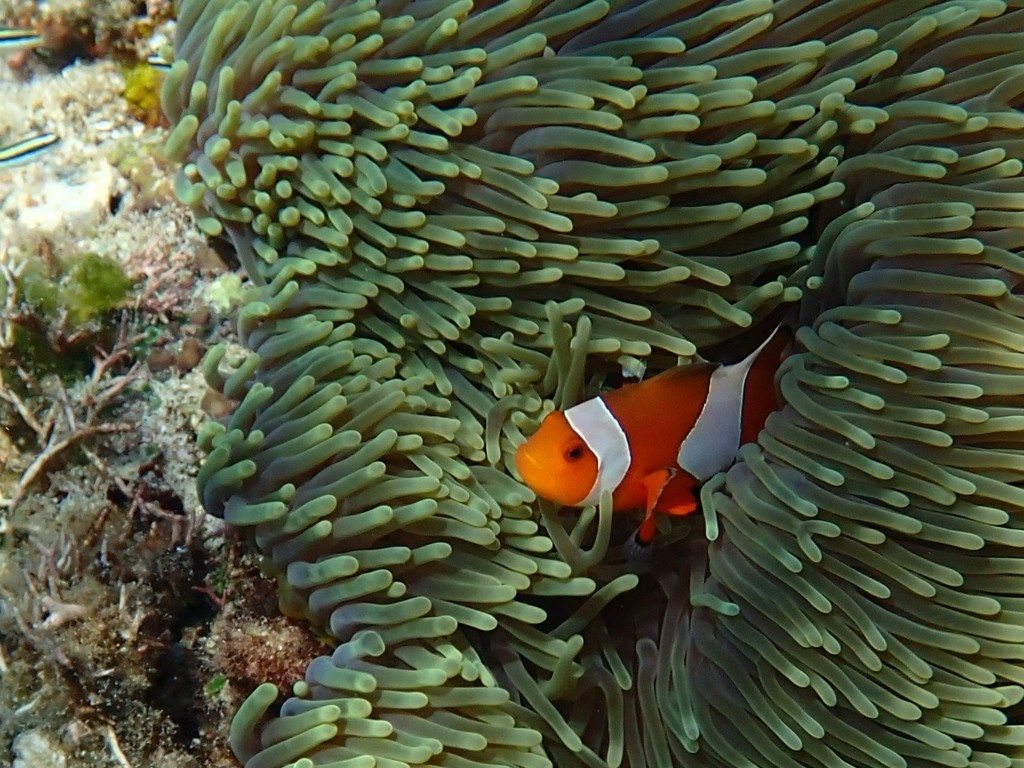
The orange and white bands of a clownfish contrast with its host anemone.
Species reference for Clownfish Anemones. The photograph does not necessarily show the population or place named in the puzzle.
(c) Petr Knotek, some rights reserved (CC BY) · CC BY 4.0 · Original recordImage changes
Resized and converted to JPEG for display; no subject alteration.
The words
Amphiprion
The false clownfish is Amphiprion ocellaris.
Anemones
Clownfish live in symbiosis with sea anemones.
Clownfish
The clown anemonefish is also called simply clownfish.
Egg Fanning
The male fans the nest to oxygenate the eggs.
Mucus
A mucus coat keeps the young safe from anemone tentacles.
Mutualism
A partnership benefiting both species, as when anemonefish and their host anemones help protect one another.
Nematocyst
Nematocysts, the stinging organelles of sea anemones and other cnidarians, are pressurized capsules built within cells called nematocytes.
Ocellaris
The false clownfish is Amphiprion ocellaris.
Percula
The true clown anemonefish is Amphiprion percula.
Reefs
The false clownfish lives on coral reefs.
Sex Change
Every clown anemonefish starts as a male, and females develop from males by sex reversal.
Sting
Mucus protects anemonefish from the anemone's sting.
Symbiosis
A close partnership between species.
The clownfish and anemone share a symbiosis.
Tropics
The false clownfish is a tropical marine fish.
White Bands
The false clownfish is orange with three white bands.
Sources
- Clownfish Anemones (source capture)Animal Diversity Web, University of Michigan Museum of Zoology
- Clownfish Anemones (source capture)Georgia Aquarium
- Clownfish Anemones (source capture)Karabulut et al., Nature Communications 13 (2022), doi:10.1038/s41467-022-31090-0 (full text via Europe PMC)
- Clownfish Anemones (source capture)Animal Diversity Web, University of Michigan Museum of Zoology