
Wildlife of the World
Puzzle 61 · Polar and Subpolar Worlds · Page 92 in print
Muskox Tundra
After muskoxen disappeared from Alaska, animals brought from East Greenland in 1930 founded a new population; descendants were later moved to establish other Alaskan herds.
Jump to a word
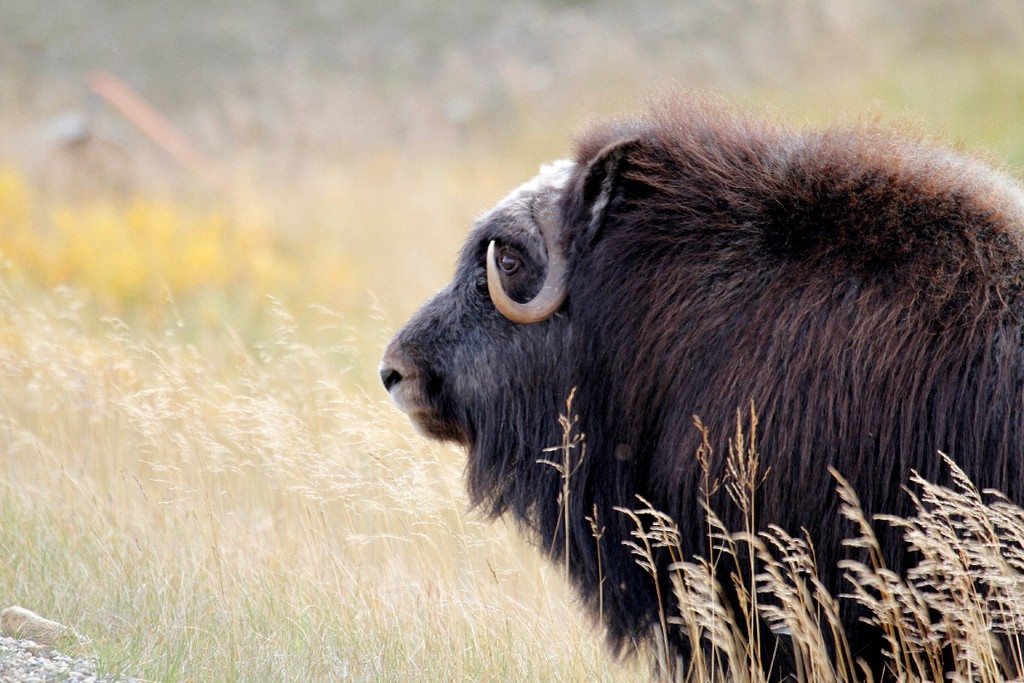
A muskox's dense coat and curved horn seen in profile.
Species reference for Muskox Tundra. The photograph does not necessarily show the population or place named in the puzzle.
steve b / iNaturalist (CC0) · CC0 1.0 · Original recordImage changes
Resized and converted to JPEG for display; no subject alteration.
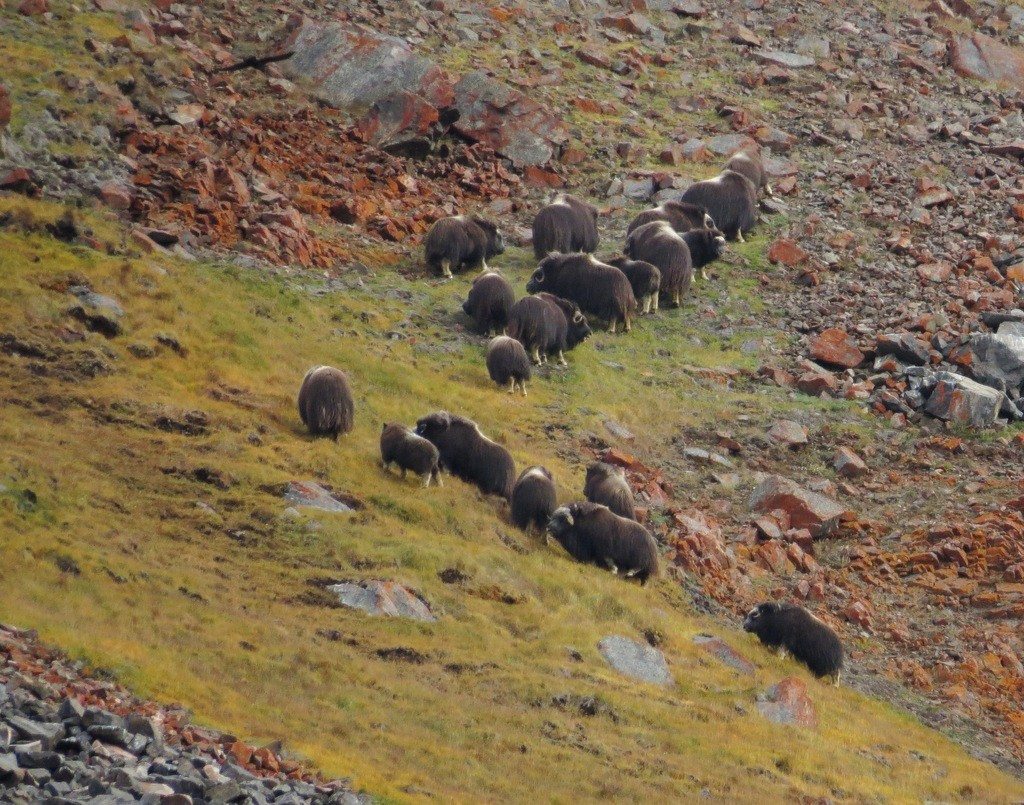
Muskoxen form a group on a rocky tundra slope in Greenland.
Species reference for Muskox Tundra. The photograph does not necessarily show the population or place named in the puzzle.
(c) Paul Prior, some rights reserved (CC BY) · CC BY 4.0 · Original recordImage changes
Resized and converted to JPEG for display; no subject alteration.
The words
Bovid
Muskoxen are members of the Bovidae family.
Calf
Single calves are born in spring.
Circle
Attacked muskoxen form a circle with calves in the centre.
Guard Hair
Guard hairs make the long, shaggy coat.
Herd
The Nunivak herd grew to 750 animals.
Lichen
Muskoxen eat lichen in winter.
Moss
Muskoxen eat moss in winter.
Muskox
Muskoxen were brought to Alaska from East Greenland in 1930.
Nunivak
The 1930 muskoxen were moved to Nunivak Island.
Ovibos
The muskox’s genus name, Ovibos, draws on Latin words for sheep and ox.
Permafrost
The muskox's tundra biome has soils usually subject to permafrost.
Qiviut
Qiviut is a very soft insulating underwool.
Sedges
In summer muskoxen eat mostly leafy plants, grasses and sedges.
Tundra
Cold, largely treeless northern country where muskoxen graze on sedges and other low plants.
Wolves
Wolves are predators, and muskoxen may throw and trample them.
Sources
- Muskox Tundra (source capture)Large Animal Research Station, University of Alaska Fairbanks
- Muskox Tundra (source capture)Alaska Department of Fish and Game
- Muskox Tundra (source capture)Animal Diversity Web, University of Michigan Museum of Zoology