
Wildlife of the World
Puzzle 57 · Polar and Subpolar Worlds · Page 88 in print
Beluga Estuaries
Belugas use the Churchill River estuary on Hudson Bay during summer. Across their range, some beluga populations rub against gravel while moulting; coastal gatherings also provide places to feed and raise calves.
Jump to a word
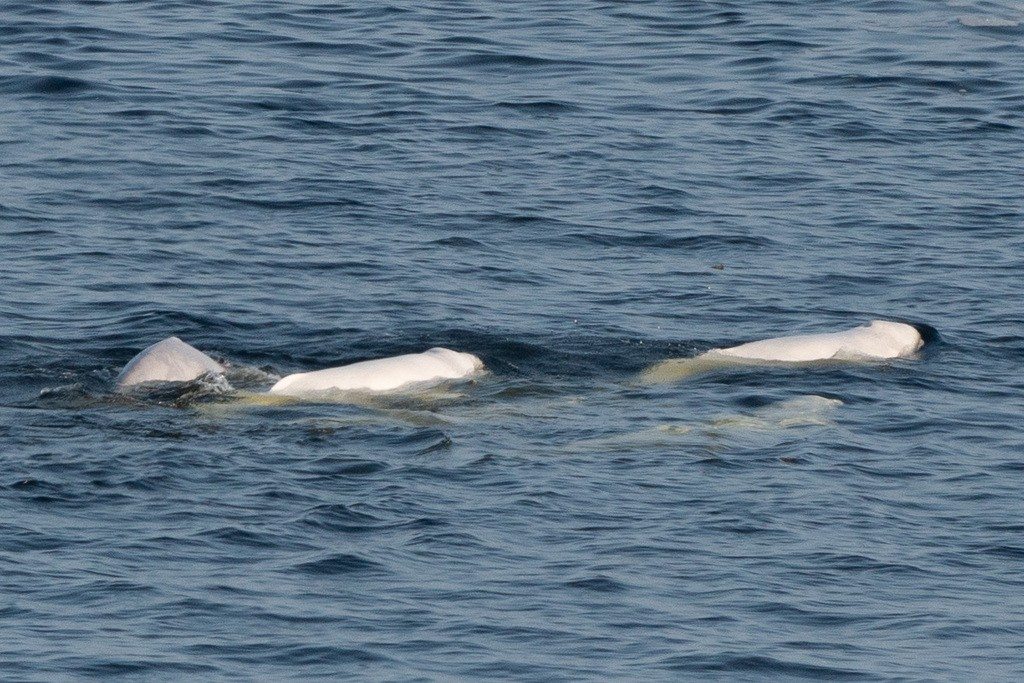
A group of belugas surfaces in Québec waters.
Species reference for Beluga Estuaries. The photograph does not necessarily show the population or place named in the puzzle.
(c) Joeb, some rights reserved (CC BY) · CC BY 4.0 · Original recordImage changes
Resized and converted to JPEG for display; no subject alteration.
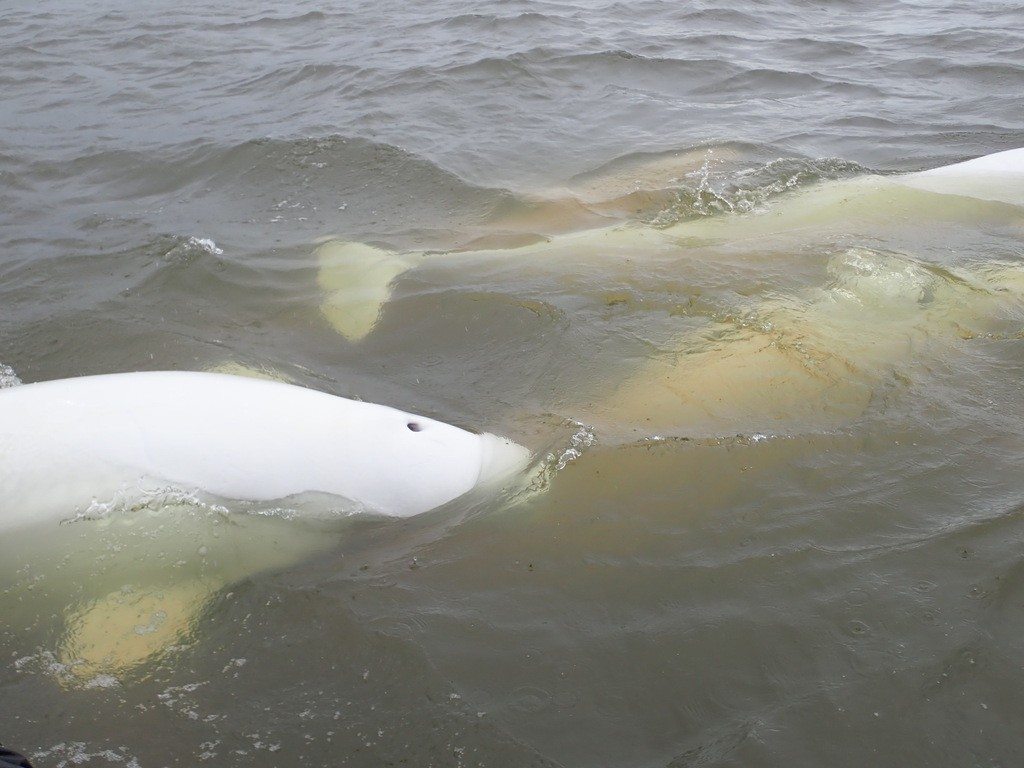
Belugas swim close together near Churchill, Manitoba.
Species reference for Beluga Estuaries. The photograph does not necessarily show the population or place named in the puzzle.
(c) Henrik Kibak, some rights reserved (CC BY) · CC BY 4.0 · Original recordImage changes
Resized and converted to JPEG for display; no subject alteration.
The words
Beluga
Belugas use shallow coastal waters in summer.
Bulbous Head
The beluga has a small bulbous head.
Canada
Belugas are common in Canada.
Cetacean
A member of the whale, dolphin and porpoise group; the beluga is a toothed whale.
Churchill
Western Hudson Bay belugas summer in the Churchill estuary.
Cook Inlet
A small endangered beluga stock lives in Cook Inlet, Alaska.
Dorsal Ridge
A tough dorsal ridge replaces the dorsal fin.
Echolocation
Finding prey by echoing sound.
Belugas echolocate to navigate and hunt.
Flippers
Male belugas have slightly curled flipper tips.
Gravel Beds
Belugas rub against coarse gravel in shallow water to shed skin.
Herring
Belugas eat herring.
Hudson Bay
Belugas migrate in and around Hudson Bay.
Russia
Belugas are common in Russia.
Salmon
Belugas eat salmon.
Sea Canary
Belugas are nicknamed the sea canary for their many sounds.
Sources
- Beluga Estuaries (source capture)NOAA Fisheries
- Beluga Estuaries (source capture)Animal Diversity Web, University of Michigan Museum of Zoology
- Beluga Estuaries (source capture)PLOS ONE (peer-reviewed article, Westdal et al. 2022)