
Wildlife of the World
Puzzle 55 · Islands of Evolution · Page 83 in print
Cuban Solenodon
The Cuban solenodon searches eastern Cuba’s mountain forests at night, using its snout and large claws to uncover food. When it walks, only its toes touch the ground.
Jump to a word
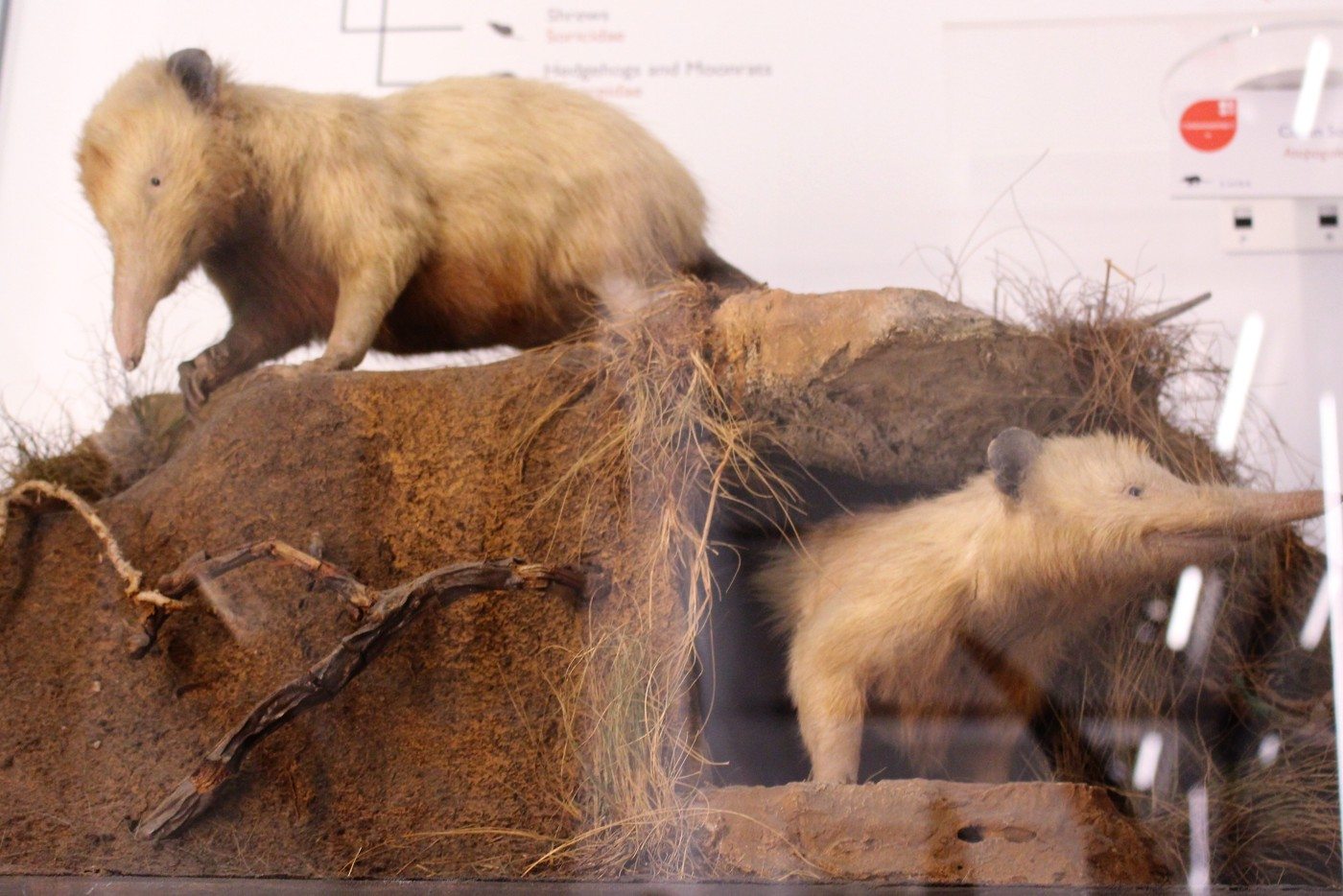
Preserved Cuban solenodons at the Cambridge University Museum of Zoology.
Preserved specimen showing the anatomy of the Cuban solenodon.
Emőke Dénes · CC BY-SA 4.0 · Original recordImage changes
Resized and converted to JPEG for display; no subject alteration.
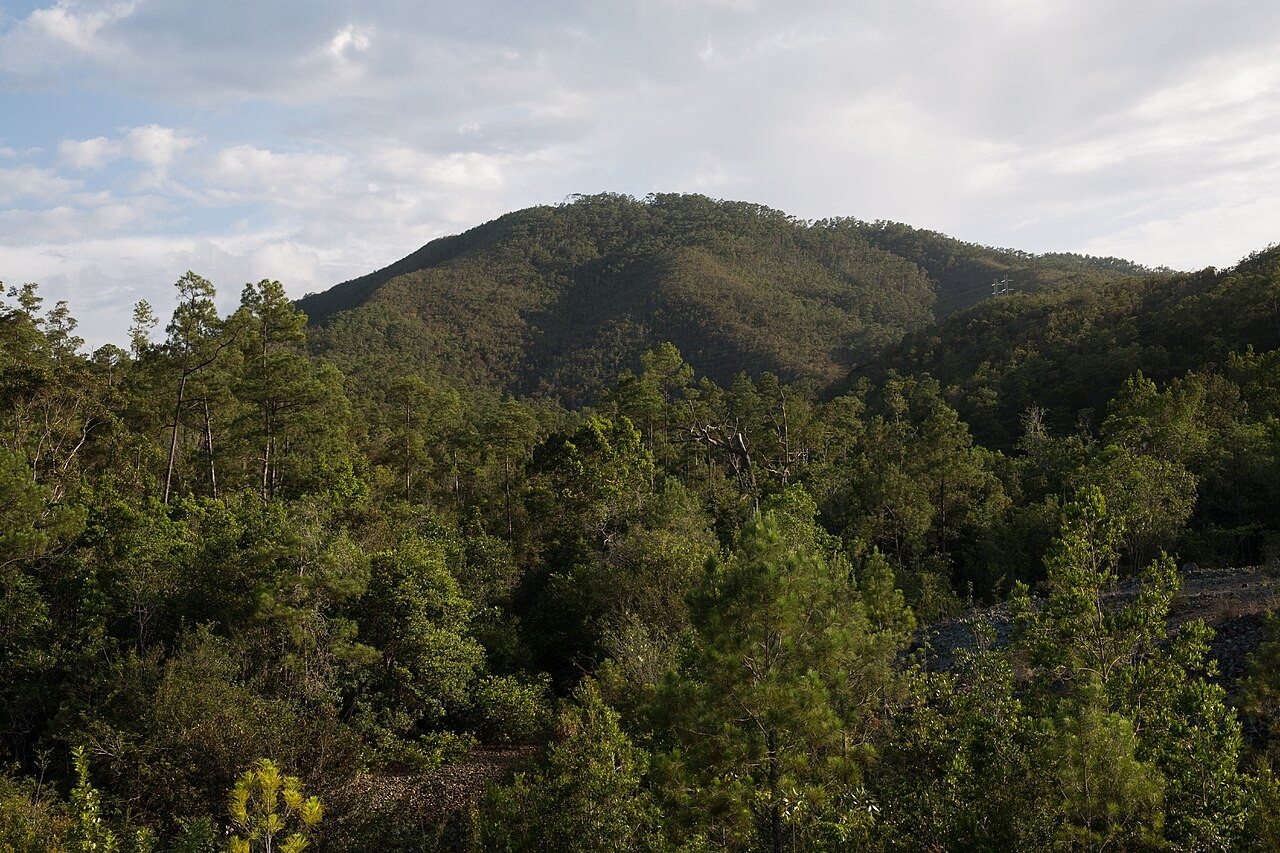
Forested mountains in Alejandro de Humboldt National Park, eastern Cuba.
Eastern Cuban forest setting connected with the Cuban solenodon chapter.
Christian Pirkl · CC BY-SA 4.0 · Original recordImage changes
Resized and converted to JPEG for display; no subject alteration.
The words
Almiqui
Almiquí is a local name for the Cuban solenodon.
Antilles
Cuba is one of the Greater Antilles.
Baracoa
The Baracoa area of eastern Cuba.
A late-1970s survey found the solenodon in upland forest at Baracoa.
Caribbean
The Cuban solenodon's DNA sheds light on the origins of Caribbean fauna.
Cuba
The Cuban solenodon survives in eastern Cuba, historically described as the Oriente region.
Foreclaws
The front claws it digs and holds prey with.
Large items were held down with the foreclaws.
Hollow Logs
It prefers to den in hollow logs or among tree roots.
Humboldt
A solenodon was seen in 2003 in Alejandro de Humboldt National Park.
Land Crabs
Besides insects it takes caterpillars, land crabs, frogs, toads, lizards and snakes.
Long Snout
The Cuban solenodon has an elongated, flexible snout suited to investigating the ground for food.
Rediscovery
The Cuban solenodon was reported again after being considered extinct, illustrating how elusive it can be.
Shrew
The solenodon resembles a large shrew in general shape, but belongs to its own mammal family.
Solenodon
Cuban solenodons root for food with their snouts.
Toxic Saliva
The Cuban solenodon delivers venomous saliva through specialized teeth.
Tunnels
Its tunnel openings are 10–12 cm across.
Sources
- Cuban Solenodon (source capture)Scientific American, Extinction Countdown blog
- Cuban Solenodon (source capture)Scientific Reports (Nature Portfolio), peer-reviewed article
- Cuban Solenodon (source capture)Bijdragen tot de Dierkunde 53 (1983), Naturalis Biodiversity Center repository
- Cuban Solenodon (source capture)Animal Diversity Web, University of Michigan Museum of Zoology
- Cuban Solenodon (source capture)Animal Diversity Web, University of Michigan Museum of Zoology