
Wildlife of the World
Puzzle 53 · Islands of Evolution · Page 81 in print
Mauritius Kestrel
Only four Mauritius kestrels were known in 1974. Captive breeding, releases and careful management helped this island falcon recover, but it still needs continuing conservation work.
Jump to a word
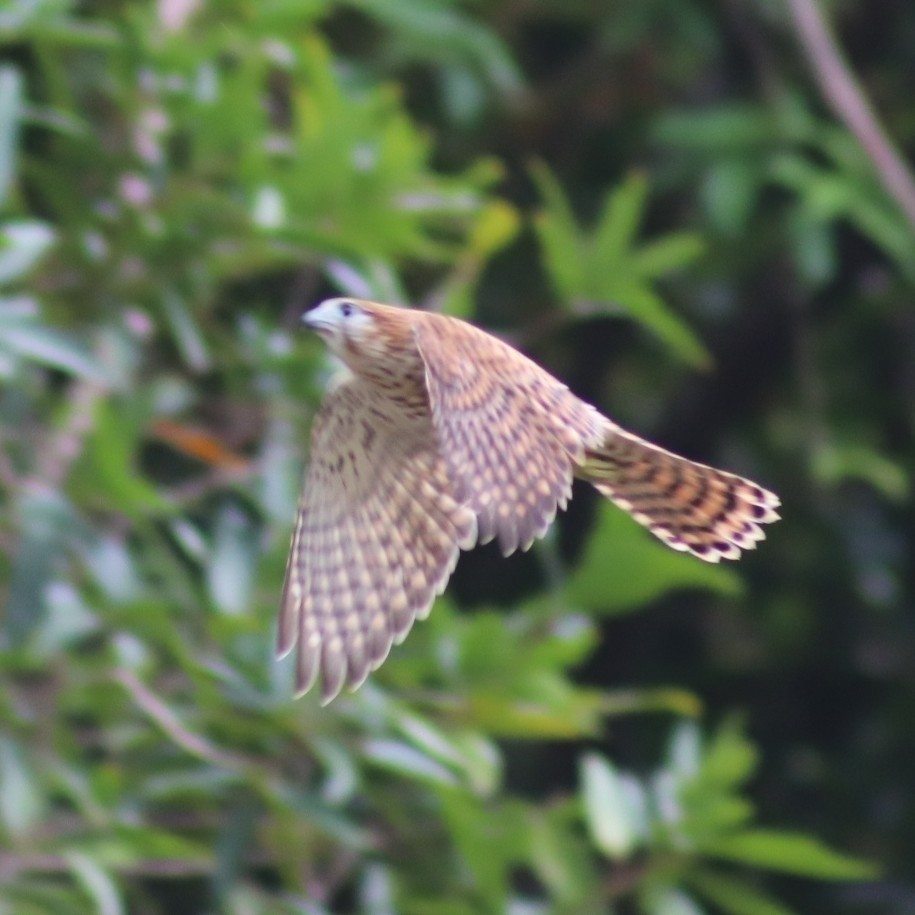
A Mauritius kestrel spreads its wings near foliage.
Species reference for Mauritius Kestrel. The photograph does not necessarily show the population or place named in the puzzle.
(c) Robert Martin, some rights reserved (CC BY) · CC BY 4.0 · Original recordImage changes
Resized and converted to JPEG for display; no subject alteration.
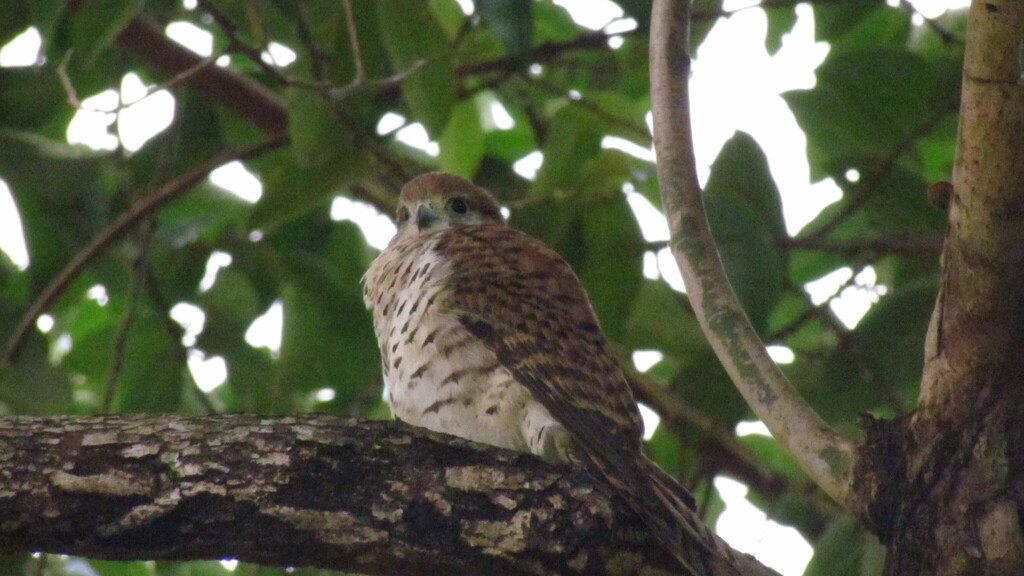
A Mauritius kestrel perches beneath leaves.
Species reference for Mauritius Kestrel. The photograph does not necessarily show the population or place named in the puzzle.
(c) Josh Noseworthy, some rights reserved (CC BY) · CC BY 4.0 · Original recordImage changes
Resized and converted to JPEG for display; no subject alteration.
The words
Black River
Kestrels originally lived in the Black River Gorges forests.
Breeding
A pioneering captive breeding programme began to turn the tide.
Carl Jones
Carl Jones initiated the kestrel's rescue.
Dodo
Mauritius, home of the kestrel, was once home to the extinct dodo.
Falcon
The Mauritius kestrel is a forest-dwelling falcon.
Four Birds
Only four birds survived in the wild in the 1970s.
Gecko
The kestrel feeds mainly on Mauritian day-geckos.
Hacking
A falconry method of releasing young birds.
Captive-reared kestrels were released by hacking.
Hand Rearing
Conservation workers raised young Mauritius kestrels for release as part of the species’ recovery programme.
Animal Diversity Web (opens a new tab) · mauritian-wildlife.org (opens a new tab)
Kestrel
The kestrel recovered from four known wild birds in 1974.
Mauritius
The Mauritius kestrel is unique to the island of Mauritius.
Mongooses
Introduced mongooses are among its main predators on Mauritius.
Nest Boxes
Artificial nest sites, including predator-resistant boxes, have supported Mauritius kestrel conservation.
Raptor
The kestrel was once the world's rarest bird of prey.
Recovery
The kestrel recovered from four known wild birds to about 350.
Sources
- Mauritius Kestrel (source capture)Museum of New Zealand Te Papa Tongarewa
- Mauritius Kestrel (source capture)The Peregrine Fund
- Mauritius Kestrel (source capture)Animal Diversity Web, University of Michigan Museum of Zoology
- kestrel-projectwww.mauritian-wildlife.org