
Wildlife of the World
Puzzle 47 · Australasia and Zealandia · Page 73 in print
Superb Lyrebird
The superb lyrebird copies many other birds’ calls and can imitate mechanical sounds; males display on small ground mounds, combining song with an elaborate spread of tail feathers.
Jump to a word
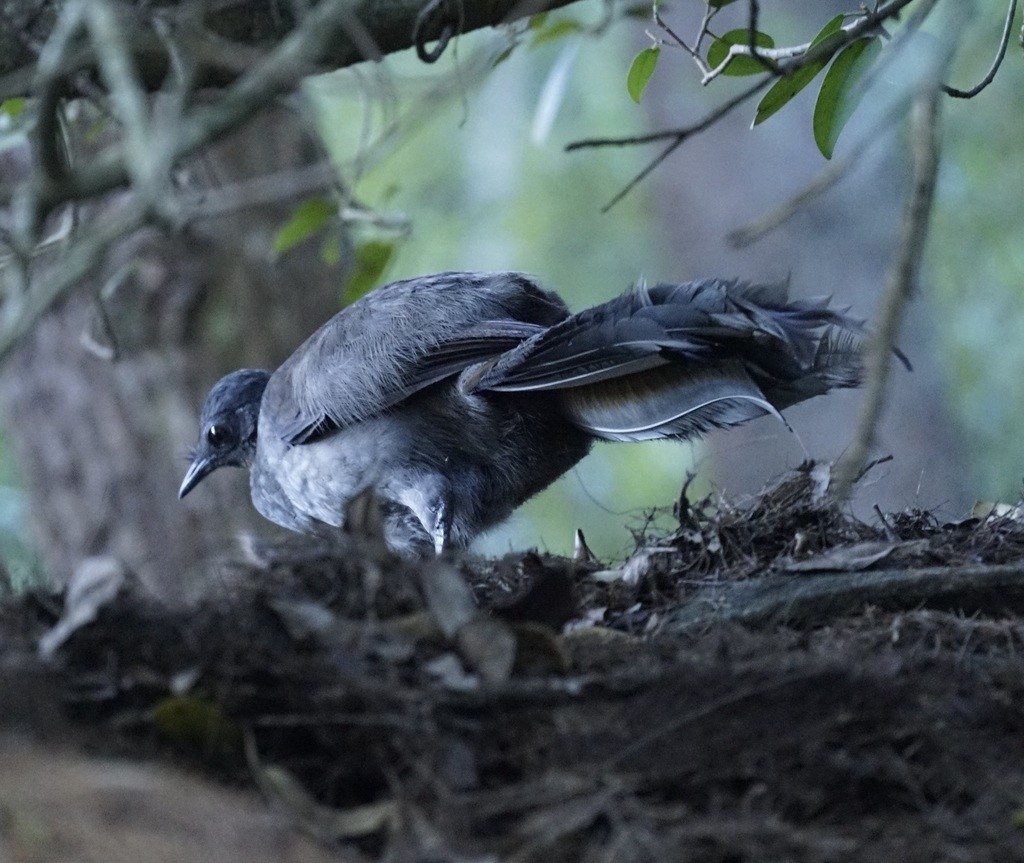
A superb lyrebird displays its tail above the forest floor.
Species reference for Superb Lyrebird. The photograph does not necessarily show the population or place named in the puzzle.
(c) Tim, some rights reserved (CC BY) · CC BY 4.0 · Original recordImage changes
Resized and converted to JPEG for display; no subject alteration.
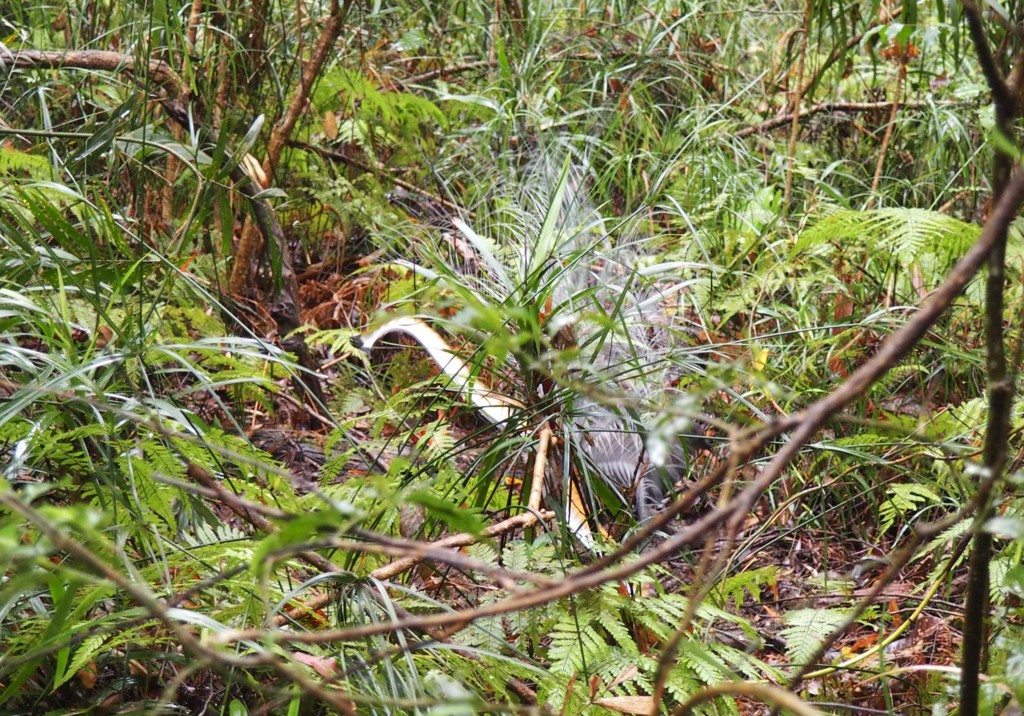
A lyrebird's curved tail feathers rise among the undergrowth.
Species reference for Superb Lyrebird. The photograph does not necessarily show the population or place named in the puzzle.
(c) Sockrosma, some rights reserved (CC BY) · CC BY 4.0 · Original recordImage changes
Resized and converted to JPEG for display; no subject alteration.
The words
Bushland
Male lyrebirds sing and dance in bushland along Australia's east coast.
Car Engines
Engine sounds are among the artificial noises that superb lyrebirds can learn to imitate; this is not evidence that wild birds routinely copy traffic.
Australian Museum (opens a new tab) · Western Sydney University (opens a new tab)
Chainsaw
Captive superb lyrebirds have imitated chainsaws; their celebrated skill should not be confused with a routine sound of wild courtship.
Australian Museum (opens a new tab) · Western Sydney University (opens a new tab)
Display
The male shakes his tail in display.
Eucalyptus
Its call is common in wet eucalypt woodlands.
Kookaburra
The kookaburra whose laugh it copies.
Kookaburras are a great favourite of lyrebird mimicry.
Lyrebird
The superb lyrebird is a ground-dwelling bird of moist forests.
Mimicry
The superb lyrebird is renowned for mimicking natural and artificial sounds.
Mound
The male builds a mound of leaf litter for his display.
Rosellas
Rosellas whose calls it copies.
Rosellas are among the birds it imitates.
Song
A lyrebird’s song combines its own sounds with learned imitations, especially the calls of other birds.
Syrinx
The lyrebird sings with a vocal organ called a syrinx.
Tail Fan
The male displays his fanned tail.
Whipbirds
Whipbirds whose whip-crack calls it copies.
Whipbirds are among its favourite imitations.
Sources
- Superb Lyrebird (source capture)ABC Science, Australian Broadcasting Corporation
- Superb Lyrebird (source capture)Australian Museum
- Vocal mimicry in Australian birdsWestern Sydney University
- Superb Lyrebird (source capture)NSW National Parks and Wildlife Service