
Wildlife of the World
Puzzle 37 · Monsoon Asia and Sundaland · Page 61 in print
Sunda Pangolin
The critically endangered Sunda pangolin climbs trees and searches the ground for ants and termites; illegal trade in its meat and scales remains a major threat across Southeast Asia.
Jump to a word
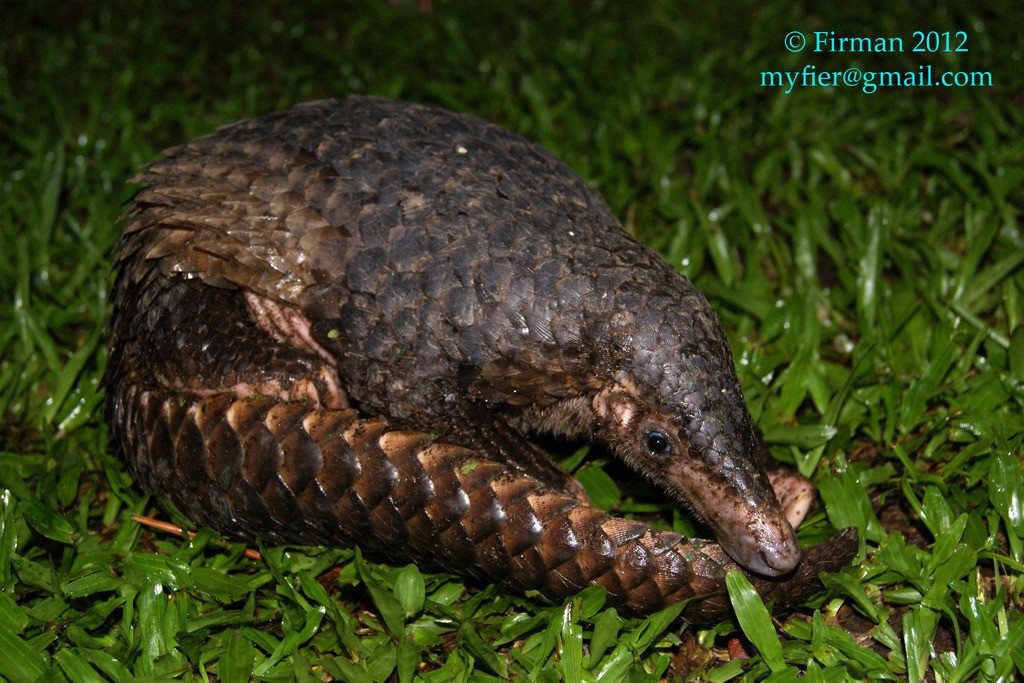
A Sunda pangolin rests on grass with its scaled body curved.
Species reference for Sunda Pangolin. The photograph does not necessarily show the population or place named in the puzzle.
(c) Firman, some rights reserved (CC BY) · CC BY 4.0 · Original recordImage changes
Resized and converted to JPEG for display; no subject alteration.
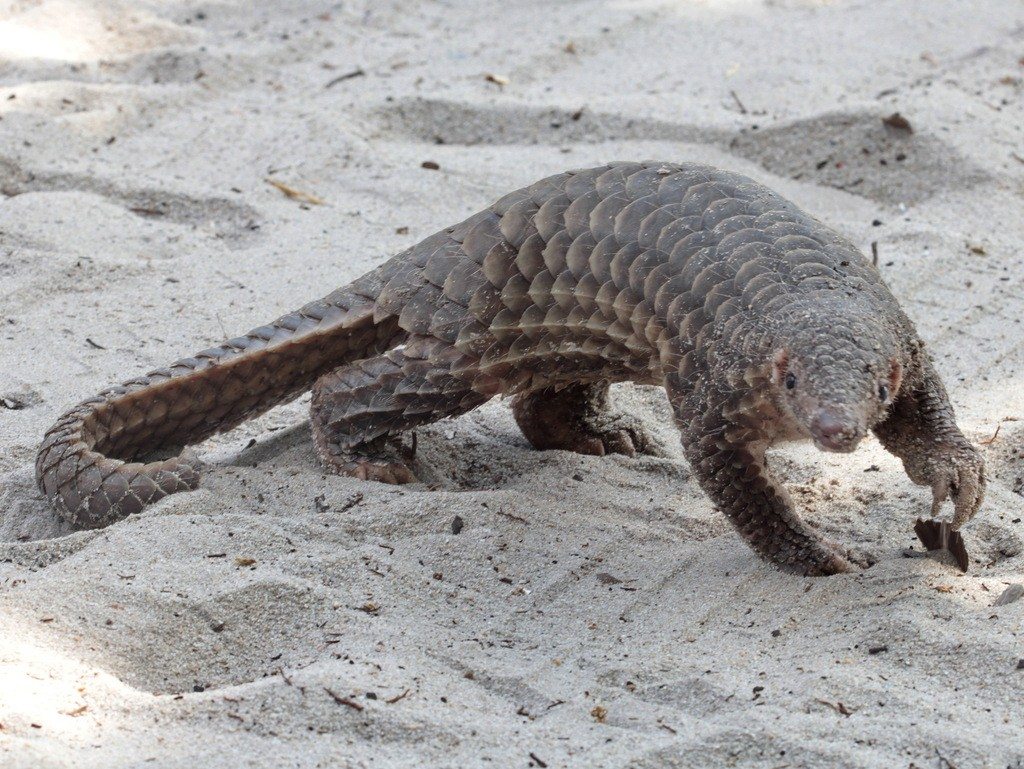
A Sunda pangolin walks across pale ground in Thailand.
Species reference for Sunda Pangolin. The photograph does not necessarily show the population or place named in the puzzle.
(c) Ian Dugdale, some rights reserved (CC BY) · CC BY 4.0 · Original recordImage changes
Resized and converted to JPEG for display; no subject alteration.
The words
Ants
It eats only ants and termites.
Burrow
The underground den it sleeps in.
Sunda pangolins live in burrows.
Bushmeat
Wild animal meat sold for food.
Sunda pangolins are hunted for their meat as well as scales and skins.
Digging Claws
The forefeet have large digging claws.
Grasping Tail
The Sunda pangolin has a prehensile tail.
Hindfeet
A threatened pangolin can run on its hindfeet alone.
Manis
The Sunda (Malayan) pangolin is Manis javanica.
Pangolin
Sunda pangolins eat only ants and termites.
Pholidota
Pangolins form the order Pholidota.
Soft Belly
It curls into a tight ball to protect its soft belly.
Sunda
The Sunda pangolin, Manis javanica, is the Southeast Asian pangolin featured here.
Termites
It eats only ants and termites.
Thailand
Its range includes Thailand.
Trafficking
It is the mammal most often found in illicit trade in Asia.
Vietnam
Its range includes Viet Nam.
Sources
- Sunda pangolin ecologyanimaldiversity.org
- Sunda Pangolin (source capture)IUCN SSC Pangolin Specialist Group