
Wildlife of the World
Puzzle 23 · Amazonia and the Neotropics · Page 41 in print
Arapaima Floodplain
An arapaima can reach about three metres in length; this giant of the Amazon floodplain regularly gulps air, helping it survive in water with little dissolved oxygen.
Jump to a word
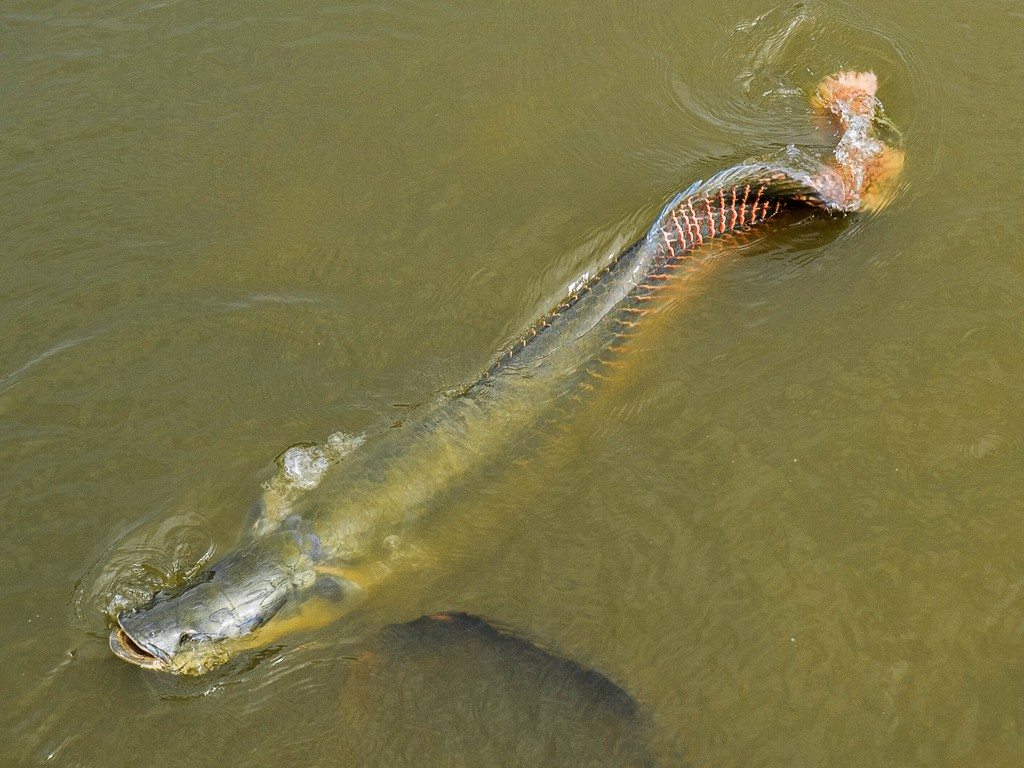
An arapaima rises close to the water's surface.
Species reference for Arapaima Floodplain. The photograph does not necessarily show the population or place named in the puzzle.
(c) Manuel Vicente Miranda del Solar, some rights reserved (CC BY) · CC BY 4.0 · Original recordImage changes
Resized and converted to JPEG for display; no subject alteration.
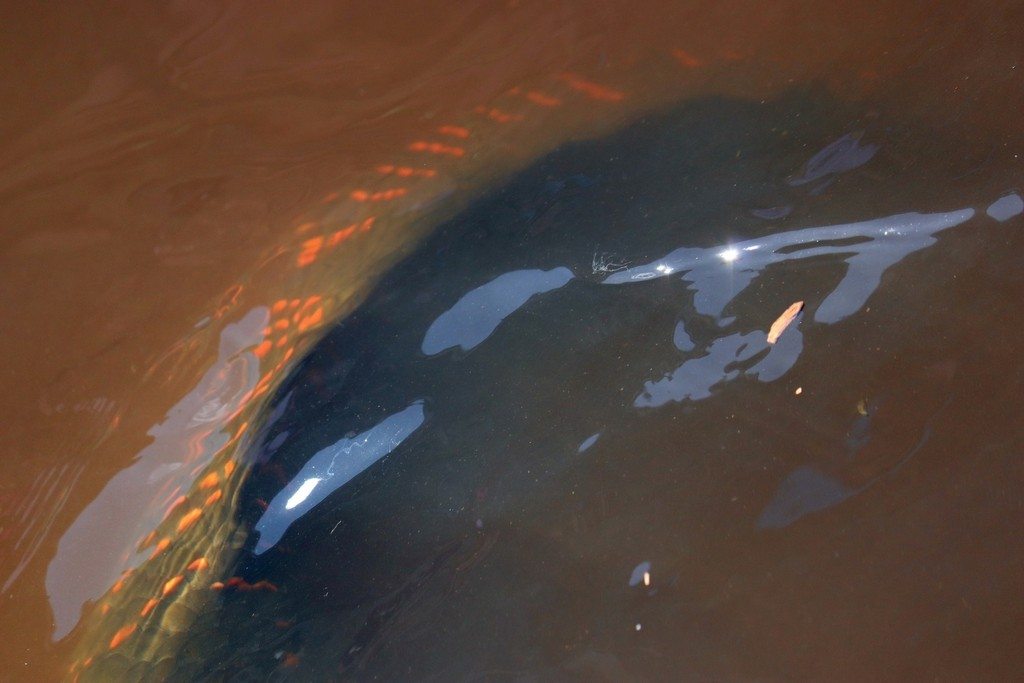
The long body of an arapaima is visible beneath the water.
Species reference for Arapaima Floodplain. The photograph does not necessarily show the population or place named in the puzzle.
(c) Conrado Pável de Oliveira, some rights reserved (CC BY) · CC BY 4.0 · Original recordImage changes
Resized and converted to JPEG for display; no subject alteration.
The words
Air Breather
The arapaima is an obligate air breather that surfaces every 10-20 minutes.
Amazon
The arapaima is native to the Amazon River basin.
Smithsonian's National Zoo and Conservation Biology Institute (opens a new tab)
Arapaima
The arapaima is a massive freshwater fish of the Amazon basin.
Smithsonian's National Zoo and Conservation Biology Institute (opens a new tab)
Bony Tongue
The arapaima has a bony tongue, used by people as a scraper.
Animal Diversity Web (opens a new tab) · Smithsonian's National Zoo and Conservation Biology Institute (opens a new tab)
Floodplain
Arapaima live in the rivers of the Amazon floodplain.
Smithsonian's National Zoo and Conservation Biology Institute (opens a new tab)
Gulping
The arapaima feeds as a 'gulper', sucking in food.
Smithsonian's National Zoo and Conservation Biology Institute (opens a new tab)
Harpoon
The spear used to hunt it.
Amazonian people harpoon the arapaima.
Smithsonian's National Zoo and Conservation Biology Institute (opens a new tab)
Nest Guard
The arapaima guards its eggs and young.
Animal Diversity Web (opens a new tab) · Smithsonian's National Zoo and Conservation Biology Institute (opens a new tab)
Paiche
In Peru the arapaima is called paiche.
Smithsonian's National Zoo and Conservation Biology Institute (opens a new tab)
Pirarucu
In Brazil the arapaima is called pirarucu, 'red fish'.
Smithsonian's National Zoo and Conservation Biology Institute (opens a new tab)
Red Tail
The arapaima's tail is red.
Smithsonian's National Zoo and Conservation Biology Institute (opens a new tab)
Scales
Its scales reach 10 cm and are used for jewellery.
Smithsonian's National Zoo and Conservation Biology Institute (opens a new tab)
Spawning
In the dry season arapaima lay thousands of eggs in sand nests.
Smithsonian's National Zoo and Conservation Biology Institute (opens a new tab)
Swim Bladder
The air sac it breathes with like a lung.
A modified swim bladder acts as a lung.
Smithsonian's National Zoo and Conservation Biology Institute (opens a new tab)
Varzea
The arapaima lives in floodplain lakes, tributaries and the varzea forest.
Sources
- Arapaima Floodplain (source capture)Animal Diversity Web, University of Michigan Museum of Zoology
- Arapaima Floodplain (source capture)Smithsonian's National Zoo and Conservation Biology Institute