
Wildlife of the World
Puzzle 10 · African Forests and Highlands · Page 25 in print
Okapi
In the Ituri rainforests of the Democratic Republic of the Congo, the okapi gathers leaves with a flexible tongue; its closest living relatives are giraffes, despite the zebra-like stripes on its legs.
Jump to a word
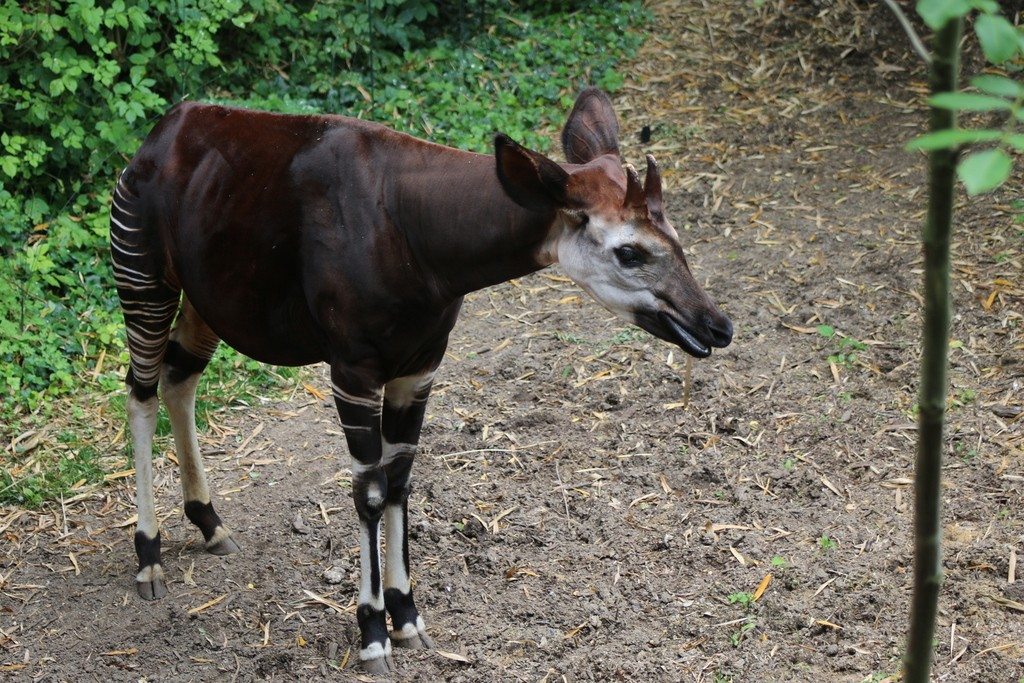
An okapi's striped legs stand out against its dark body. Species reference photographed in human care.
Species reference for Okapi. The photograph does not necessarily show the population or place named in the puzzle.
(c) Melvin TOULLEC, some rights reserved (CC BY-SA) · CC BY-SA 4.0 · Original recordImage changes
Resized and converted to JPEG for display; no subject alteration.
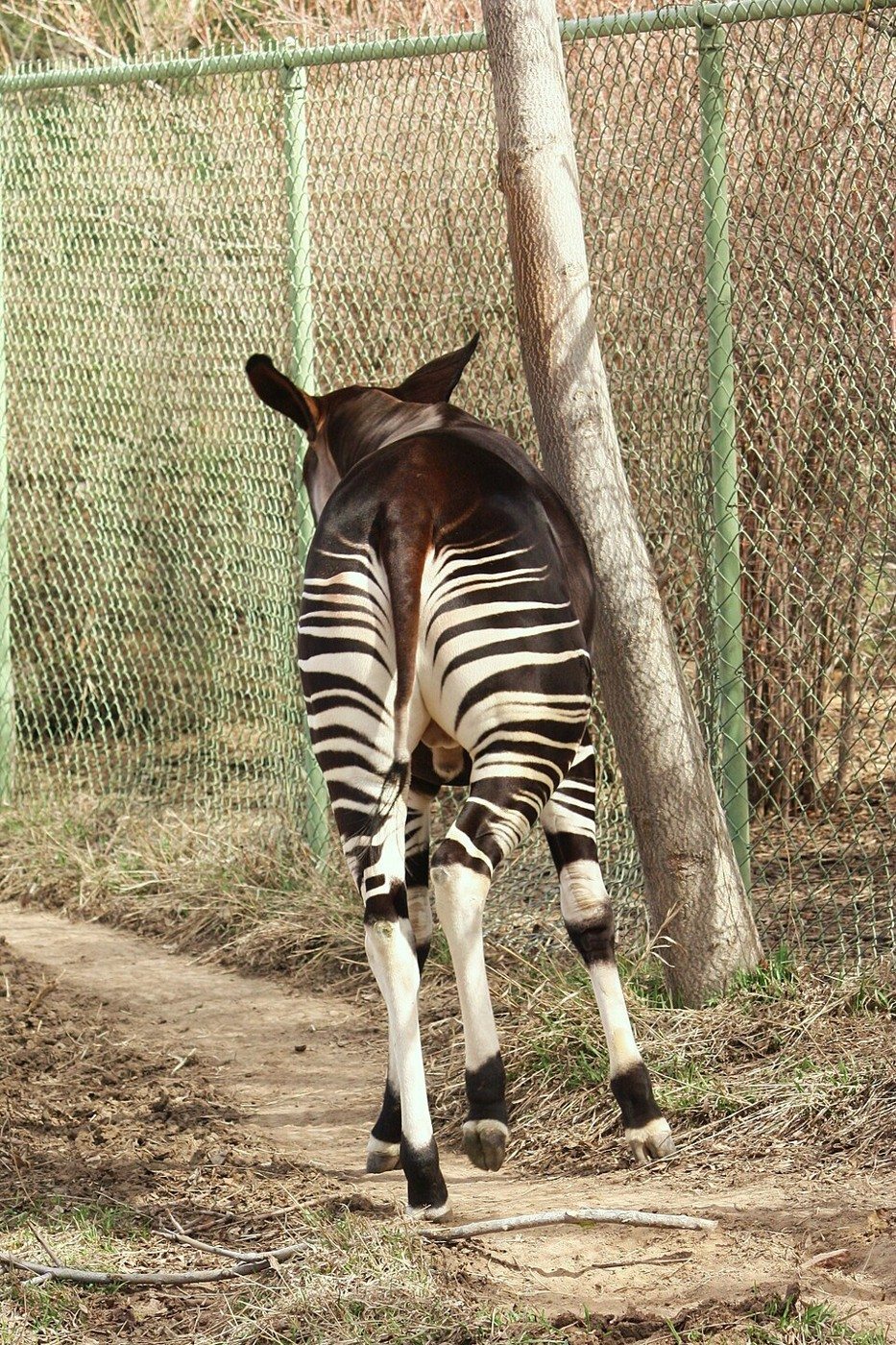
A male okapi’s striped hindquarters at Denver Zoo.
Species reference photographed in human care.
Postdlf · CC BY-SA 3.0 · Original recordImage changes
Resized and converted to JPEG for display; no subject alteration.
The words
Clay
Okapis eat clay for minerals.
San Diego Zoo Wildlife Alliance (opens a new tab) · Animal Diversity Web (opens a new tab)
Epulu
The Okapi Conservation Project's okapis were born at its Epulu headquarters.
Forest Giraffe
A nickname for the okapi, a forest-dwelling relative of the giraffe.
Fungi
Fungi are part of the okapi's daily diet.
Ituri
The Ituri rainforest of north-east DR Congo.
Okapis live mainly in the Ituri forest.
Mbuti
Ituri people knew the okapi for generations.
Peaceful Societies (opens a new tab) · San Diego Zoo Wildlife Alliance (opens a new tab)
Mining
The okapi is threatened by poaching, illegal mining and deforestation.
Okapi
Okapis live in the rainforests of north-east DR Congo.
Ossicones
Males carry two short, skin-covered horns called ossicones.
San Diego Zoo Wildlife Alliance (opens a new tab) · Animal Diversity Web (opens a new tab)
Poaching
Okapis are in steep decline from habitat loss and poaching.
Scent Trails
Foot glands leave a scent wherever okapis walk, along trails worn by generations of okapis.
Stripe
Its bold leg stripes give camouflage in dappled forest light.
Tongue
A long, dark, prehensile tongue strips leaves from the understory.
Twigs
Part of its daily diet of browse.
Okapis eat leaves, twigs, fruits and fungi each day.
Velvet Coat
The okapi's dark coat feels like velvet.
San Diego Zoo Wildlife Alliance (opens a new tab) · Animal Diversity Web (opens a new tab)
Sources
- Okapi (source capture)San Diego Zoo Wildlife Alliance
- Okapi (source capture)Animal Diversity Web, University of Michigan Museum of Zoology
- Okapi (source capture)Scientific American
- Okapi (source capture)Okapi Conservation Project
- Okapi (source capture)Peaceful Societies, University of North Carolina at Greensboro
- Okapi (source capture)Okapi Conservation Project