
The Great Stories of the Old Testament
Puzzle 09 · Patriarchs · Page 23 in print
The Call of Abraham
Abram leaves Haran in response to a promise, travels in Canaan and goes down to Egypt during famine. Abraham is his later name.
Jump to a word
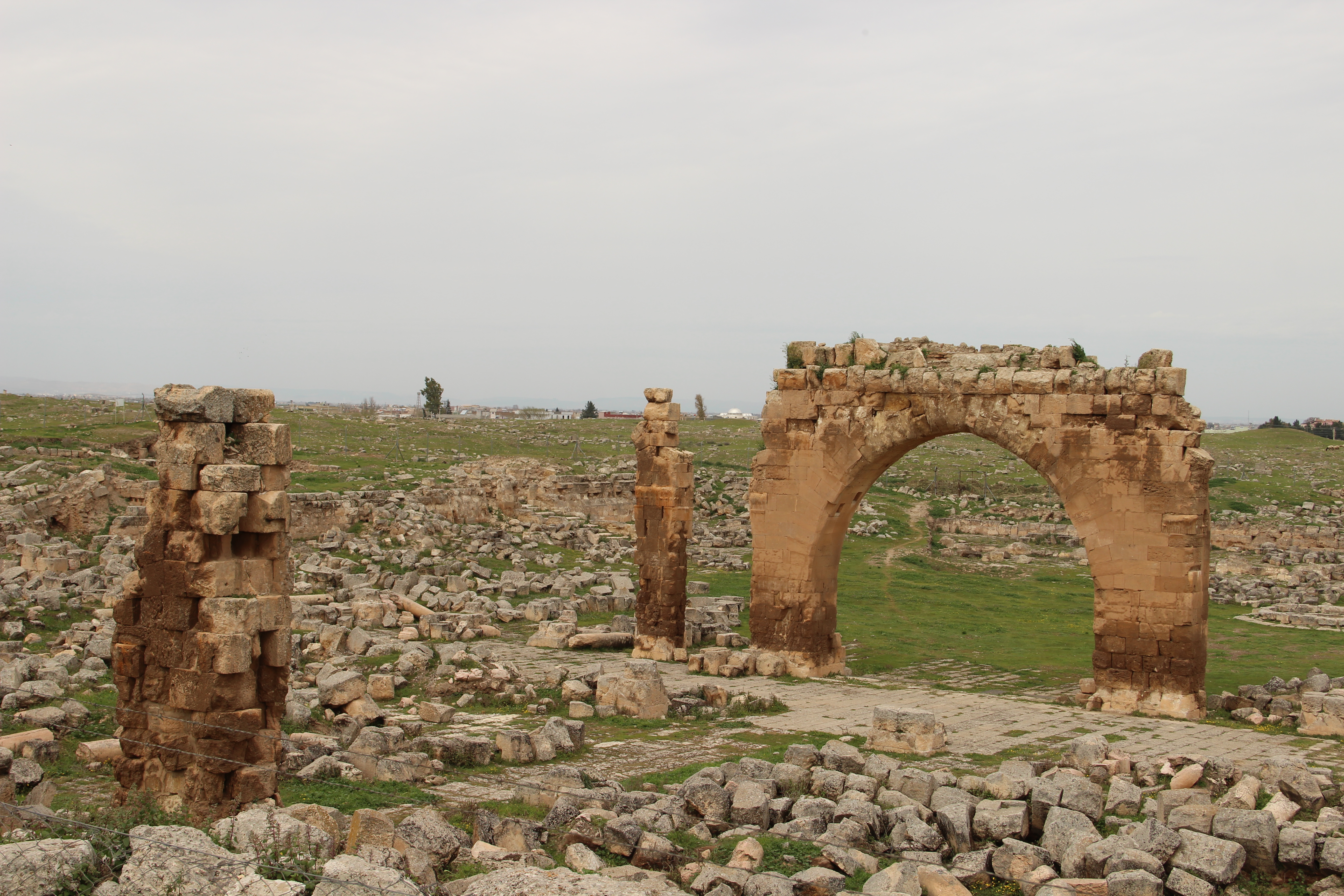
Ruins at Harran, photographed March 28, 2015.
The surviving ruins provide town context without identifying a building used by Abraham.
Hamdigumus / Wikimedia Commons · CC0 · Original recordImage changes
Display copies resized; original downloaded JPEG preserved.
The words
Abraham
God later changes Abram’s name to Abraham as part of the covenant, saying he will be the father of many nations.
Canaanite
After Abram reaches Sichem and Moreh, the narrator notes that the Canaanite was then in the land, before reporting God’s promise.
Chaldees
The Chaldeans, in the KJV’s older wording.
Genesis describes Terah’s family leaving Ur of the Chaldees for Canaan and stopping at Haran before Abram’s departure.
Genesis 11:31 (opens a new tab) · Genesis 12:4 (opens a new tab) · Strong’s H3778 (Chaldeans) (opens a new tab)
Egypt
With famine severe in the land, Abram goes down to Egypt to stay there for a time.
Did you know?
The next chapter follows Abram out of Egypt with his wife, his possessions and Lot, continuing the journey back toward Bethel.
Genesis 12:10 (opens a new tab) · Genesis 13:1–3 (opens a new tab)
Famine
The famine is called grievous in the land, giving Abram a reason to seek a temporary stay in Egypt.
Haran
Terah’s household settles at Haran on its journey from Ur; Abram later leaves Haran at 75, taking Lot with him.
Genesis 11:31 (opens a new tab) · Genesis 12:4 (opens a new tab)
Journey
After stopping near Bethel, Abram continues toward the south; the next verse gives the famine that takes him down to Egypt.
Did you know?
The NET Bible reads this part of the journey as heading toward the Negev, using a place name where the KJV has south.
Genesis 12:8–10 (opens a new tab) · NET Bible: Genesis 12:6–9 (opens a new tab)
Kindred
The call asks Abram to leave his country, his kindred and his father’s house, setting the journey within his family life.
Did you know?
Later in Genesis, Abraham sends a servant to his country and kindred to find a wife for Isaac, returning to the same family language.
Genesis 12:1 (opens a new tab) · Genesis 24:1–4 (opens a new tab)
Land
Abram is told to go to a land God will show him; at Moreh, the promise names his descendants as its recipients.
Genesis 12:1 (opens a new tab) · Genesis 12:6–7 (opens a new tab)
Nation
God promises to make Abram into a great nation and make his name great, followed by blessing for all families of the earth.
Did you know?
In the preceding chapter, Babel’s builders want to make a name for themselves; here, God promises to make Abram’s name great.
Genesis 12:2–3 (opens a new tab) · Genesis 11:4 (opens a new tab)
Pharaoh
A title for Egypt’s king.
Abram presents his wife Sarai as his sister; she is taken into Pharaoh’s house. The LORD afflicts the household, and Pharaoh later sends the couple away.
Did you know?
Brown-Driver-Briggs traces the title to an Egyptian expression for the great house, referring to the royal court before its use for the king.
Genesis 12:13–17 (opens a new tab) · Genesis 12:18–20 (opens a new tab) · Strong’s H6547 (Pharaoh) (opens a new tab)
Plain of Moreh
The site rendered the oak of Moreh in the NET Bible.
Abram reaches Moreh after passing through Canaan to Sichem; God appears there and promises the land to his descendants.
Genesis 12:6–7 (opens a new tab) · NET Bible: Genesis 12:6–9 (opens a new tab)
Sichem
The place rendered Shechem in the NET Bible.
Sichem is the named place Abram reaches as he passes through Canaan, before the LORD appears and he builds an altar.
Genesis 12:6–7 (opens a new tab) · NET Bible: Genesis 12:6–9 (opens a new tab)
Sojourn
To stay somewhere as a guest or newcomer.
Abram goes to Egypt to sojourn because the famine is severe in the land; the stay is part of his continuing journey.
Genesis 12:10 (opens a new tab) · Strong’s H1481 (sojourn) (opens a new tab)
Terah
Terah takes Abram, Sarai and Lot from Ur toward Canaan, but the household settles at Haran, where Genesis records Terah’s death.
Sources
- Genesis 17:4-5 (King James Version)King James Version, passage navigation via Bible Gateway
- Genesis 12:6-7 (King James Version)King James Version, passage navigation via Bible Gateway
- Strong’s Hebrew 3778: ChaldeansBible Hub
- Genesis 11:31 (King James Version)King James Version, passage navigation via Bible Gateway
- Genesis 12:4 (King James Version)King James Version, passage navigation via Bible Gateway
- Genesis 12:10 (King James Version)King James Version, passage navigation via Bible Gateway
- Genesis 13:1-3 (King James Version)King James Version, passage navigation via Bible Gateway
- Genesis 12:6–9 (NET Bible), translation and notesNET Bible, via Bible Gateway
- Genesis 12:8-10 (King James Version)King James Version, passage navigation via Bible Gateway
- Genesis 12:1 (King James Version)King James Version, passage navigation via Bible Gateway
- Genesis 12:2-3 (King James Version)King James Version, passage navigation via Bible Gateway
- Genesis 11:4 (King James Version)King James Version, passage navigation via Bible Gateway
- Strong’s Hebrew 6547: PharaohBible Hub
- Genesis 12:18-20 (King James Version)King James Version, passage navigation via Bible Gateway
- Strong’s Hebrew 1481: gurBible Hub
- Genesis 11:31-32 (King James Version)King James Version, passage navigation via Bible Gateway
- Genesis 24:1-4 (King James Version)King James Version, passage navigation via Bible Gateway
- Genesis 12:13-17 (King James Version)King James Version, passage navigation via Bible Gateway