
The Great Stories of the Old Testament
Puzzle 72 · The Twelve · Page 105 in print
Malachi and the Refiner's Fire
Malachi pictures purification through refining fire and cleansing soap, then calls for faithful worship, justice and remembrance.
Jump to a word
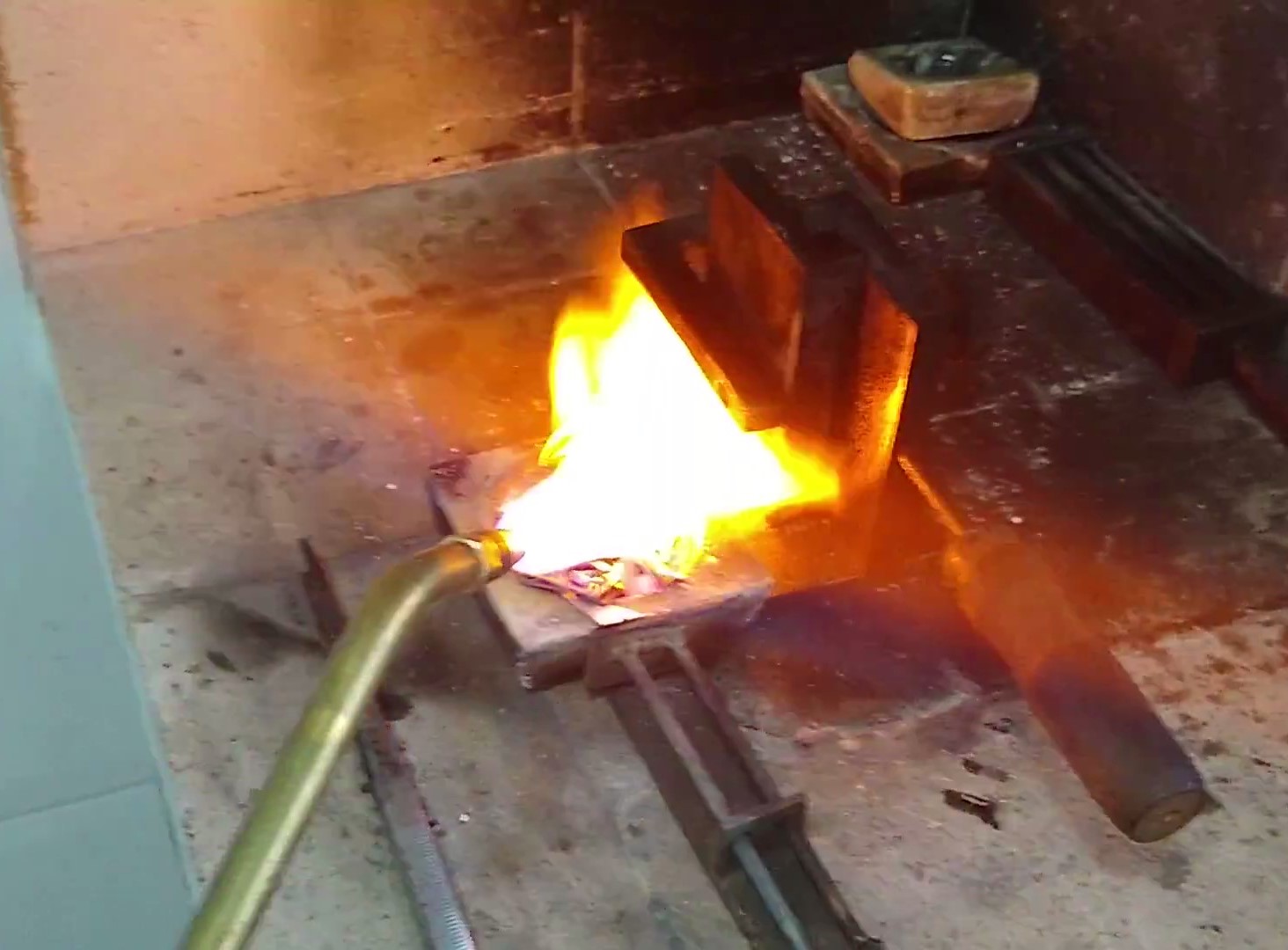
Melting silver for an ingot, photographed March 15, 2022.
Mauro Cateb / Wikimedia Commons · CC BY-SA 4.0 · Original recordImage changes
Display copies resized; original downloaded JPEG preserved.
The words
False Swearers
People who make false oaths.
The judgment list names false swearers alongside those oppressing workers in their wages, widows and the fatherless, and denying strangers justice.
Malachi 3:5 (opens a new tab) · NET Bible: Malachi 3:5 (opens a new tab)
Fear
Reverence for God.
The judgment list ends with “fear not me”; later, the reverent are remembered, while the coming day threatens to burn up the wicked.
Malachi 3:5 (opens a new tab) · Malachi 3:16 (opens a new tab) · Malachi 4:1 (opens a new tab) · Webster’s 1828: fear (opens a new tab)
Fullers' Soap
Soap used in cleaning cloth.
Malachi pairs fullers’ soap with refining fire when asking who can endure the coming day; both images lead into purification of Levi’s sons.
Malachi 3:2–3 (opens a new tab) · NET Bible: Malachi 3:2 (opens a new tab)
Law of Moses
The closing command names Moses as the LORD’s servant and recalls statutes and judgments given at Horeb for all Israel.
Malachi
The opening gives the LORD’s message to Israel “by Malachi”; the NET note discusses a name or title meaning “my messenger.”
Malachi 1:1 (opens a new tab) · NET Bible: Malachi 1:1 (opens a new tab)
Messenger
The promise begins with “my messenger” preparing the way, then speaks of the Lord’s temple arrival and “the messenger of the covenant.”
Offerings
After Levi’s sons are purified, their offerings are presented in righteousness; the offering of Judah and Jerusalem is then described as pleasing.
Prepare the Way
Preparing the way is the task of the messenger sent before the LORD; the verse moves from that preparation to sudden arrival at the temple.
Did you know?
Matthew 11:7–10 later quotes the promise of a messenger preparing the way, in Jesus’s speech to the crowds about John.
Malachi 3:1 (opens a new tab) · Matthew 11:7–10 (opens a new tab)
Purge
Purify or refine, in the NET.
The sons of Levi are purged like gold and silver so they can present an offering in righteousness; the NET names them Levites.
Malachi 3:3 (opens a new tab) · NET Bible: Malachi 3:3 (opens a new tab)
Refiner's Fire
The coming figure is compared to a refiner’s fire, then shown sitting as a purifier of silver, preparing Levi’s sons for righteous offerings.
Remember
The closing passage joins the call to remember Moses’s law with a promise to send Elijah before the LORD’s great and dreadful day.
Rob God
The people ask how they have robbed God; the reply names tithes and offerings and says the whole nation is under a curse.
Storehouse
A temple warehouse, in the NET note.
The tithe is brought into the storehouse so there is food in the LORD’s house; the NET identifies this as a temple warehouse.
Did you know?
Nehemiah 13:5 describes a chamber that previously held tithes of wine and oil, along with frankincense and temple vessels.
Malachi 3:10 (opens a new tab) · NET Bible: Malachi 3:10 (opens a new tab) · Nehemiah 13:5 (opens a new tab)
Tithe
A tenth part.
The call brings the whole tithe into the storehouse, followed by promises of blessing and protection for the land’s fruit and vines.
Malachi 3:10–11 (opens a new tab) · Webster’s 1828: tithe (opens a new tab)
Turn the Heart
The KJV has Elijah turn fathers’ and children’s hearts toward each other to avert a curse; the NET reads a shared return to God.
Did you know?
Luke 1:17 later echoes the turning of fathers’ hearts to children in the announcement of John’s birth, alongside “the spirit and power of Elias.”
Malachi 4:5–6 (opens a new tab) · NET Bible: Malachi 4:6 (opens a new tab) · Luke 1:13–17 (opens a new tab)
Sources
- Malachi 1:1 (King James Version)King James Version, passage navigation via Bible Gateway
- Malachi 3:1-6 (King James Version)King James Version, passage navigation via Bible Gateway
- Malachi 3:7-12 (King James Version)King James Version, passage navigation via Bible Gateway
- Malachi 3:13-18 (King James Version)King James Version, passage navigation via Bible Gateway
- Malachi 4:1-6 (King James Version)King James Version, passage navigation via Bible Gateway
- Malachi 1:1 (NET Bible), translation and notesNET Bible, via Bible Gateway
- Malachi 3:2 (NET Bible), translation and notesNET Bible, via Bible Gateway
- Malachi 3:3 (NET Bible), translation and notesNET Bible, via Bible Gateway
- Malachi 3:10 (NET Bible), translation and notesNET Bible, via Bible Gateway
- Malachi 4:6 (NET Bible), translation and notesNET Bible, via Bible Gateway
- Malachi 3:5 (NET Bible), translation and notesNET Bible, via Bible Gateway
- Matthew 11:7-10 (King James Version)King James Version, passage navigation via Bible Gateway
- Luke 1:13-17 (King James Version)King James Version, passage navigation via Bible Gateway
- Nehemiah 13:4-9 (King James Version)King James Version, passage navigation via Bible Gateway
- Webster’s 1828: titheWebster’s Dictionary 1828, online transcription
- Webster’s 1828: fearWebster’s Dictionary 1828, online transcription