
The Great Stories of the Old Testament
Puzzle 59 · Major Prophets · Page 90 in print
Immanuel and the Virgin Sign
During a threat to Judah, Isaiah meets Ahaz and announces the sign of Immanuel; the chapter also warns of Assyria.
Jump to a word
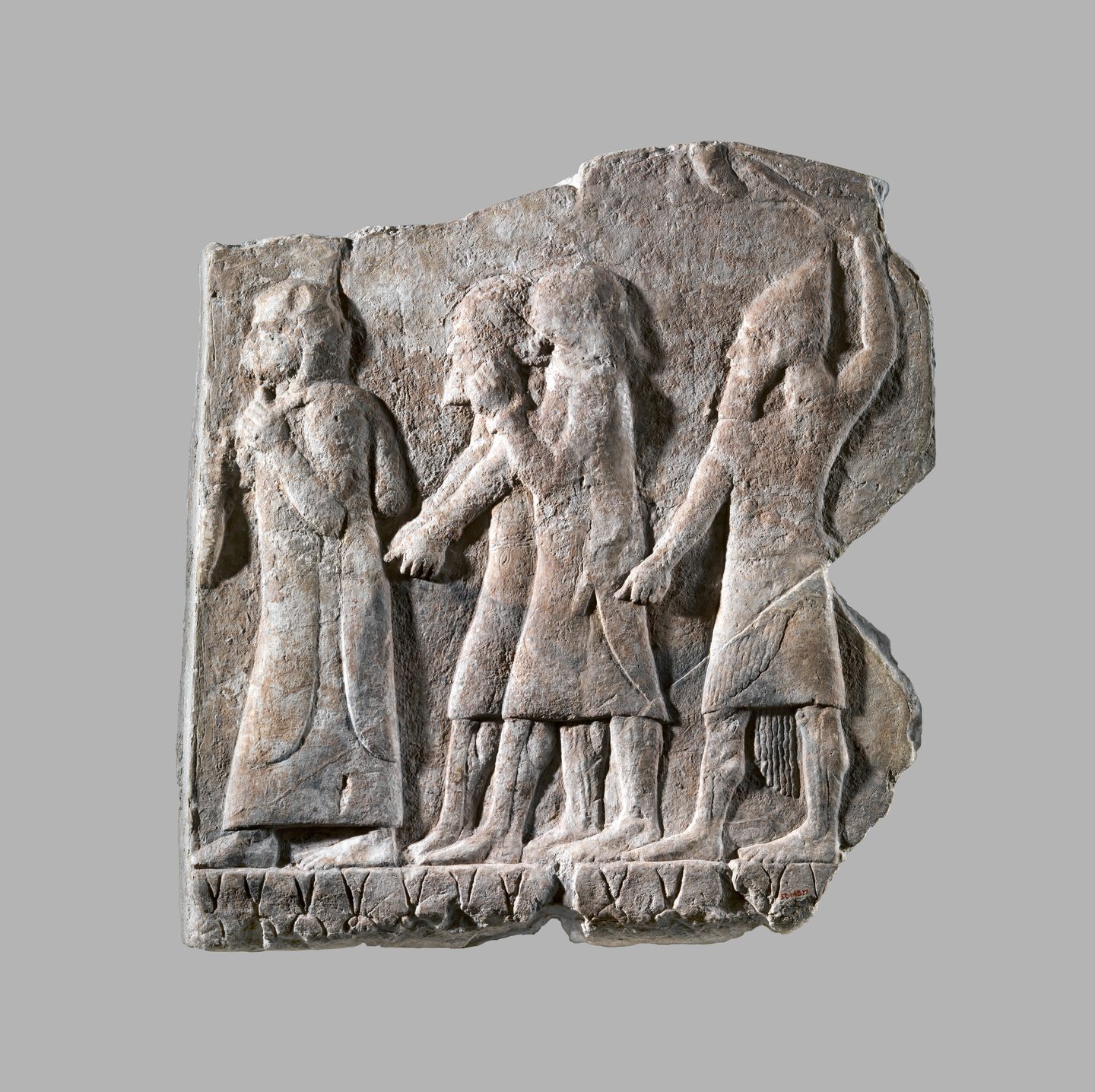
Assyrian relief from Nineveh.
The Assyrian relief gives material context for the power represented by Isaiah’s razor image, not a depiction of the prophecy.
The Metropolitan Museum of Art (image provider; individual photographer uncredited) · Public Domain / The Met Open Access CC0 · Original recordImage changes
Resized proportionally to at most 1440px and JPEG compressed; no crop or content alteration.
The words
Child
Isaiah measures time by the child: “before the child shall know to refuse the evil, and choose the good,” the land “shall be forsaken of both her kings.”
Did you know?
The Hebrew word here, naar, covers a boy “from the age of infancy to adolescence,” in Strong’s words. It is used for baby Moses, “the babe,” and for Joseph at seventeen, “the lad.”
Isaiah 7:16 (opens a new tab) · Strong’s H5288 (naar) (opens a new tab) · Bible Hub interlinear, Isaiah 7:16 (opens a new tab) · Bible Hub interlinear, Exodus 2:6 (opens a new tab) · Exodus 2:6, 10; Genesis 37:2 (opens a new tab)
Fear Not
When the house of David hears that Syria has joined Ephraim (Israel), hearts shake “as the trees of the wood are moved with the wind.” Isaiah’s message: “be quiet; fear not.”
Did you know?
Isaiah’s message ends in a Hebrew wordplay: “If ye will not believe, surely ye shall not be established.” Both verbs come from aman, the root of “amen.”
Isaiah 7:2, 4, 9 (opens a new tab) · NET Bible note, Isaiah 7:9 (opens a new tab) · Strong’s H543 (amen) (opens a new tab)
Firebrands
Pieces of burning wood. Webster’s 1828 dictionary lists this sense before “one who inflames factions.”
Isaiah is sent to tell Ahaz not to fear “the two tails of these smoking firebrands”: Rezin of Syria and “the son of Remaliah.”
Did you know?
The Hebrew word, ud, appears only twice more, each time for a brand rescued from the flames: “a firebrand plucked out of the burning” (Amos 4:11).
Isaiah 7:4 (opens a new tab) · Webster’s 1828: firebrand (opens a new tab) · Strong’s H181 (ud) (opens a new tab) · Amos 4:11; Zechariah 3:2 (opens a new tab)
Fuller's Field
A fuller cleansed woven cloth and made it thicker and firmer.
God’s directions to Isaiah end on a road, “the highway of the fuller’s field.” The NET Bible notes that the Hebrew says “the field of the washer.”
Did you know?
The Hebrew word for fuller comes from kabas, which Strong’s defines as “to wash (properly, by stamping with the feet).” The trade’s English names, fuller, tucker and walker, all became common surnames.
Isaiah 7:3 (opens a new tab) · Webster’s 1828: fuller (opens a new tab) · Webster’s 1828: fulling (opens a new tab) · NET Bible note, Isaiah 7:3 (opens a new tab) · Strong’s H3526 (kabas) (opens a new tab) · Wikipedia: Fulling (opens a new tab) · Webster’s 1828: tucker (opens a new tab) · Webster’s 1828: walker (opens a new tab)
God with Us
Isaiah 8:10 ends a warning to the nations with “for God is with us.” In Hebrew these words are immanu El, the same words that form the name Immanuel.
Did you know?
The Hebrew immanu, “with us,” also appears in the refrain of Psalm 46: “The LORD of hosts is with us” (verses 7 and 11). Between them comes “Be still, and know that I am God.”
Isaiah 8:9–10 (opens a new tab) · Bible Hub interlinear, Isaiah 8:10 (opens a new tab) · NRSV Updated Edition, Isaiah 7:14 (opens a new tab) · Psalm 46:7, 10–11 (opens a new tab) · Bible Hub interlinear, Psalm 46:7 (opens a new tab) · Bible Hub interlinear, Psalm 46:11 (opens a new tab)
Immanuel
Matthew 1:23 gives the name’s meaning: “which being interpreted is, God with us.”
After the sign, the name returns in Isaiah 8:8, in a warning that the king of Assyria “shall pass through Judah” and fill “the breadth of thy land, O Immanuel.”
Did you know?
The King James Bible prints “Immanuel” only twice, in Isaiah 7:14 and 8:8, both in this puzzle. In Matthew 1:23 the KJV spells it “Emmanuel.”
Isaiah 7:14 (opens a new tab) · Matthew 1:23 (opens a new tab) · Bible Gateway: KJV search, “Immanuel” (opens a new tab) · Isaiah 8:7–8 (opens a new tab)
Pekah
Isaiah 7 opens with Pekah and Rezin of Syria marching on Jerusalem, though they “could not prevail against it.”
Did you know?
2 Kings dates two of Judah’s kings by Pekah’s reign: Jotham began “In the second year of Pekah,” and Jotham’s son Ahaz “In the seventeenth year.”
Isaiah 7:1 (opens a new tab) · 2 Kings 15:32; 16:1 (opens a new tab)
Razor
In Isaiah 7:20 the Lord will shave with “a razor that is hired”: the king of Assyria, from “beyond the river,” the Euphrates. It will “consume the beard.”
Did you know?
2 Kings 16:7–8 says Ahaz sent silver and gold from the temple and palace to the king of Assyria, with a plea: “come up, and save me.”
Isaiah 7:20 (opens a new tab) · NASB 1995, Isaiah 7:20 (opens a new tab) · 2 Kings 16:7–8 (opens a new tab)
Remaliah
The book of Isaiah names Pekah only once, in 7:1. After that, he is called by his father’s name alone: “the son of Remaliah” or “Remaliah’s son.”
Did you know?
Remaliah is named 13 times in the King James Bible, always as Pekah’s father. The Brown-Driver-Briggs lexicon calls Isaiah’s way of dropping Pekah’s name “contemptuous.”
Isaiah 7:1, 4–5, 9 (opens a new tab) · Isaiah 8:6 (opens a new tab) · Bible Gateway: KJV search, “Pekah” (opens a new tab) · Bible Gateway: KJV search, “Remaliah” (opens a new tab) · Strong’s H7425 (Remaliah) (opens a new tab)
Rezin
Isaiah sums up the enemy in a line: “the head of Syria is Damascus, and the head of Damascus is Rezin.” Their plan “shall not stand.”
Did you know?
At that time, 2 Kings 16:6 says, Rezin “drave the Jews from Elath.” It is the first verse in the King James Bible to use the word “Jews.”
Isaiah 7:5–8 (opens a new tab) · 2 Kings 16:6 (opens a new tab) · Bible Gateway: KJV search, “Jews” (opens a new tab)
Shear-jashub
Hebrew for “a remnant shall return.” The KJV prints the name as one word, Shearjashub.
God sends Isaiah with his son: “Go forth now to meet Ahaz, thou, and Shearjashub thy son.” The Bible names the boy only here.
Did you know?
The words of his name return as a phrase in Isaiah 10:21: “The remnant shall return, even the remnant of Jacob.”
Isaiah 7:3 (opens a new tab) · Strong’s H7610 (Shear-jashub) (opens a new tab) · Isaiah 10:21 (opens a new tab)
Sign
God offers Ahaz a sign “in the depth, or in the height above.” Ahaz refuses: “I will not ask, neither will I tempt the LORD.”
Did you know?
The KJV keeps a distinction modern English has lost: Ahaz is told “Ask thee a sign,” singular, but the sign of verse 14 is given to “you,” plural, after Isaiah turns to the “house of David.”
Isaiah 7:10–14 (opens a new tab) · Wikipedia: Thou (opens a new tab) · New International Version, Isaiah 7:14 (opens a new tab) · NET Bible note, Isaiah 7:13 (opens a new tab)
Tabeal
Rezin and Pekah plot to “set a king in the midst of it, even the son of Tabeal.” The NET Bible’s notes say this would-be king’s precise identity is unknown.
Did you know?
In Ezra 4:7 the same name, spelled Tabeel, belongs to a Persian officer. The Brown-Driver-Briggs lexicon reads it “God is good,” and says Isaiah 7:6’s vowels apparently make it mean “good-for-nothing,” though others disagree.
Isaiah 7:5–6 (opens a new tab) · NET Bible note, Isaiah 7:6 (opens a new tab) · Strong’s H2870 (Tabeel) (opens a new tab) · Ezra 4:7 (opens a new tab)
Upper Pool
God sets Isaiah’s meeting with Ahaz at “the end of the conduit” (a water channel) “of the upper pool.” Assyria’s envoy, Rabshakeh, later stands at the same spot, in puzzle 52.
Did you know?
Strong’s says berekah, the Hebrew “pool,” means “a reservoir (at which camels kneel as a resting-place).” It traces the word to barak, also the root of berakah, “blessing.”
Isaiah 7:3 (opens a new tab) · Webster’s 1828: conduit (opens a new tab) · Isaiah 36:2; 2 Kings 18:17 (opens a new tab) · Strong’s H1295 (berekah) (opens a new tab) · Strong’s H1293 (berakah) (opens a new tab)
Virgin
In Isaiah 7:14 the KJV calls the mother in the sign “a virgin.” Matthew’s Gospel later quotes this verse: “Behold, a virgin shall be with child” (Matthew 1:23).
Did you know?
Many modern translations read “young woman”: the Revised Standard Version (1952) has “a young woman shall conceive,” and the Common English Bible (2011) “The young woman is pregnant.” Others, such as the New International Version, keep “virgin.”
Isaiah 7:14 (opens a new tab) · Matthew 1:23 (opens a new tab) · Revised Standard Version, Isaiah 7:14 (opens a new tab) · Bible Gateway: about the RSV (opens a new tab) · Common English Bible, Isaiah 7:14 (opens a new tab) · NRSV Updated Edition, Isaiah 7:14 (opens a new tab) · New International Version, Isaiah 7:14 (opens a new tab)
Sources
- Isaiah 7:1-25; Isaiah 8:8-10 (King James Version)King James Version, passage navigation via Bible Gateway
- Matthew 1:22-23 (King James Version)King James Version, passage navigation via Bible Gateway
- Exodus 2:6-10; Genesis 37:2 (King James Version)King James Version, passage navigation via Bible Gateway
- Amos 4:11; Zechariah 3:2 (King James Version)King James Version, passage navigation via Bible Gateway
- Isaiah 36:2; 2 Kings 18:17 (King James Version)King James Version, passage navigation via Bible Gateway
- 2 Kings 16:7-8 (King James Version)King James Version, passage navigation via Bible Gateway
- 2 Kings 15:32; 2 Kings 16:1 (King James Version)King James Version, passage navigation via Bible Gateway
- 2 Kings 16:6 (King James Version)King James Version, passage navigation via Bible Gateway
- Isaiah 10:21 (King James Version)King James Version, passage navigation via Bible Gateway
- Psalm 46:7-11 (King James Version)King James Version, passage navigation via Bible Gateway
- Ezra 4:7 (King James Version)King James Version, passage navigation via Bible Gateway
- Isaiah 8:6-7 (King James Version)King James Version, passage navigation via Bible Gateway
- Isaiah 7:3 (New English Translation), translator’s noteNET Bible, via Bible Gateway
- Isaiah 7:6 (New English Translation), study noteNET Bible, via Bible Gateway
- Isaiah 7:9 (New English Translation), translator’s noteNET Bible, via Bible Gateway
- Isaiah 7:13 (New English Translation), translator’s noteNET Bible, via Bible Gateway
- Isaiah 7:20 (New American Standard Bible 1995)New American Standard Bible 1995, via Bible Gateway
- Isaiah 7:14 (New Revised Standard Version Updated Edition)New Revised Standard Version Updated Edition, via Bible Gateway
- Isaiah 7:14 (Common English Bible)Common English Bible, via Bible Gateway
- Isaiah 7:14 (Revised Standard Version)Revised Standard Version, via Bible Gateway
- Isaiah 7:14 (New International Version)New International Version, via Bible Gateway
- Revised Standard Version (RSV): version informationBible Gateway
- Strong’s Hebrew 5288: naar (boy, lad, youth)Bible Hub
- Strong’s Hebrew 543: amen (verily, truly)Bible Hub
- Strong’s Hebrew 181: ud (firebrand)Bible Hub
- Strong’s Hebrew 3526: kabas (to wash, by treading)Bible Hub
- Strong’s Hebrew 7610: Shear Yashub (a remnant will return)Bible Hub
- Strong’s Hebrew 2870: TabeelBible Hub
- Strong’s Hebrew 1295: berekah (pool)Bible Hub
- Strong’s Hebrew 1293: berakah (blessing)Bible Hub
- Strong’s Hebrew 7425: Remalyahu (Remaliah)Bible Hub
- Isaiah 7:16 InterlinearBible Hub
- Exodus 2:6 InterlinearBible Hub
- Isaiah 8:10 InterlinearBible Hub
- Psalm 46:7 InterlinearBible Hub
- FirebrandWebster’s Dictionary 1828
- FullerWebster’s Dictionary 1828
- FullingWebster’s Dictionary 1828
- TuckerWebster’s Dictionary 1828
- WalkerWebster’s Dictionary 1828
- ConduitWebster’s Dictionary 1828
- Keyword search, King James Version: “Pekah”Bible Gateway
- Keyword search, King James Version: “Remaliah”Bible Gateway
- Keyword search, King James Version: “Jews”Bible Gateway
- Keyword search, King James Version: “Immanuel”Bible Gateway
- Fulling: LegacyWikipedia
- Thou: the King James Version’s singular and plural pronounsWikipedia
- Psalm 46:11 InterlinearBible Hub