
The Great Stories of the Old Testament
Puzzle 20 · Exodus and Wilderness · Page 37 in print
Red Sea Deliverance
Israel passes through the sea, and the following song celebrates deliverance; Miriam leads the women with timbrels.
Jump to a word
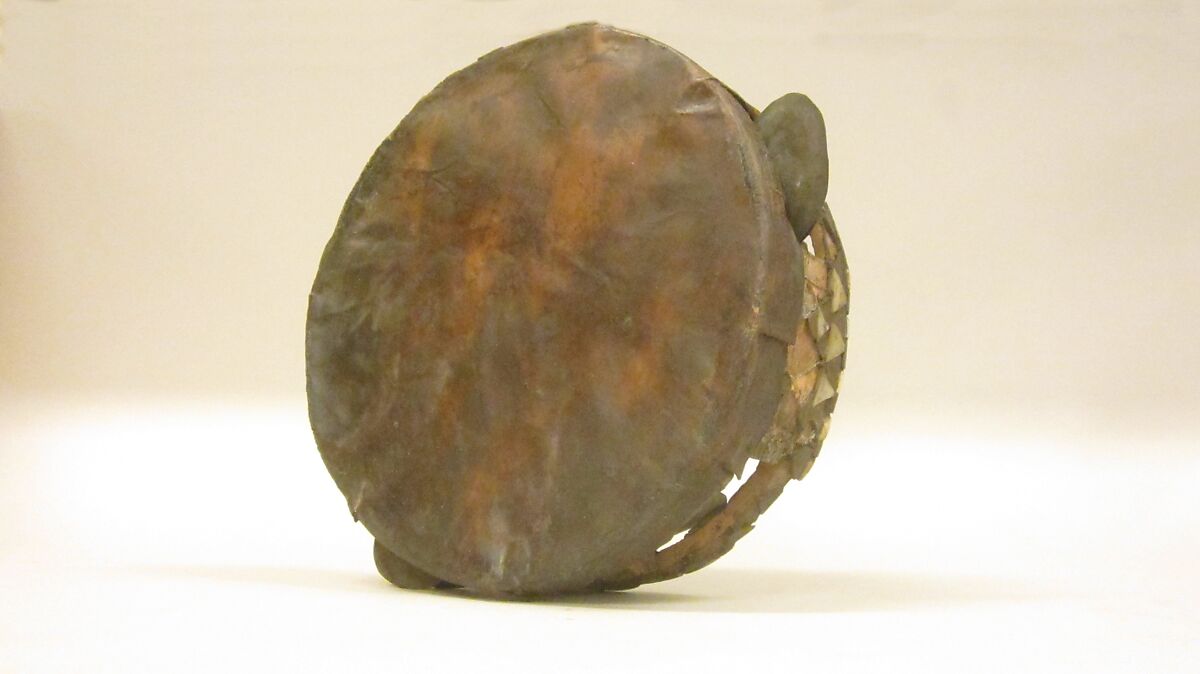
Egyptian riq (tambourine), late 19th century.
The Metropolitan Museum of Art, The Crosby Brown Collection of Musical Instruments, 1889 (89.4.323) · CC0 · Original recordImage changes
Display copies resized; original downloaded JPEG preserved.
The words
Baalzephon
Baal Zephon in the NET Bible.
Israel’s camp is placed opposite Baalzephon, with Pihahiroth and Migdol also named in the instructions for camping by the sea.
Exodus 14:2 (opens a new tab) · NET Bible: Exodus 14:2 (opens a new tab)
Deliverance
Moses tells the people to stand still and see the LORD’s salvation; Exodus later says the LORD saved Israel that day.
Exodus 14:13–14 (opens a new tab) · Exodus 14:30 (opens a new tab)
Drown
The song says Pharaoh’s chosen captains are drowned; the preceding narrative describes returning waters covering the pursuing chariots and horsemen.
Exodus 15:4 (opens a new tab) · Exodus 14:28 (opens a new tab)
Dry Land
Exodus describes Israel walking through the sea on dry ground, with the waters like a wall on either side.
Did you know?
Joshua later uses the same image of dry ground for Israel’s crossing of the Jordan, with priests standing in the river’s midst.
Exodus 14:21–22 (opens a new tab) · Joshua 3:17 (opens a new tab)
Hardened
Made stubborn or unyielding.
Exodus says the LORD hardened Pharaoh’s heart, after which Pharaoh pursues Israel with his forces toward the seaside camp.
Exodus 14:8–9 (opens a new tab) · Webster’s 1828: harden (opens a new tab)
Horsemen
Pharaoh’s horsemen pursue Israel into the sea with the chariots; the returning waters cover this force in Exodus’s account.
Migdol
The camping instructions place Israel before Pihahiroth, between Migdol and the sea, with Baalzephon opposite the camp.
Miriam
Miriam, called a prophetess and Aaron’s sister, takes a timbrel; the women follow her with timbrels and dances.
Did you know?
Micah later names Miriam alongside Moses and Aaron among those God sent before Israel when bringing the people out of Egypt.
Exodus 15:20 (opens a new tab) · Micah 6:4 (opens a new tab)
Pihahiroth
Pi Hahiroth in the NET Bible.
Pihahiroth is named in Israel’s camping instructions and again when Pharaoh’s forces catch up with the people beside the sea.
Exodus 14:2 (opens a new tab) · Exodus 14:9 (opens a new tab) · NET Bible: Exodus 14:2 (opens a new tab)
Pillar of Cloud
The cloud that guides Israel by day moves from in front of the people to stand behind them, between the two camps.
Did you know?
At the end of Exodus, the cloud’s rising from the tabernacle signals when Israel should travel; otherwise the people stay.
Exodus 13:21 (opens a new tab) · Exodus 14:19–20 (opens a new tab) · Exodus 40:36–38 (opens a new tab)
Pillar of Fire
The LORD goes before Israel in a pillar of fire by night, giving light so that they can travel by day and night.
Red Sea
Exodus names Israel’s route toward the Red Sea; the song after the crossing uses that name for the sea where Pharaoh’s captains drowned.
Exodus 13:17–18 (opens a new tab) · Exodus 15:4 (opens a new tab)
Sing
Miriam answers with “Sing ye to the LORD,” echoing the opening of the song sung by Moses and Israel after the crossing.
Exodus 15:21 (opens a new tab) · Exodus 15:1 (opens a new tab)
Song of Moses
Moses and Israel sing to the LORD after the crossing; the song begins by celebrating the overthrow of horse and rider.
Did you know?
Deuteronomy records another song of Moses, opening with an appeal for the heavens and earth to hear his words.
Exodus 15:1 (opens a new tab) · Deuteronomy 31:30 (opens a new tab) · Deuteronomy 32:1 (opens a new tab)
Timbrels
Hand drums.
Miriam carries a timbrel in her hand, and the women follow her with the same instruments and with dances.
Did you know?
Psalm 150 pairs the timbrel with dance in its call to praise, then goes on to name cymbals.
Exodus 15:20 (opens a new tab) · NET Bible: Exodus 15:20 (opens a new tab) · Psalm 150:3–5 (opens a new tab)
Sources
- Exodus 13:17-18 (King James Version)King James Version, passage navigation via Bible Gateway
- Exodus 13:21-22 (King James Version)King James Version, passage navigation via Bible Gateway
- Exodus 14:1-4 (King James Version)King James Version, passage navigation via Bible Gateway
- Exodus 14:8-9 (King James Version)King James Version, passage navigation via Bible Gateway
- Exodus 14:13-14 (King James Version)King James Version, passage navigation via Bible Gateway
- Exodus 14:19-20 (King James Version)King James Version, passage navigation via Bible Gateway
- Exodus 14:21-22 (King James Version)King James Version, passage navigation via Bible Gateway
- Exodus 14:23-28 (King James Version)King James Version, passage navigation via Bible Gateway
- Exodus 14:29-30 (King James Version)King James Version, passage navigation via Bible Gateway
- Exodus 15:1-4 (King James Version)King James Version, passage navigation via Bible Gateway
- Exodus 15:20-21 (King James Version)King James Version, passage navigation via Bible Gateway
- Exodus 40:36-38 (King James Version)King James Version, passage navigation via Bible Gateway
- Joshua 3:17 (King James Version)King James Version, passage navigation via Bible Gateway
- Micah 6:4 (King James Version)King James Version, passage navigation via Bible Gateway
- Deuteronomy 31:30 (King James Version)King James Version, passage navigation via Bible Gateway
- Psalm 150:3-5 (King James Version)King James Version, passage navigation via Bible Gateway
- Deuteronomy 32:1 (King James Version)King James Version, passage navigation via Bible Gateway
- Exodus 14:2 (NET Bible), translation and notesNET Bible, via Bible Gateway
- Exodus 15:20 (NET Bible), translation and notesNET Bible, via Bible Gateway
- Webster’s 1828: hardenNoah Webster, American Dictionary of the English Language (1828), via MasonSoft