
America’s National Parks
Puzzle 80 · Alaska · Page 110 in print
Kobuk Valley
The Great Kobuk Sand Dunes are the largest active sand dunes in the Arctic, part of 30 square miles of sand lying 35 miles above the Arctic Circle.
Jump to a word
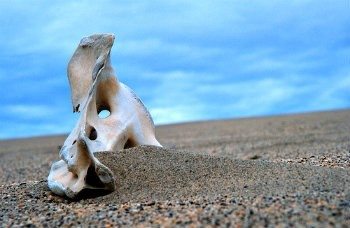
A caribou skull rests on the Great Kobuk Sand Dunes.
NPS Photo · Public domain (U.S. federal government work) · Original recordImage changes
Resized and converted to JPEG for display; no subject alteration.
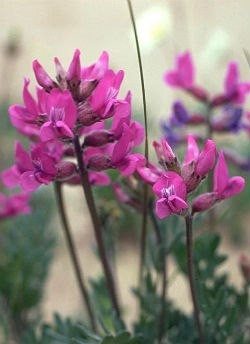
Kobuk locoweed grows in the dunes.
NPS Photo · Public domain (U.S. federal government work) · Original recordImage changes
Resized and converted to JPEG for display; no subject alteration.
The words
Arctic Circle
The Arctic Circle, the geographical latitude south of Kobuk Valley’s sand dunes.
Beringia
Beringia, the former Bering land bridge region connected to the Paleoarctic history studied at Onion Portage.
Caribou
Caribou, the animals migrating through Kobuk Valley and hunted at Onion Portage.
Cloudberry
Cloudberry, Rubus chamaemorus, one of the wild berries gathered along the Kobuk River.
Hunt River
The Hunt River Sand Dunes, one of Kobuk Valley’s three dune fields.
Inupiaq
Iñupiaq, the language of the Iñupiat of northwestern Alaska.
Jade Mountains
The Jade Mountains, the mountains bounding the eastern side of Kobuk Valley National Park.
U.S. Geological Survey / National Park Service (opens a new tab)
Kobuk
The Kobuk River, the river running through the center of Kobuk Valley National Park.
Kotzebue
Kotzebue, the town outside the park where visitors arrange chartered flights.
Locoweed
Kobuk locoweed, the endemic flowering plant of the park’s sand dunes.
Louis Giddings
J. Louis Giddings, the archeologist who expanded knowledge of human occupation in the Arctic.
Onion Portage
Onion Portage, or Paatitaaq, the long-used caribou hunting and meeting place on the Kobuk River.
Sheefish
Sheefish, the fish caught in the rivers of Kobuk Valley.
Western Arctic
The Western Arctic Caribou Herd, the named herd migrating through Kobuk Valley.
Whitefish
Whitefish, the fish harvested for subsistence along the Kobuk River.
Sources
- Great Kobuk Sand Dunes - Kobuk Valley National ParkNational Park Service
- The Paleoarctic Tradition - Bering Land Bridge National PreserveNational Park Service
- Paatitaaq-Onion Portage - Kobuk Valley National ParkNational Park Service
- Kobuk Valley National Park: Traditional Affiliation Scoping StudyNational Park Service, Kobuk Valley Traditional Affiliation Scoping Study
- Land Cover Mapping of the National Park Service Northwest Alaska Management Area Using Landsat Multispectral and Thematic Mapper Satellite DataU.S. Geological Survey / National Park Service
- Frequently Asked Questions - Kobuk Valley National ParkNational Park Service
- Nearby Attractions - Kobuk Valley National ParkNational Park Service
- Kobuk Locoweed - Kobuk Valley National ParkNational Park Service
- Louis Giddings - Kobuk Valley National ParkNational Park Service
- Fishing - Kobuk Valley National ParkNational Park Service
- Subsistence Practices in Kobuk Valley - Kobuk Valley National ParkNational Park Service