
America’s National Parks
Puzzle 72 · Northwest and the Pacific · Page 100 in print
American Samoa
The National Park of American Samoa is the only National Park Service site south of the Equator, protecting paleotropical rainforests and Indo-Pacific coral reefs that are unique in the park system.
Jump to a word
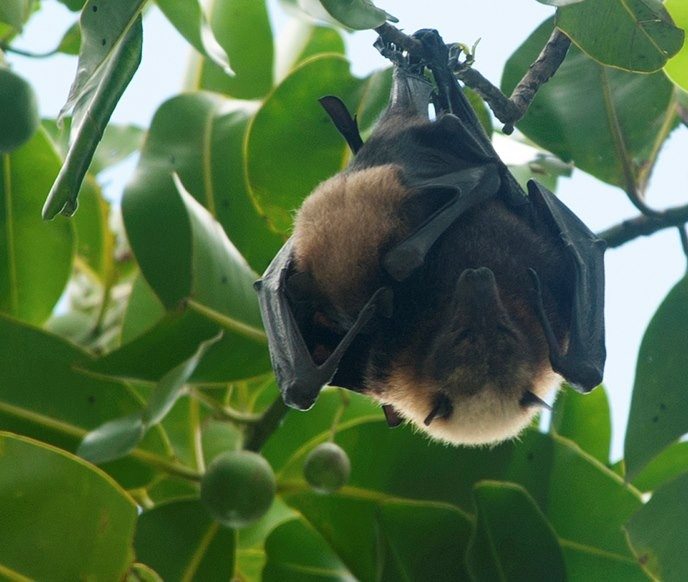
A fruit bat caring for its young.
NPS · Public domain (U.S. federal government work) · Original recordImage changes
Resized and converted to JPEG for display; no subject alteration.
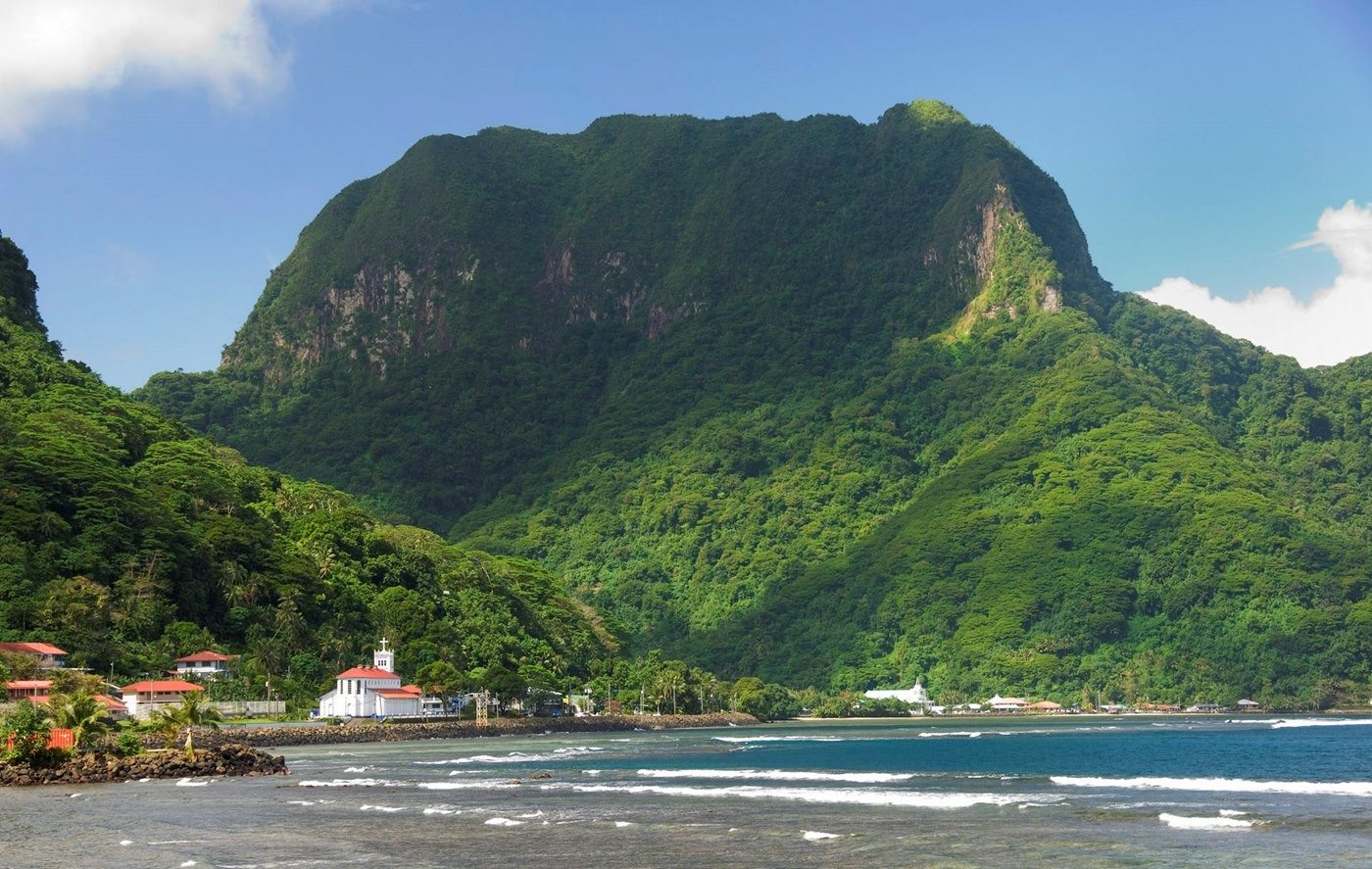
A coastal village beneath American Samoa's green mountains.
NPS photo. · Public domain (U.S. federal government work) · Original recordImage changes
Resized and converted to JPEG for display; no subject alteration.
The words
Cloud Forest
Cloud forest, the wet tropical forest on the park’s island summits.
Coral Reef
Coral reef, the fringing marine habitat surrounding the park’s islands.
Fruit Bat
Fruit bat, one of the large flying foxes living in American Samoa.
Giant Clam
Giant clam, the large colorful clam found on American Samoa’s reefs.
Lata Mountain
Lata Mountain, the Taʻū summit that is the highest point in American Samoa.
Margaret Mead
Margaret Mead, the researcher who studied adolescent girls on Taʻū.
Mount Alava
Mount ʻAlava, the Tutuila summit reached by the park’s rainforest trails.
Ofu Beach
Ofu Beach, the sandy shore used to reach Ofu’s snorkeling waters.
Olosega
Olosega, the neighboring island included in the park’s congressionally authorized expansion.
Pago Pago
Pago Pago, the Tutuila town where the national park visitor center is located.
Pola Island
Pola Island, the offshore seabird nesting island visible from the park’s coastal trails.
Saua
Saua, the sacred Taʻū site regarded in Samoan tradition as a birthplace of Polynesian culture.
Siapo
Siapo, the traditional Samoan barkcloth textile art.
Tutuila
Tutuila, one of the islands containing the park’s tropical rainforest lands.
Vatia
Vatia, the Tutuila village beside the park’s coastal trails.
Sources
- Natural Features & Ecosystems - National Park of American SamoaNational Park Service
- Fruit Bats - National Park of American SamoaNational Park Service
- Natural History Guide to American SamoaNational Park Service
- Plan Your Visit - National Park of American SamoaNational Park Service
- Samoa: The Adolescent Girl - Margaret Mead: Human Nature and the Power of CultureLibrary of Congress
- Trails - National Park of American SamoaNational Park Service
- Visiting Ofu and Ta'ū Islands - National Park of American SamoaNational Park Service
- Fact Sheet - National Park of American SamoaNational Park Service
- History & Culture - National Park of American SamoaNational Park Service
- Teaming Up to Tackle Trash - Oceans, Coasts & SeashoresNational Park Service