
America’s National Parks
Puzzle 68 · Northwest and the Pacific · Page 96 in print
Crater Lake
Found only in Crater Lake, the Mazama newt was the lake’s top predator before fish and crayfish were brought in, and it shows less red and carries fewer toxins than other rough-skinned newts.
Jump to a word
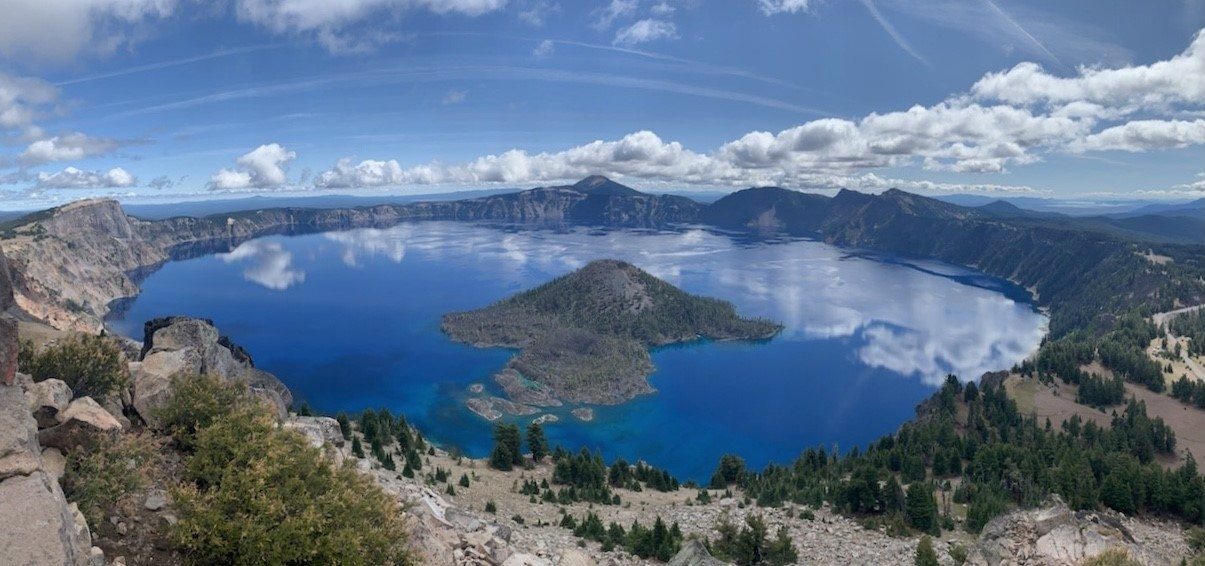
Wizard Island rises within Crater Lake's caldera.
NPS Photo/Kim Chamales · Public domain (U.S. federal government work) · Original recordImage changes
Resized and converted to JPEG for display; no subject alteration.
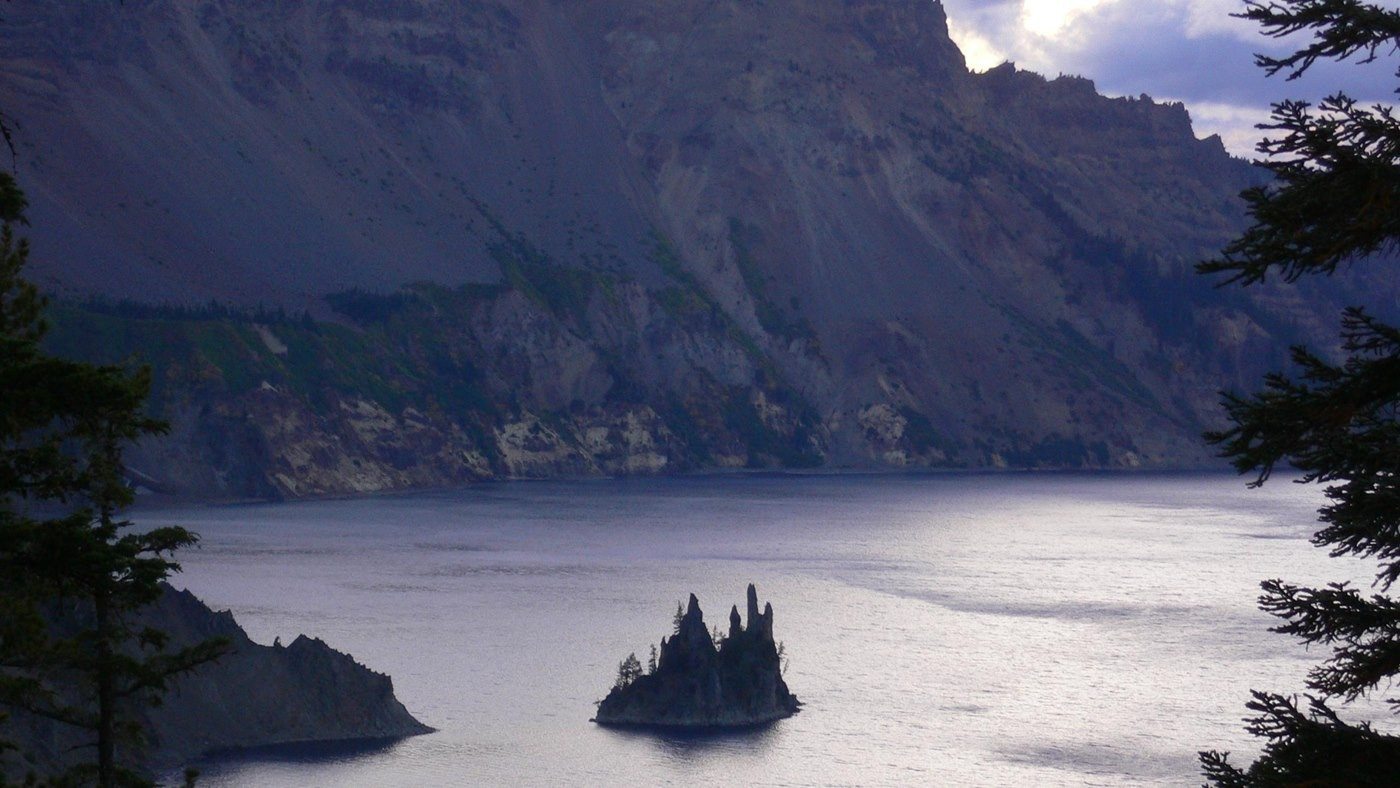
Phantom Ship at sunset.
NPS Photo · Public domain (U.S. federal government work) · Original recordImage changes
Resized and converted to JPEG for display; no subject alteration.
The words
Caldera
The Crater Lake caldera, the large basin formed by Mount Mazama’s collapse.
Deep Blue Lake
Deep Blue Lake, the name proposed for Crater Lake by a prospector in 1853.
Klamath
The Klamath people, whose traditional stories describe the eruption of Mount Mazama.
Kokanee
Kokanee salmon, one of the introduced fish living in Crater Lake.
Llao Rock
Llao Rock, the thick lava flow formed before the climactic Mount Mazama eruption.
Mazama Newt
The Mazama newt, the distinct rough-skinned-newt population endemic to Crater Lake.
Mount Mazama
Mount Mazama, the volcano whose collapse formed the Crater Lake caldera.
Mount Scott
Mount Scott, the highest mountain in Crater Lake National Park.
Phantom Ship
Phantom Ship, the jagged remnant of an ancient volcanic cone forming one of Crater Lake’s islands.
Pumice Castle
Pumice Castle, the colorful volcanic formation on the east wall of Crater Lake.
Rim Drive
Rim Drive, the historic scenic road around Crater Lake.
Skell
Skell, the Chief of the Above World in the NPS telling of a Makalak/Klamath creation story.
Watchman Peak
The Watchman Peak Trail, the ascent to a historic fire lookout above Crater Lake.
William Steel
William Gladstone Steel, the advocate who worked to establish Crater Lake National Park.
Wizard Island
Wizard Island, the volcanic island that grew after Mount Mazama’s collapse.
Sources
- Crater Lake - Crater Lake National ParkNational Park Service
- History & Culture - Crater Lake National ParkNational Park Service
- Crater LakeNational Park Service
- Eruption History for Mount Mazama and Crater Lake CalderaU.S. Geological Survey
- Mazama Newts - Crater Lake National ParkNational Park Service
- Phantom Ship OverlookNational Park Service
- The Pumice Castle, Crater Lake Nature Notes vol. XI no. 2 (August 1938)National Park Service
- Scenic Rim Drive - Crater Lake National ParkNational Park Service
- History - Crater Lake National ParkNational Park Service
- Hiking Trails - Crater Lake National ParkNational Park Service