
America’s National Parks
Puzzle 65 · Northwest and the Pacific · Page 93 in print
Olympic
Frequent winter rain gives the Hoh Rain Forest in Olympic National Park a yearly average of 140 inches of precipitation, and mosses and ferns blanket the surfaces beneath its canopy.
Jump to a word
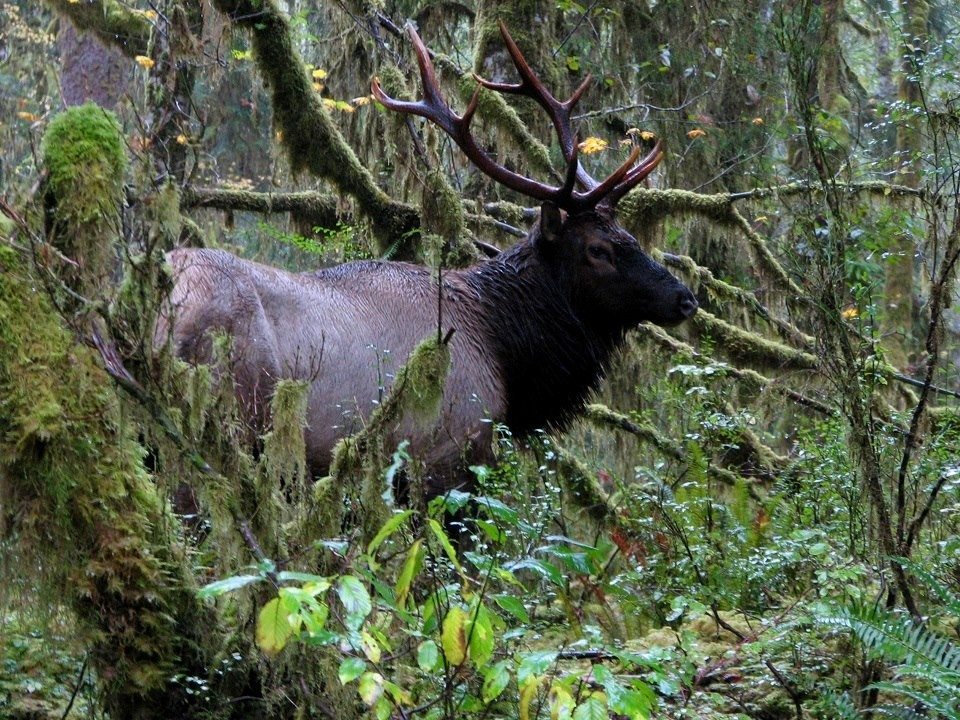
A Roosevelt elk in the Hoh Rain Forest.
NPS Photo · Public domain (U.S. federal government work) · Original recordImage changes
Resized and converted to JPEG for display; no subject alteration.
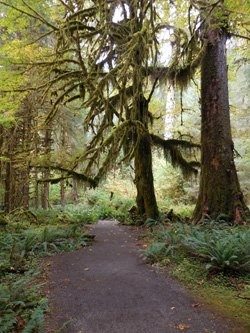
A trail through the Hoh's dense temperate rainforest.
NPS Photo · Public domain (U.S. federal government work) · Original recordImage changes
Resized and converted to JPEG for display; no subject alteration.
The words
Blue Glacier
The Blue Glacier, the glacier below Mount Olympus reached by the Hoh River Trail.
Elwha
The Elwha River, the park river whose ecosystem is being restored after dam removal.
Hall of Mosses
The Hall of Mosses Trail, the loop through old-growth forest in the Hoh area.
Hoh Rain Forest
The Hoh Rain Forest, a temperate rainforest in Olympic National Park.
Hurricane Hill
The Hurricane Hill Trail, a mountain trail on Hurricane Ridge.
Lake Crescent
Lake Crescent, the glacially carved lake in the northern Olympic foothills.
Lake Ozette
Lake Ozette, the coastal-area lake with a long Indigenous and later settlement history.
Makah
The Makah, one of the Indigenous peoples with continuing relationships to the park’s lands and waters.
Mount Olympus
Mount Olympus, the highest mountain of the Olympic range.
Olympic Marmot
The Olympic marmot, a marmot living in high meadows of the Olympic Mountains.
Quileute
The Quileute, one of the Indigenous peoples with continuing relationships to the park’s lands and waters.
National Park Service (opens a new tab) · Quileute Tribe: History (opens a new tab)
Quinault
The Quinault Valley, a rainforest valley and gateway to Olympic’s mountains.
Roosevelt Elk
Roosevelt elk, the large elk subspecies living in the park’s rainforest valleys.
Ruby Beach
Ruby Beach, a beach on the park’s Pacific coast noted for sea stacks.
Sol Duc
The Sol Duc River, the river carrying coho salmon through the park’s Sol Duc Valley.
Sources
- Visiting the Hoh Rain Forest - Olympic National ParkNational Park Service
- History of the Elwha - Olympic National ParkNational Park Service
- Geology of Olympic - Olympic National ParkNational Park Service
- Visiting Lake Crescent - Olympic National ParkNational Park Service
- Visiting Ozette - Olympic National ParkNational Park Service
- History & Culture - Olympic National ParkNational Park Service
- Olympic Marmot - Olympic National ParkNational Park Service
- Visiting Quinault - Olympic National ParkNational Park Service
- Quinault Area Brochure - Olympic National ParkNational Park Service
- Visiting the Sol Duc Valley - Olympic National ParkNational Park Service
- Tribes of the Olympic Peninsula - Olympic National ParkNational Park Service
- History | Quileute TribeQuileute Tribe