
America’s National Parks
Puzzle 62 · California · Page 88 in print
Pinnacles
Nearly 500 bee species have been found at Pinnacles National Park, and honeybees and bumblebees make up less than two percent of them. Bee diversity at Pinnacles ranks among the highest known anywhere on Earth.
Jump to a word
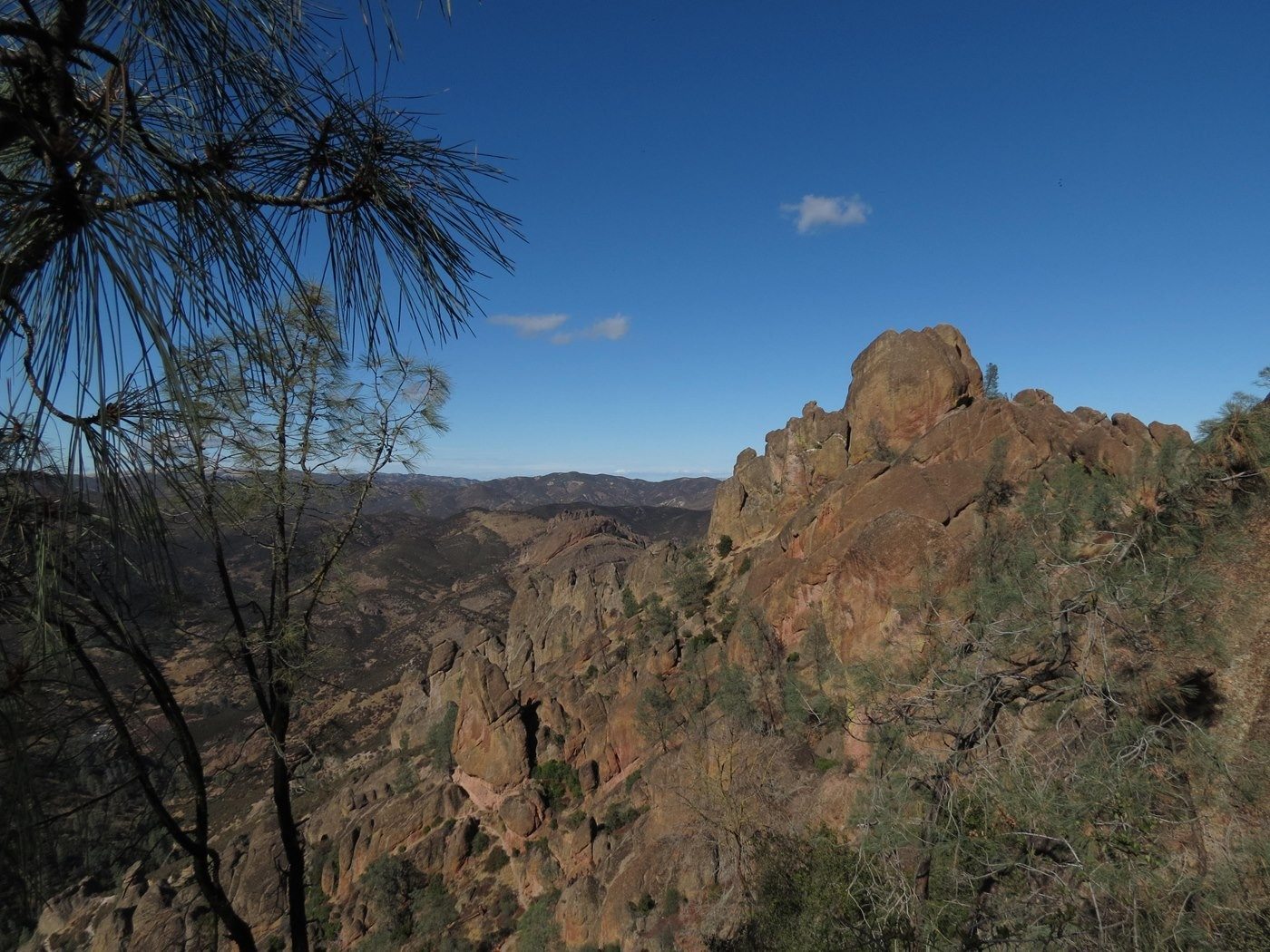
Sunset in Pinnacles National Park.
NPS / Emily Novack · Public domain (U.S. federal government work) · Original recordImage changes
Resized and converted to JPEG for display; no subject alteration.
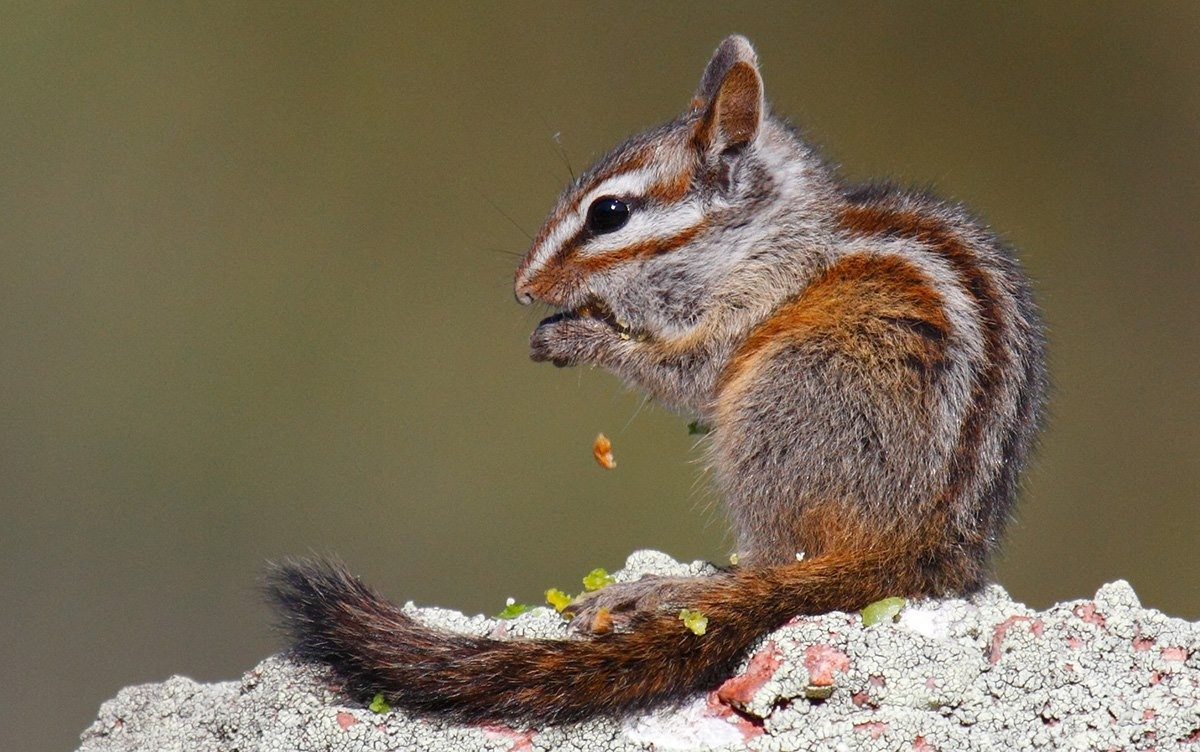
A Merriam's chipmunk feeding on an acorn.
NPS / Gavin Emmons · Public domain (U.S. federal government work) · Original recordImage changes
Resized and converted to JPEG for display; no subject alteration.
The words
Amah Mutsun
The Amah Mutsun Tribal Band, whose members work with Pinnacles on restoration and indigenous land management.
Balconies Cave
Balconies Cave, the Pinnacles cave area providing habitat for western mastiff bats.
Bear Gulch
Bear Gulch Cave, the Pinnacles cave providing habitat for Townsend’s big-eared bats.
Blue Oak
Blue oak, one of the prominent oak-tree species at Pinnacles.
Chalone Peak
North Chalone Peak, the highest point in Pinnacles.
Chaparral
Chaparral, the dense low vegetation covering much of Pinnacles and sheltering birds.
Condor Gulch
Condor Gulch, the Pinnacles trail offering views of blue oaks.
High Peaks
The High Peaks area, the Pinnacles formation at the heart of the park.
Machete Ridge
Machete Ridge, the rock-climbing formation with multi-pitch routes.
Native Bees
Native bees, the Pinnacles-area pollinators that forage between natural habitat and agricultural land.
Neenach
The Pinnacles-Neenach Volcanic Field, the original volcanic formation split by the San Andreas Fault.
Pinnacles
Pinnacles National Park, whose rock formations are remnants of the Pinnacles-Neenach Volcanic Field.
San Andreas
The San Andreas Fault, the plate boundary that split and displaced the original Pinnacles volcano.
Talus Caves
Talus caves, the spaces beneath boulders wedged across narrow gorges or fractures.
Tarantula
Tarantula, the large spider whose males roam Pinnacles in autumn seeking mates.
Sources
- Native Peoples - Pinnacles National ParkNational Park Service
- Bats - Pinnacles National ParkNational Park Service
- Trees and Shrubs - Pinnacles National ParkNational Park Service
- Maps - Pinnacles National ParkNational Park Service
- Birds - Pinnacles National ParkNational Park Service
- Climbing - Pinnacles National ParkNational Park Service
- Pinnacles Builds on Earlier Bee Studies with New Surveys in 2020-2021National Park Service
- Geology - Pinnacles National ParkNational Park Service
- Tarantulas and Other Spiders - Pinnacles National ParkNational Park Service