
America’s National Parks
Puzzle 54 · The Desert Southwest · Page 78 in print
White Sands
The bleached earless lizard is not really earless or bleached: it hears without outer ear openings, and its grayish-white color helps it blend into the white gypsum dunes.
Jump to a word
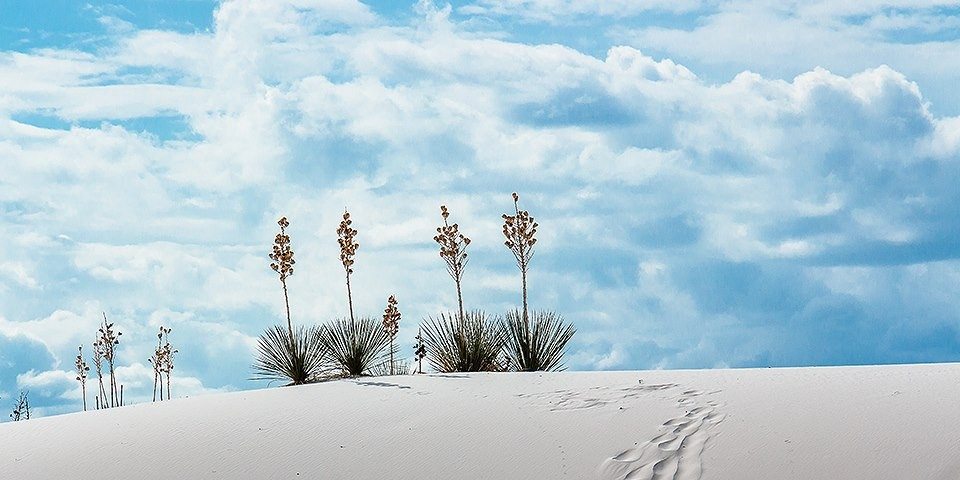
Yucca plants hold their ground in the shifting dunes at White Sands.
NPS Photo · Public domain (U.S. federal government work) · Original recordImage changes
Resized and converted to JPEG for display; no subject alteration.
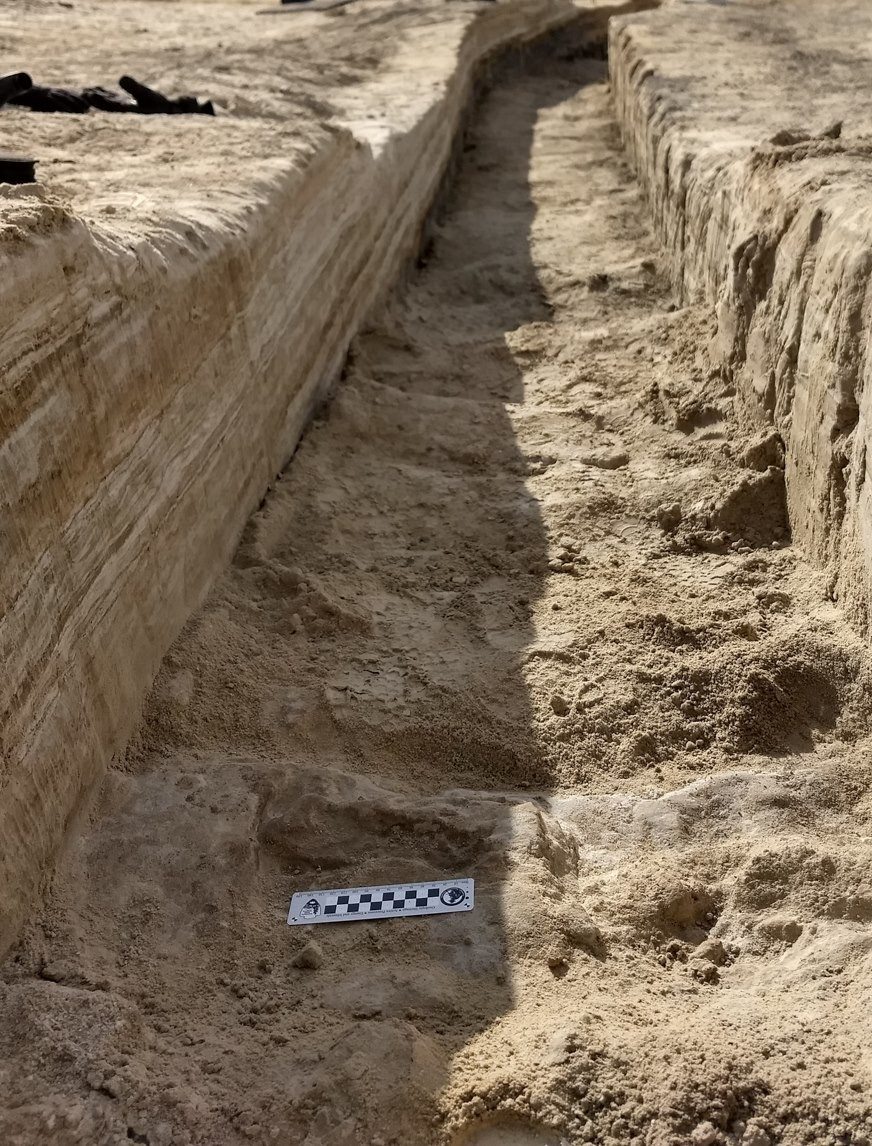
Excavation exposes more footprints in an ancient lake landscape.
NPS Photo · Public domain (U.S. federal government work) · Original recordImage changes
Resized and converted to JPEG for display; no subject alteration.
The words
Alkali Flat
Alkali Flat, the dry lakebed beside the gypsum dunes.
Chihuahuan
The Chihuahuan Desert, the desert containing White Sands.
Dire Wolf
The dire wolf, the extinct predator represented in the Lake Otero landscape.
Dunefield
The dunefield, the great accumulation of gypsum sand dunes protected by the park.
Earless Lizard
The bleached earless lizard, the pale lizard adapted to the white dunefield.
Footprints
Fossilized footprints, the ancient human and animal tracks preserved in the park.
Giant Sloth
The giant sloth, the extinct Ice Age animal represented by fossilized tracks.
Gypsum
Gypsum, the mineral forming White Sands' white sand.
Kit Fox
The kit fox, the small fox living in the dunes.
Lake Lucero
Lake Lucero, the seasonal lake providing gypsum to the dunefield.
Lake Otero
Lake Otero, the ancient lake that once covered much of the Tularosa Basin.
Oryx
The African oryx, the introduced antelope released near White Sands.
Selenite
Selenite, the gypsum crystals broken down into grains of white sand.
Soaptree Yucca
Soaptree yucca, the desert plant whose growing stem keeps pace with the dunes.
Tularosa Basin
The Tularosa Basin, the basin between the San Andres and Sacramento mountains.
Sources
- Geology of White Sands - White Sands National ParkNational Park Service
- Natural Features & Ecosystems - White Sands National ParkNational Park Service
- Fossilized Footprints - White Sands National ParkNational Park Service
- White Species - White Sands National ParkNational Park Service
- White Sands National Park (park brochure)National Park Service
- White Sands National Park History - White Sands National ParkNational Park Service
- Plant Survival Strategies - White Sands National ParkNational Park Service