
America’s National Parks
Puzzle 52 · The Desert Southwest · Page 76 in print
Big Bend
Quetzalcoatlus, the pterosaur whose first bones were found in Big Bend in 1971, had an estimated wingspan of 36 to 39 feet, the largest known flying creature of all time.
Jump to a word
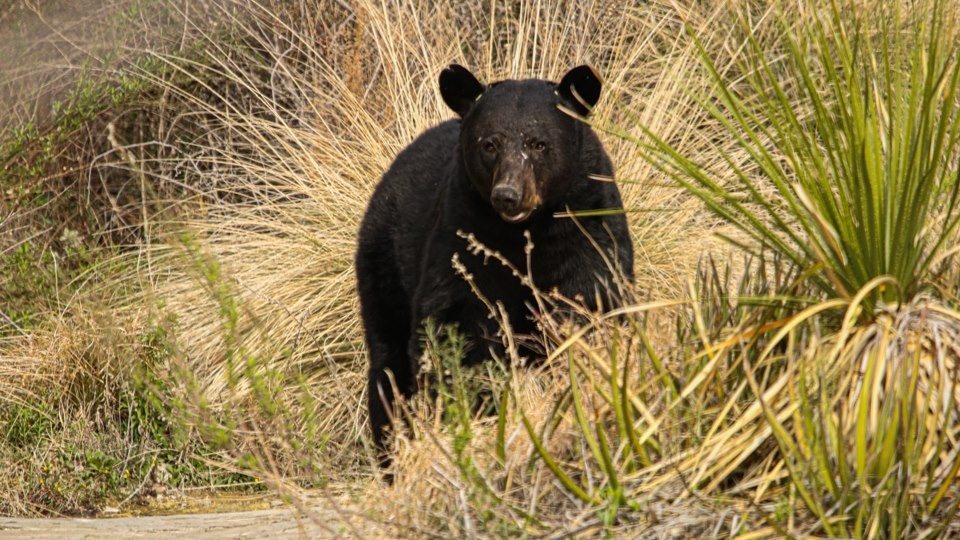
A Mexican black bear in Big Bend.
NPS/R. Negele · Public domain (U.S. federal government work) · Original recordImage changes
Resized and converted to JPEG for display; no subject alteration.
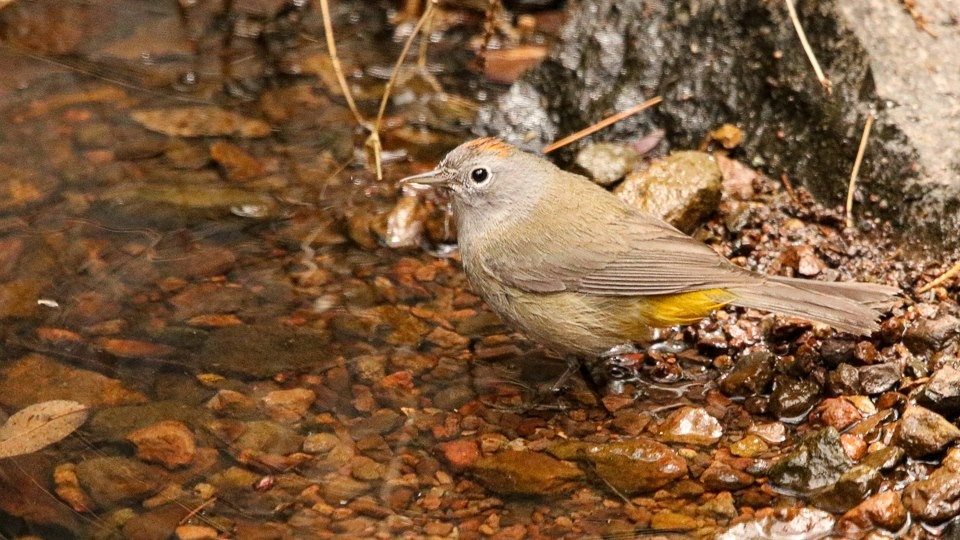
A Colima warbler drinks in Boot Canyon.
NPS/R. Negele · Public domain (U.S. federal government work) · Original recordImage changes
Resized and converted to JPEG for display; no subject alteration.
The words
Black Bear
The black bear, the bear that returned naturally to the Chisos Mountains.
Boquillas
Boquillas Canyon, the Rio Grande canyon in Big Bend's eastern area.
Casa Grande
Casa Grande, the named peak above the Chisos Mountains Lodge.
Castolon
Castolon, the historic cavalry-camp and trading settlement in western Big Bend.
Chisos
The Chisos Mountains, the mountain range within Big Bend National Park.
Colima Warbler
The Colima warbler, the bird occurring in Big Bend's mountain habitat.
Emory Peak
Emory Peak, the high summit in the Chisos Mountains.
Javelina
The javelina, the wild mammal found in Big Bend.
Mule Ears
Mule Ears Peaks, the twin named peaks visible from the Ross Maxwell Scenic Drive.
Pterosaur
A pterosaur, the flying reptile represented by Big Bend's Quetzalcoatlus fossils.
Rio Grande
The Rio Grande, the river carving Big Bend's border canyons.
Roadrunner
The roadrunner, the bird called paisano in Big Bend's interpretive program.
Ross Maxwell
Ross Maxwell, the geologist who served as Big Bend's first superintendent.
Santa Elena
Santa Elena Canyon, the Rio Grande canyon along the Texas and Mexico border.
Terlingua
Terlingua Creek, the stream whose badlands lie along the west side of the park.
Sources
- Black Bears - Big Bend National ParkNational Park Service
- Natural History - Big Bend National ParkNational Park Service
- Lodging - Big Bend National ParkNational Park Service
- Ross Maxwell Scenic Drive - Big Bend National ParkNational Park Service
- Day Hikes - Big Bend National ParkNational Park Service
- Colima story - Big Bend National ParkNational Park Service
- Backcountry Food Storage - Big Bend National ParkNational Park Service
- Pterosaurs - Big Bend National ParkNational Park Service
- Big Bend Digital Junior Ranger - Big Bend National ParkNational Park Service
- 1916–1966: First 50 Years of the National Park Service - Fossils and PaleontologyNational Park Service