
America’s National Parks
Puzzle 48 · The Colorado Plateau · Page 70 in print
Canyon de Chelly
Canyon de Chelly, pronounced d’SHAY, is one of the longest continuously inhabited landscapes of North America: for nearly five thousand years people have sheltered beneath its towering sandstone walls.
Jump to a word
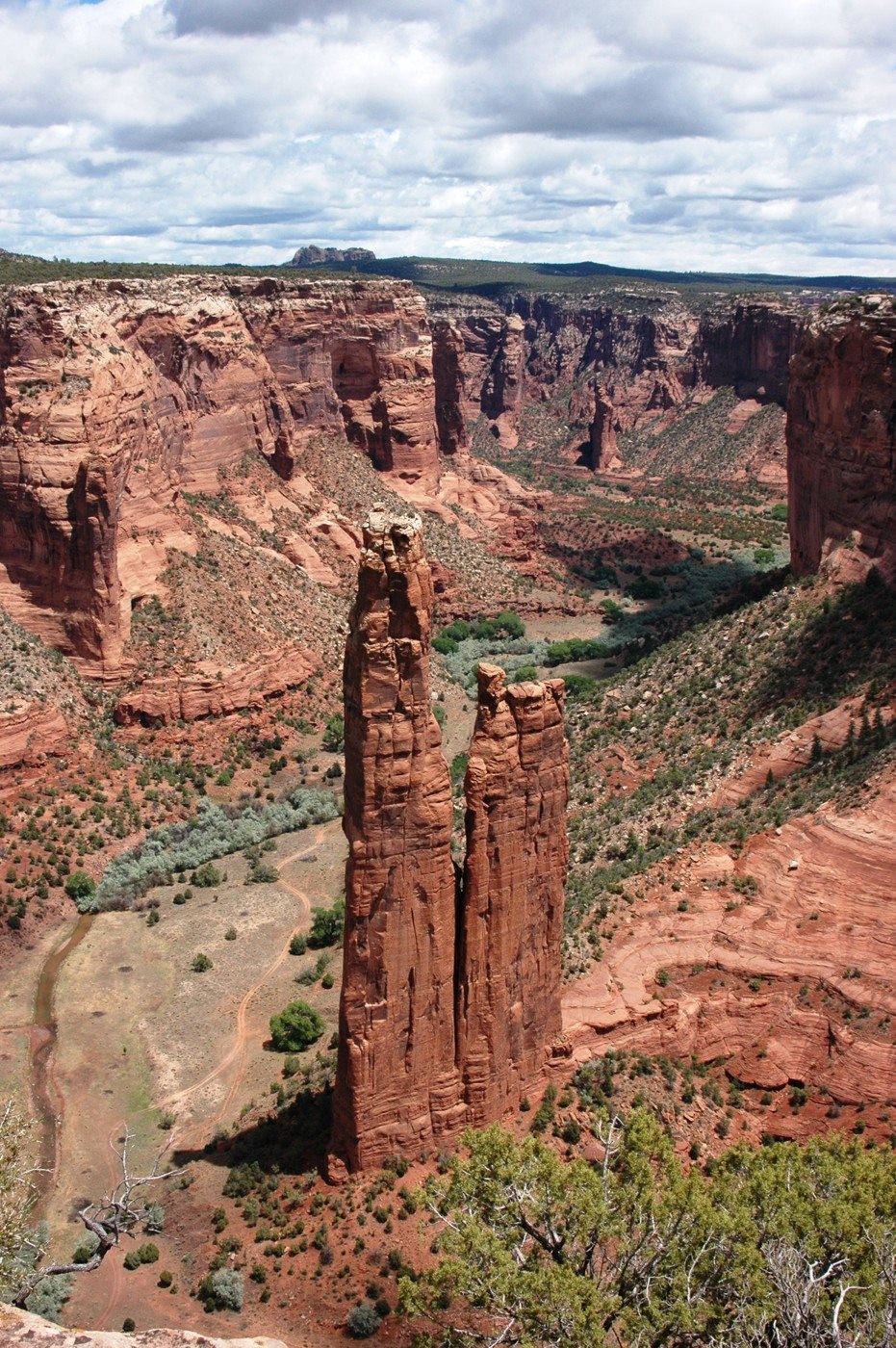
Spider Rock rises from the canyon floor.
NPS Photo · Public domain (U.S. federal government work) · Original recordImage changes
Resized and converted to JPEG for display; no subject alteration.
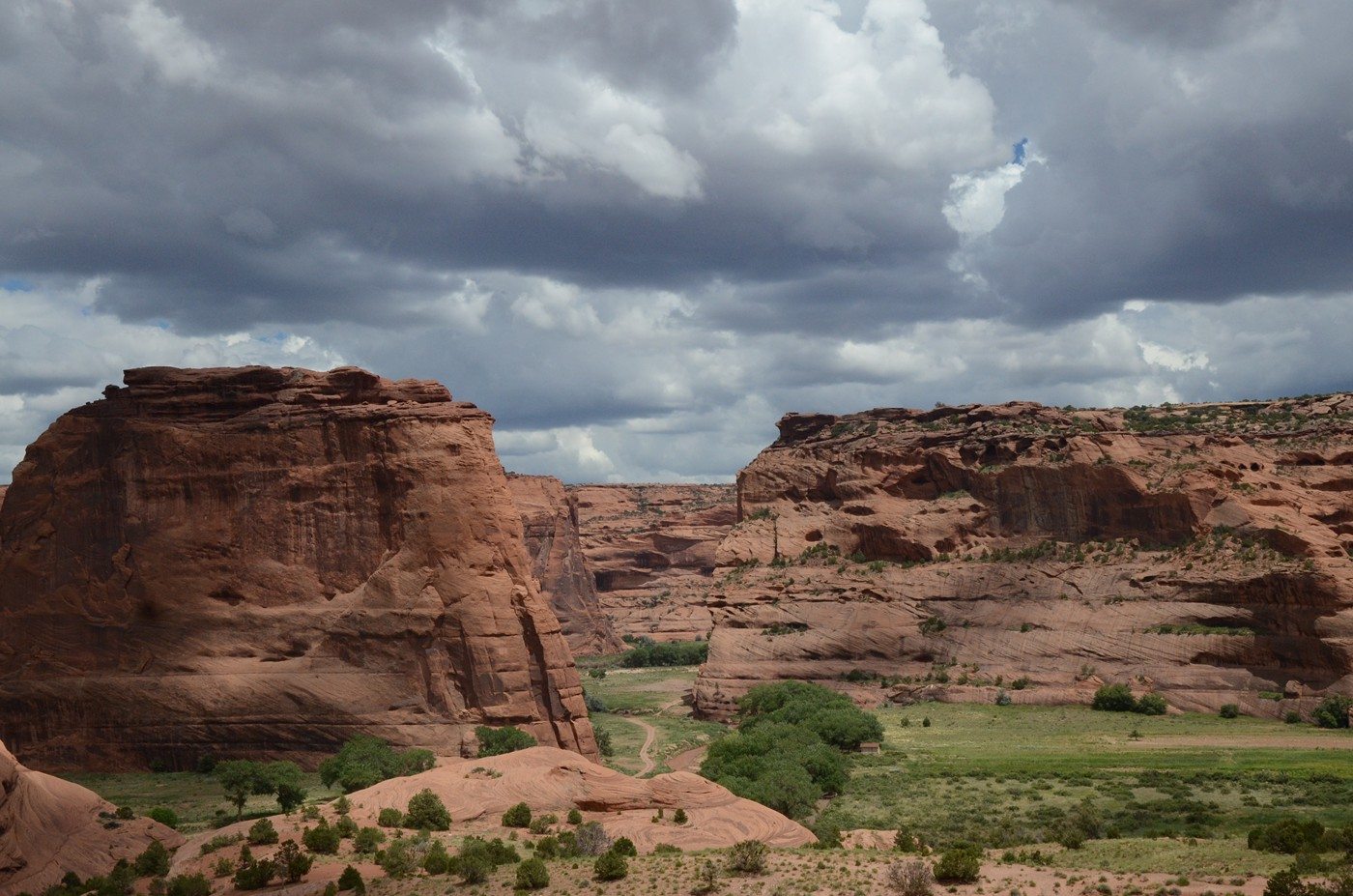
The canyon seen from the White House Trail.
NPS Photo · Public domain (U.S. federal government work) · Original recordImage changes
Resized and converted to JPEG for display; no subject alteration.
The words
Antelope House
Antelope House, the pueblo structure preserved within Canyon de Chelly.
Barboncito
Barboncito, the Navajo leader associated with the 1868 treaty and return home.
Chinle Wash
Chinle Wash, the drainage beside the park's visitor center area.
Desert Varnish
Desert varnish, the thin mineral coating visible on Canyon de Chelly's sandstone cliffs.
Hogan
A hogan, the traditional Diné dwelling visible in the inhabited canyon landscape.
Kit Carson
Kit Carson, the military commander whose campaign led to Navajo forced removal.
Long Walk
The Long Walk, the forced removal of Navajo people to Fort Sumner.
Manuelito
Manuelito, the Navajo leader associated with the 1868 treaty and return home.
Mummy Cave
Mummy Cave, the large ancestral village preserved in a canyon alcove.
Peach Orchards
Peach orchards, the traditional Diné plantings in Canyon de Chelly.
Spider Rock
Spider Rock, the sandstone spire associated with Spider Woman in Diné belief.
Spider Woman
Spider Woman, the important figure in Diné belief who taught the people to weave.
Weaving
Weaving, the Diné craft associated with Spider Woman in the canyon's living cultural tradition.
White House
White House, the ancient dwelling site within Canyon de Chelly.
Sources
- Air Tour Management Plan for Canyon de Chelly National Monument - Revised Appendix G: Cultural Resources Consultation and SummaryNational Park Service
- Long Walk National Historic Trail Feasibility Study: Executive Summary for the National Park System Advisory Board (October 2005)National Park Service
- Superintendent's Compendium - Canyon de Chelly National MonumentNational Park Service
- Canyon de Chelley National Monument, ArizonaMiraCosta College, Photographic Geology and Natural History Tour
- History & Culture - Canyon de Chelly National MonumentNational Park Service
- Arizona: Canyon de Chelly National MonumentNational Park Service
- Spider RockNatural History Museum of Utah
- How a Navajo Scientist Is Helping to Restore Traditional Peach HorticultureNational Park Service