
The Life of Jesus
Puzzle 62 · Called to Follow · Page 91 in print
Levi's Feast
Levi leaves the tax booth and gives a feast; questions about eating and fasting lead to images of cloth and wineskins.
Jump to a word
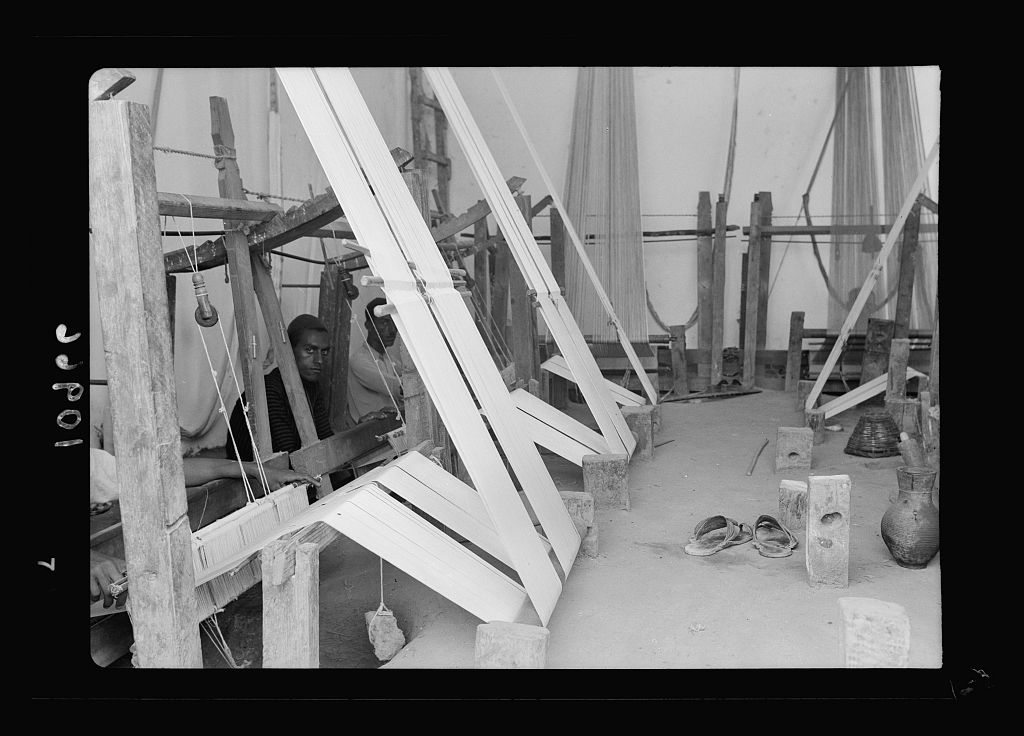
Weaving workshop in Majdel, 1934–1939.
The fabric-making scene gives direct material context to the saying about new cloth and an old garment.
American Colony (Jerusalem). Photo Department; G. Eric and Edith Matson Photograph Collection, Library of Congress. · No known restrictions on publication · Original recordImage changes
Resized proportionally to at most 1440px and JPEG compressed; no crop or content alteration.
The words
Alphaeus
Mark names Levi as the son of Alphaeus when Jesus sees him at the tax booth. Levi rises and follows; Luke also names the tax collector Levi, while Matthew’s account calls him Matthew.
Mark 2:14 (opens a new tab) · Luke 5:27–28 (opens a new tab) · Matthew 9:9 (opens a new tab)
Bridechamber
The bridal room; the phrase refers to the bridegroom’s friends.
Asked why his disciples do not fast, Jesus says in Mark that “the children of the bridechamber” cannot fast while the bridegroom is with them: the bridegroom’s friends, named for the bridal room.
Mark 2:18–20 (opens a new tab) · Strong’s G3567: bridal chamber (opens a new tab)
Burst
Jesus says new wine would burst old bottles, spilling the wine and ruining the containers. The NET calls these containers wineskins and explains that fermenting wine expands, stretching the skins.
Mark 2:22 (opens a new tab) · NET Bible: Mark 2:13-22 (opens a new tab)
Fast
In Luke, the question contrasts John’s and the Pharisees’ disciples fasting and praying with Jesus’s disciples eating and drinking. Jesus answers with the bridegroom’s presence, then speaks of fasting after the bridegroom is taken away.
Great Company
A large gathering of people.
Luke says Levi gives Jesus a great feast in his own house, with a large gathering of tax collectors and others. The following complaint asks the disciples why they eat and drink with publicans and sinners.
Luke 5:29–30 (opens a new tab) · NET Bible: Luke 5:27-39 (opens a new tab)
Levi
Luke names Levi as the tax collector Jesus calls from the tax booth. He leaves everything, follows Jesus and hosts a feast; Matthew’s account names the man called at the booth as Matthew.
Luke 5:27–29 (opens a new tab) · Matthew 9:9 (opens a new tab)
Marred
Ruined; damaged beyond use here.
In Mark’s wine comparison, the bottles are marred when new wine bursts them and spills. The NET describes both wine and skins as destroyed; Jesus then says new wine belongs in new bottles.
Mark 2:22 (opens a new tab) · NET Bible: Mark 2:13-22 (opens a new tab)
New Cloth
Unshrunk cloth, in the NET’s Mark wording.
Mark describes a new patch pulling away from an old garment and worsening the tear; the NET calls the cloth unshrunk. Luke’s version instead describes a patch taken from a new garment that does not match.
Did you know?
Exodus 35:25 also describes textile work: women spin with their hands and bring what they have spun, naming blue, purple, scarlet and fine linen.
Mark 2:21 (opens a new tab) · NET Bible: Mark 2:13-22 (opens a new tab) · Luke 5:36 (opens a new tab) · Exodus 35:25 (opens a new tab)
New Wine
In Jesus’s comparison, new wine belongs in new wineskins. Luke then adds a drinker’s preference for old wine, rendered better in the KJV and good enough in the NET; that is the drinker’s saying.
Luke 5:37–39 (opens a new tab) · NET Bible: Luke 5:27-39 (opens a new tab)
Old Bottles
Old wineskins; skin containers for wine.
Old bottles are the unsuitable containers in Jesus’s new-wine comparison. The NET calls them wineskins; Luke says they burst and perish, while new wine must instead be put into new bottles.
Luke 5:37–38 (opens a new tab) · NET Bible: Luke 5:27-39 (opens a new tab)
Publicans
Tax collectors.
Publicans join the feast in Levi’s house; the NET calls them tax collectors. Luke reports a complaint about the disciples eating with them and sinners, followed by Jesus’s reply about calling sinners to repentance.
Luke 5:29–32 (opens a new tab) · NET Bible: Luke 5:27-39 (opens a new tab)
Receipt
The tax collection booth, in this phrase.
The receipt of custom is where Levi sits when Jesus calls him to follow. The NET renders the place as a tax booth; Luke then describes Levi leaving everything and rising to follow.
Luke 5:27–28 (opens a new tab) · NET Bible: Luke 5:27-39 (opens a new tab)
Rent
A tear in cloth.
The rent is the tear made worse when the new patch pulls away from an old garment in Mark. Luke’s version describes damage to the new garment and a patch that does not match the old.
Mark 2:21 (opens a new tab) · Luke 5:36 (opens a new tab) · NET Bible: Mark 2:13-22 (opens a new tab)
Seweth
Sews; attaches with stitches.
Mark’s cloth comparison begins with sewing a new patch onto an old garment. The new piece pulls away and worsens the tear; Luke separately describes taking the patch from a new garment.
Mark 2:21 (opens a new tab) · Luke 5:36 (opens a new tab) · NET Bible: Mark 2:13-22 (opens a new tab)
Spilled
In Mark, spilled wine is one consequence of putting new wine into old skins: the containers burst and are ruined too. Matthew describes the same loss as wine running out and bottles perishing.
Mark 2:22 (opens a new tab) · Matthew 9:17 (opens a new tab)
Sources
- Mark 2:13-22 (King James Version)King James Version, passage navigation via Bible Gateway
- Luke 5:27-39 (King James Version)King James Version, passage navigation via Bible Gateway
- Matthew 9:9-17 (King James Version)King James Version, passage navigation via Bible Gateway
- Mark 2:13-22 (NET Bible), translation and notesNET Bible, via Bible Gateway
- Luke 5:27-39 (NET Bible), translation and notesNET Bible, via Bible Gateway
- Exodus 35:25 (King James Version)King James Version, passage navigation via Bible Gateway
- Strong’s Greek 3567: bridal chamberBible Hub